BIS Bulletin Puts the Three Month Risk of 2008 Style US Treasury Stress at 3 Percent When Debt Is High

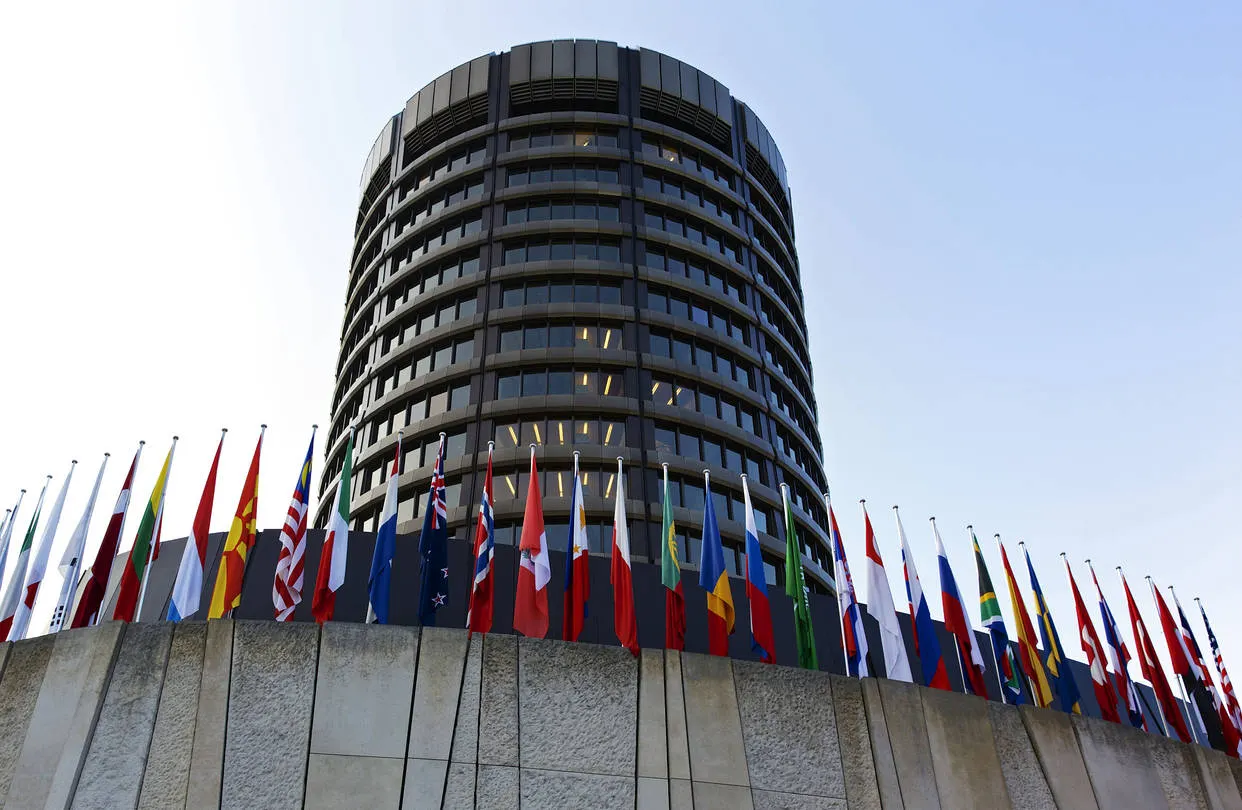
High government debt worsens expected liquidity in government bond markets and raises the risk of market dysfunction, while a large footprint of non-bank financial institutions widens the range of outcomes in both directions, according to a Bank for International Settlements Bulletin published on Tuesday. The authors, Mathias Drehmann and Sonya Zhu, use a US Treasury market conditions indicator over July 2004 to May 2024.
Stress odds by debt and non-bank share
| Condition | Probability of a stress event like the 2008 crisis within three months |
|---|---|
| Debt to GDP in top third | 3% |
| Debt to GDP in bottom third | 0.02% |
| Non-bank share in top third | 1.5% |
| Non-bank share low | close to zero |
The non-bank share is government bonds held by money market funds, investment funds, pension funds and insurers. A stress event is the indicator exceeding its October to December 2008 levels.
Non-banks widen the range
The average reading of the indicator, where higher values mean worse liquidity, was 0.4 when the debt ratio sat in its top third against 0.23 in its bottom third, about 74 percent higher, on our calculation. With a high non-bank share, the chance of conditions in the worst fifth of the distribution three months ahead was 12 percent, and of conditions in the best fifth 7 percent, against virtually zero for both when the share was low. The authors say this fits the view that non-banks add liquidity in good times but amplify shocks. They also note that government debt is close to post-World War II highs in many advanced economies.
Why it matters: The findings tie fiscal policy to the functioning of bond markets. The paper cites the bank’s policy work calling for credible medium term fiscal frameworks for high debt jurisdictions and “congruent regulation” that applies similar stringency to intermediaries posing similar risks, and says tighter safeguards against excessive leverage, liquidity mismatches and fragile funding among non-banks are especially important.
Outlook: The authors limited the analysis to the US Treasury market because comparable data are lacking elsewhere, and the views are theirs rather than the institution’s.
Sources: Bank for International Settlements, The Edge.