WTO More Than Doubles Its 2026 Goods Trade Forecast to 3.9 Percent on AI Demand
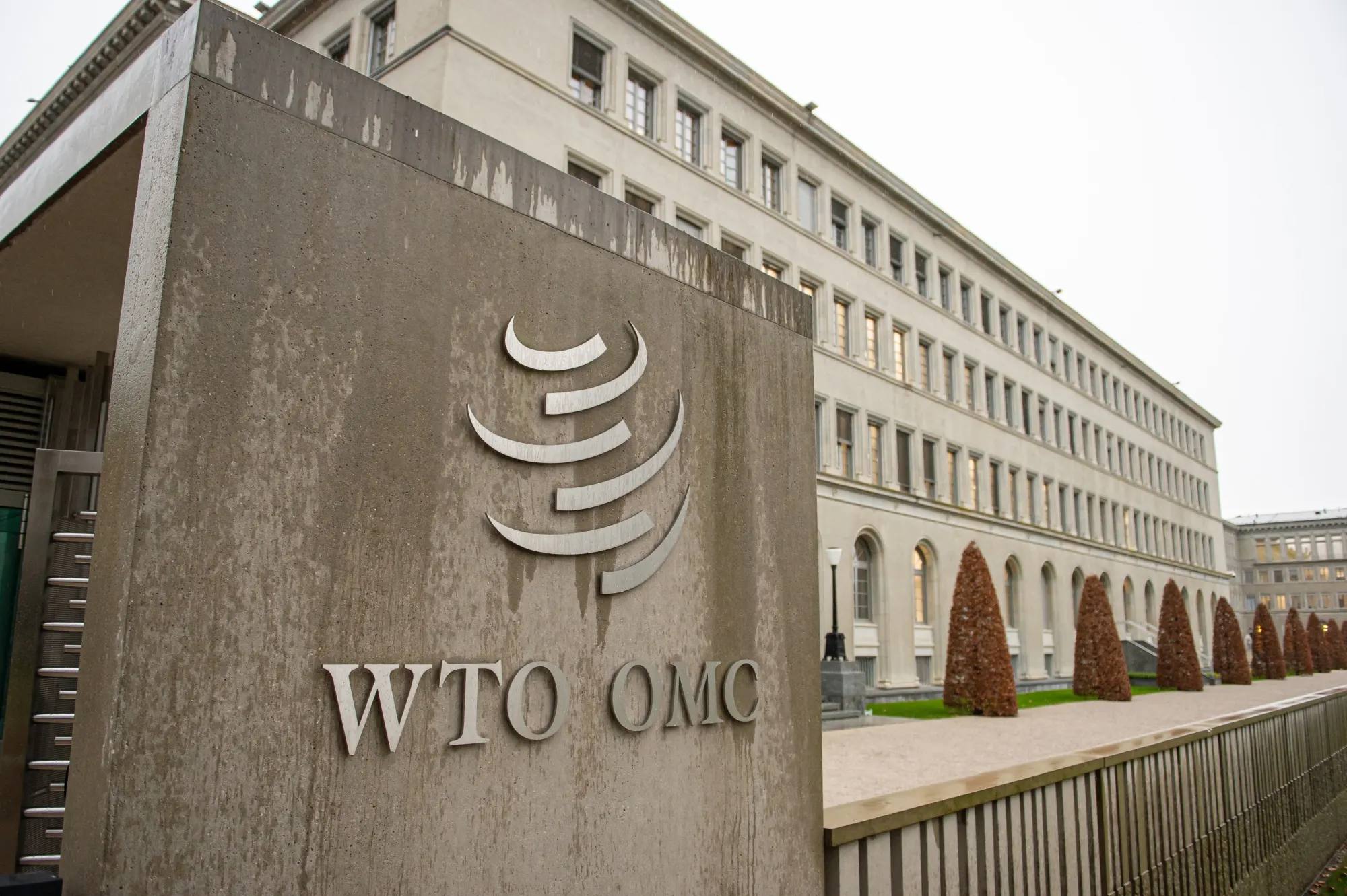
The World Trade Organization raised its forecast for growth in world merchandise trade volume this year to 3.9 percent from 1.9 percent in March, as spending on artificial intelligence infrastructure lifted trade in chips and servers by more than the Middle East conflict weighed on shipments of fuels and fertilisers. It raised its 2027 forecast to 4.1 percent from 2.6 percent, while it cut its forecast for services trade in 2026 to 3.3 percent from 4.8 percent.
AI goods carry the year
Goods trade volume grew 3.5 percent in the first half of 2026. AI-enabling goods such as semiconductors and servers accounted for 47 percent of the growth in merchandise trade, measured by value, and trade in them rose 67 percent from a year earlier, lifting their share of world goods trade to 14.8 percent. By value, trade in them grew 4.5 times as fast as all merchandise trade, which rose 15 percent, on our calculation.
Value and volume have moved far apart. The dollar value of world merchandise trade rose 15 percent in the first half against volume growth of 3.5 percent, which implies that the average value of each unit traded rose 11.1 percent, on our calculation; on our reading, that reflects higher prices for fuels and fertilisers and the weight of high-value electronics.
On the forecast, goods trade grows 1.5 times as fast as world output this year, on our calculation: the organisation puts global GDP growth at 2.6 percent in 2026 and 2.9 percent in 2027. Asia accounts for 4.0 percentage points of the 3.9 percent world total, more than all of it, with North America adding 0.5 point and Europe 0.1 point.
Trade and output, annual percentage change in volume
| Measure | 2025 | 2026 | 2027 |
|---|---|---|---|
| World merchandise trade | 4.2 | 3.9 | 4.1 |
| World commercial services trade | 5.3 | 3.3 | 6.4 |
| World GDP | 3.0 | 2.6 | 2.9 |
| Middle East merchandise exports | 5.2 | -17.2 | 23.3 |
| Middle East merchandise imports | 6.8 | -15.4 | 17.0 |
Source: WTO, Global Trade Outlook and Statistics, October 2026. Merchandise trade is the average of exports and imports; services trade refers to exports; 2026 and 2027 are projections. The 2025 export figure for the Middle East is a low quality estimate.
The Middle East rebound in the forecast
The organisation’s economists estimate that crude oil exports from the Middle East fell roughly 24 percent in the first half and liquefied natural gas exports 47 percent, but extra supply from producers such as the United States, Norway and Brazil kept the global decline to around 6 percent for crude and 1 percent for LNG. The region’s goods exports are projected to fall 17.2 percent this year before rising 23.3 percent in 2027. Taken together, those 2 years would leave the region’s export volumes 2.1 percent above their 2025 level, on our calculation, and its services exports, forecast to fall 10.3 percent and then rise 21.1 percent, 8.6 percent higher.
Services trade is where the year’s cut lands. Travel is expected to grow 0.2 percent in 2026 and transport 0.9 percent, against 4.8 percent for other commercial services, including digitally delivered services. Director-General Ngozi Okonjo-Iweala described the figures as “trade resilience in action”.
Why it matters: For world trade, the upgrade shows supply chains absorbing an energy shock by rerouting rather than contracting. Asia supplies more than the whole of this year’s forecast volume growth, and AI goods supplied nearly half of the first-half rise in the value of goods trade, so a slowdown in AI investment, which the report names as a risk alongside the gap between crude and refined fuel prices, could hit trade hard given its high import content.
Outlook: Global AI infrastructure spending is projected to rise at least 30 percent in 2026, and market analysts cited in the report expect a further 10 to 20 percent in 2027. The 2027 forecasts, including the rebound in Middle East trade, depend on a timely resolution of the conflict, the report said.
Sources: World Trade Organization, The Edge.