Emirates Group Posts AED 4.1 Billion Half-Year Pre-Tax Profit, Cargo Revenue Up 52%
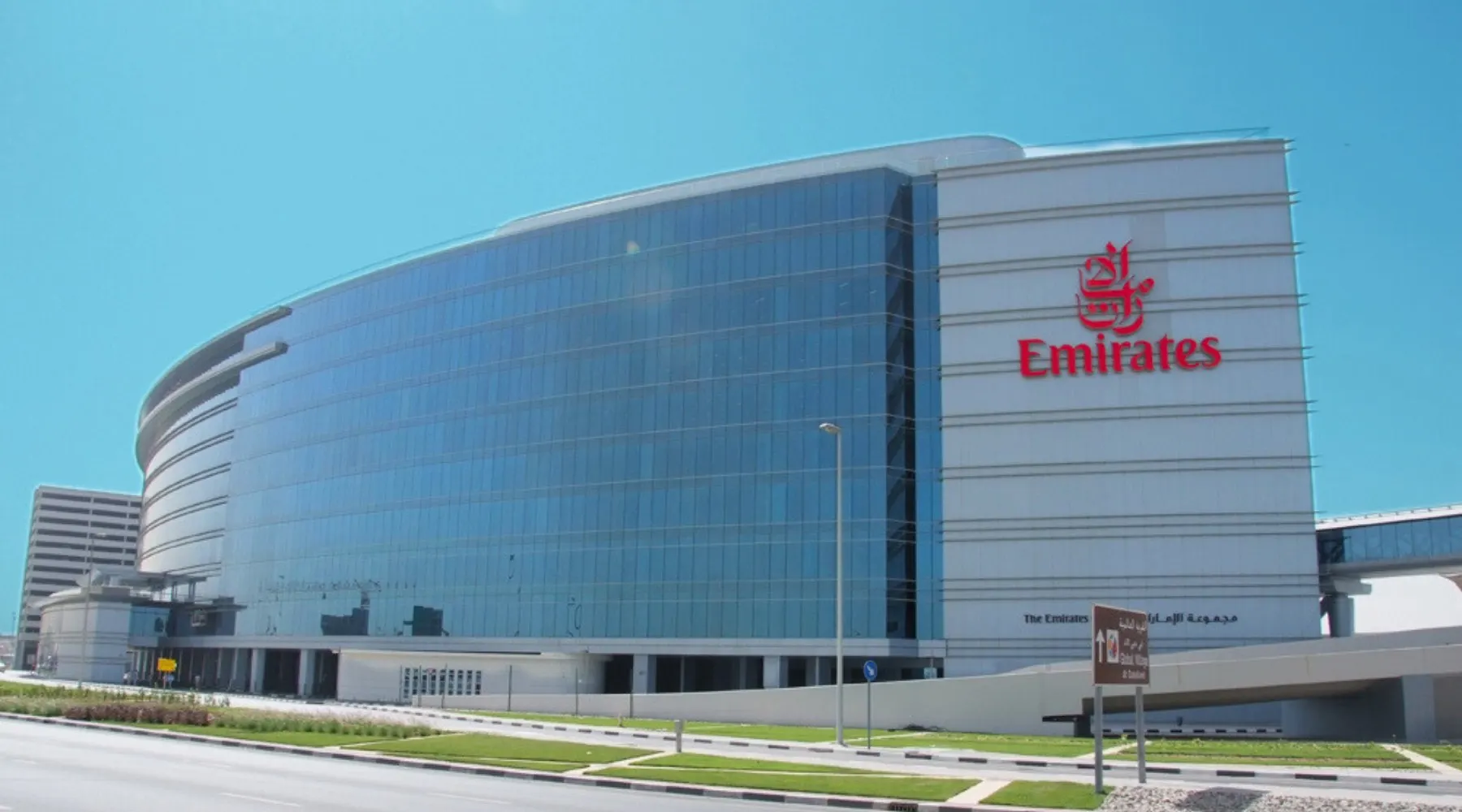
The Emirates Group stayed profitable through the first half of its financial year despite regional conflict and high fuel costs, posting a pre-tax profit of AED 4.1 billion ($1.1 billion).
For Emirates, dnata and their owner, the Investment Corporation of Dubai, the result keeps the group in profit through a half of intermittent airspace restrictions and closures across the region. In The Edge’s reading, cargo and fuel hedging carried the half: cargo revenue rose 52%, and hedging gains of AED 7.1 billion were nearly twice the airline’s own profit before tax.
The group earns AED 3.6 billion after tax and keeps AED 54.1 billion in cash
Profit after tax came to AED 3.6 billion ($1.0 billion), the group said on 5 November. EBITDA reached AED 12.5 billion, which the company presented as evidence of its strong operating performance.
The group ended September with AED 54.1 billion in cash, against AED 59.6 billion at 31 March. The balance fell AED 5.5 billion, or 9.2%. The group said it drew on its own cash to support business needs, including pre-delivery payments for aircraft and existing debt service.
It also paid the Investment Corporation of Dubai the final AED 2 billion of the AED 3.5 billion dividend declared for 2025-26. That payment equals 36% of the net fall in cash over the half.
The comparison is with last year’s first half, when the group set records for profit and revenue. Profit before tax and profit after tax were each down 66%. Revenue fell 12% to AED 66.2 billion.
EBITDA was 41% lower than last year’s AED 21.1 billion. The EBITDA margin narrowed to 18.9% of revenue from 28.0%.
The workforce stood at 128,237 on 30 September, down 2% from the end of March. Both Emirates and dnata are still recruiting, the group said.
Emirates Group first half (in AED billions)
| Measure | H1 2026-27 | H1 2025-26 | Change |
|---|---|---|---|
| Revenue | 66.2 | 75.4 | -12% |
| EBITDA | 12.5 | 21.1 | -41% |
| Profit before tax | 4.1 | n/a | -66% |
| Profit after tax | 3.6 | n/a | -66% |
Six months to 30 September; the release gives last year’s profit as a percentage change, not in AED.
His Highness Sheikh Ahmed bin Saeed Al Maktoum, Chairman and Chief Executive, Emirates Airline and Group, said customer demand stayed firm and cargo made a strong contribution, keeping revenue and cash healthy even as global jet fuel prices doubled from a year earlier.
He thanked the UAE government for coordinating the safe resumption of air transport and said its measures had led to the easing of travel advisories to and through the UAE. Investment had not paused during the period, he added.
Emirates lifts cargo revenue 52% and restores 91% of its network
Emirates, the airline, earned AED 3.7 billion ($1.0 billion) before tax, accounting for 90% of the group figure. Its profit after tax was AED 3.3 billion ($903 million).
Airline revenue, including other operating income, was AED 56.9 billion. The company credited lasting travel demand, particularly for premium cabins, and a solid contribution from cargo.
Emirates SkyCargo moved 1.2 million tonnes, 1% less than a year earlier, yet cargo revenue rose 52%. The company said the regional conflict reduced available airfreight capacity while marine disruptions pushed shippers towards air.
SkyCargo took delivery of 5 new Boeing 777 freighters and put its first converted passenger aircraft into freighter service. It added Almaty and Zhengzhou to its freighter network and introduced dedicated freighter services to more than 15 existing Emirates destinations.
By 30 September, Emirates was flying 91% of its pre-disruption network, serving 150 airports in 78 countries and territories. It offered travel cover that applies regardless of government travel advisories, free date changes and flexible refunds.
The reduced schedule cut overall capacity, passengers and cargo together, by 10% to 28.2 billion available tonne kilometres. On the passenger side, seat capacity, measured in available seat kilometres, fell 17% and passenger traffic, in revenue passenger kilometres, 25%. The seat factor slipped to 72.0% from 79.5%.
Emirates carried 21.8 million passengers between 1 April and 30 September, down 22%. A year earlier the airline made a record AED 11.4 billion before tax. Its pre-tax margin fell to 6.5% of revenue from 17.4%.
Emirates airline first half (in AED billions)
| Measure | H1 2026-27 | H1 2025-26 | Change |
|---|---|---|---|
| Revenue | 56.9 | 65.6 | -13% |
| EBITDA | 11.5 | 19.7 | -41% |
| Profit before tax | 3.7 | 11.4 | -68% |
| Profit after tax | 3.3 | n/a | -66% |
Six months to 30 September; revenue includes other operating income; last year’s profit after tax is given as a percentage change, not in AED.
Hedging gains of AED 7.1 billion contain the fuel bill
Fuel uplift was 12% lower, but fuel costs before hedging rose 60% on the first half of the previous financial year. Gains of AED 7.1 billion from the airline’s fuel price risk management cut the net increase in the fuel bill to 13%.
Fuel remains the largest single cost at 34% of operating costs. Total operating costs, fuel included, fell 2% in line with the smaller operation, and airline EBITDA came to AED 11.5 billion, or 20.2% of revenue.
The fleet programme continued through the half. Emirates received 9 new Airbus A350s. It also completed full cabin refurbishments on 12 aircraft, 9 A380s and 3 Boeing 777s, under a retrofit programme planned at more than $7.0 billion.
Another 36 aircraft gained Starlink Wi-Fi, taking the equipped fleet to 57. In May, Emirates broke ground on a $5.1 billion engineering and maintenance facility at Al Maktoum International Airport, due for completion in the mid-2030s.
Emirates Flight Catering’s revenue from external customers fell 51% to AED 273 million, and its meals uplifted fell 41% on lower air traffic at Dubai’s airport. Emirates Leisure Retail/MMI revenue fell 13% to AED 1.2 billion, which the company put down to lower tourism traffic in the UAE.
dnata’s catering and retail arm grows 1%
dnata earned a profit before tax of AED 410 million ($112 million), down 51%. Profit after tax fell 56% to AED 309 million. Revenue was AED 11.0 billion, 7% below last year, and EBITDA of AED 939 million gave an 8.5% margin.
Flight catering and retail grew 1% to AED 4.2 billion, helped by inflight retail for easyJet and Aer Lingus. Meals uplifted fell 10% to 54.0 million, largely because key UK contracts were lost.
Airport operations, still the largest unit at 49% of revenue, slipped 3% to AED 5.4 billion; the company said its growing international business partly offset lower airline activity at the UAE hub. Aircraft turns handled fell 8% to 414,012, and cargo handled 6% to 1.49 million tonnes.
Travel revenue fell 31% to AED 1.4 billion, mainly because dnata sold Travel Republic and Netflights in the UK, which stopped taking new bookings in November 2025. Underlying total transactional value was AED 3.8 billion, against AED 5.0 billion.
dnata revenue by division (in AED billions)
| Division | H1 2026-27 | Change |
|---|---|---|
| Airport operations | 5.4 | -3% |
| Catering, retail | 4.2 | +1% |
| Travel | 1.4 | -31% |
| Total | 11.0 | -7% |
Six months to 30 September; the total includes other operating income; changes are against the same period last year, as printed.
New business included a cargo partnership with Silk Way Group in Singapore, catering contracts with Cathay Pacific in the UK and the US, and a seven-year ground handling licence at Amsterdam Schiphol. At home, dnata commissioned an AED 100 million logistics facility in Dubai South.
Method: figures are from the Emirates Group’s half-year results release of 5 November 2026, as also published by the Government of Dubai Media Office the same day; percentages, margins and shares not attributed to a source are The Edge’s calculations.
Sources: Emirates Group, Government of Dubai Media Office, The Edge.