Saudi East-West Pipeline Operations Continue After Limited Fire in Madinah Region
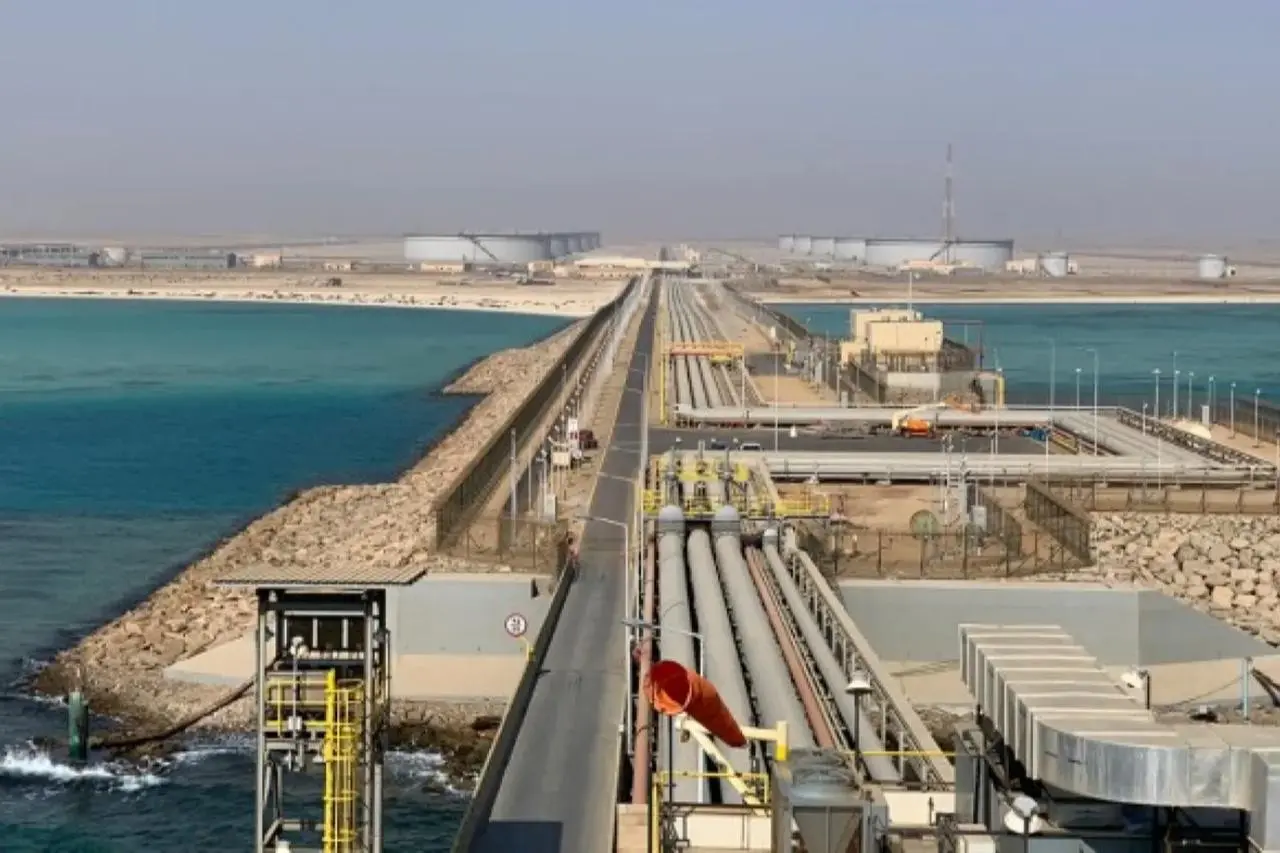
The Takeaway: Saudi Arabia’s East-West Pipeline kept operating after it was targeted in the Madinah Region on Monday, the Ministry of Energy said, with a limited fire put out by emergency teams and no injuries or deaths reported. The line lets Saudi crude reach export markets without passing through the Strait of Hormuz. In September, the swift return of East-West flows raised exports that bypass the strait by 970,000 barrels a day to 5.6 million, the International Energy Agency said, and Aramco said on 3 November that the pipeline continued to provide export flexibility.
Emergency and technical teams moved to secure the site after Monday’s attack on the East-West Pipeline in the Madinah Region, putting out a limited fire, the Ministry of Energy said.
Emergency teams secure the site as operations continue
An official source at the ministry said the pipeline was targeted on Monday 9 November, causing a limited fire that emergency response teams extinguished. No injuries or deaths were reported, and pipeline operations were unaffected.
The source said the teams took the measures needed to secure the site and confirm its safety, in line with established safety procedures and emergency plans.
Ministry reports no effect on operations this time
Monday’s account differs sharply from the ministry’s statement of 11 September. Then, an official source said the pipeline had been targeted several times on the morning of Thursday 10 September, in both the Riyadh and Madinah regions.
The line was then shut as a precaution. Those attacks caused some injuries, and the injured received medical care.
This time the ministry reports a limited fire in the Madinah Region, no injuries and no effect on operations. The incident came 60 days after the September attacks.
In September the source said teams were working with the relevant authorities and that any developments would be announced in due course.
In The Edge’s reading, Monday’s statement describes a line that absorbed an attack with no effect on operations, where the September attacks forced a precautionary halt.
Pipeline’s return lifted bypass exports as Saudi supply recovered
The pipeline’s flows let Saudi crude reach export markets without passing through the Strait of Hormuz. The International Energy Agency’s Oil Market Report of 14 October, set out here the same day, linked the pipeline to the September recovery. The swift return of East-West pipeline flows raised overall exports that bypass the strait by 970,000 barrels a day to 5.6 million that month.
Gulf crude exports, led by Saudi Arabia, surged 4.4 million barrels a day to 13.9 million in September. That took them above 75% of their pre-war level.
Saudi crude supply rose to 8.3 million barrels a day in September from 5.97 million in August, the agency’s production table shows. That is a gain of 2.33 million barrels a day in a single month. The agency said Saudi Arabia led OPEC+ supply gains of 2.1 million barrels a day.
Total oil flows through the Strait of Hormuz rose 3.7 million barrels a day to 10.9 million, helped by ship-to-ship transfers in the Gulf of Oman.
Middle East oil flows and Saudi crude supply, September 2026 (in million barrels a day)
| Measure | September | Change on August |
|---|---|---|
| Gulf crude exports | 13.9 | 4.4 |
| Strait of Hormuz flows | 10.9 | 3.7 |
| Exports bypassing Hormuz | 5.6 | 0.97 |
| Saudi crude supply | 8.3 | 2.33 |
Flows as published in the agency’s October report. The Saudi change is computed from the agency’s August and September supply figures.
The agency headed its account of the recovery “Fragile rebound”, warning that the recent escalation in attacks on regional energy infrastructure and tanker traffic threatened to derail further gains. It said the September attack on the pipeline and an exponential rise in freight rates compounded a rally that lifted North Sea Dated crude by $26.17 a barrel to $116.89 in September. The agency’s report dates that attack to 11 September; the ministry’s statement places the attacks on the morning of 10 September.
Monday’s statement that operations were unaffected means the bypass route behind part of that recovery kept working.
Pipeline continued to give export flexibility in the third quarter
Aramco’s third quarter results of 3 November, set out here that day, said the East-West Pipeline continued to provide export flexibility.
The company said a 9% rise on the year in adjusted net income, to $31.2 billion, was underpinned by operational excellence, rapid restoration capabilities, flexibility and resilience.
The company’s president and chief executive said geopolitical uncertainty and attacks on key energy facilities “continued to amplify the global energy supply crisis” in the quarter.
He said the company continues to explore additional overseas storage capacity and alternative export routes to strengthen its global supply network.
What to watch: The agency publishes its next Oil Market Report on 13 November 2026 at 09:00 GMT.
Figures are from the Ministry of Energy’s statements carried by the Saudi Press Agency on 9 November and 11 September 2026, the International Energy Agency’s Oil Market Report of 14 October 2026 and Aramco’s third quarter results of 3 November 2026; changes and comparisons not attributed to a source are The Edge’s calculations.
Sources: Saudi Press Agency, International Energy Agency, Aramco, The Edge.