Report: Twin Shocks: Energy Prices, AI Leverage and Global Financial Stability

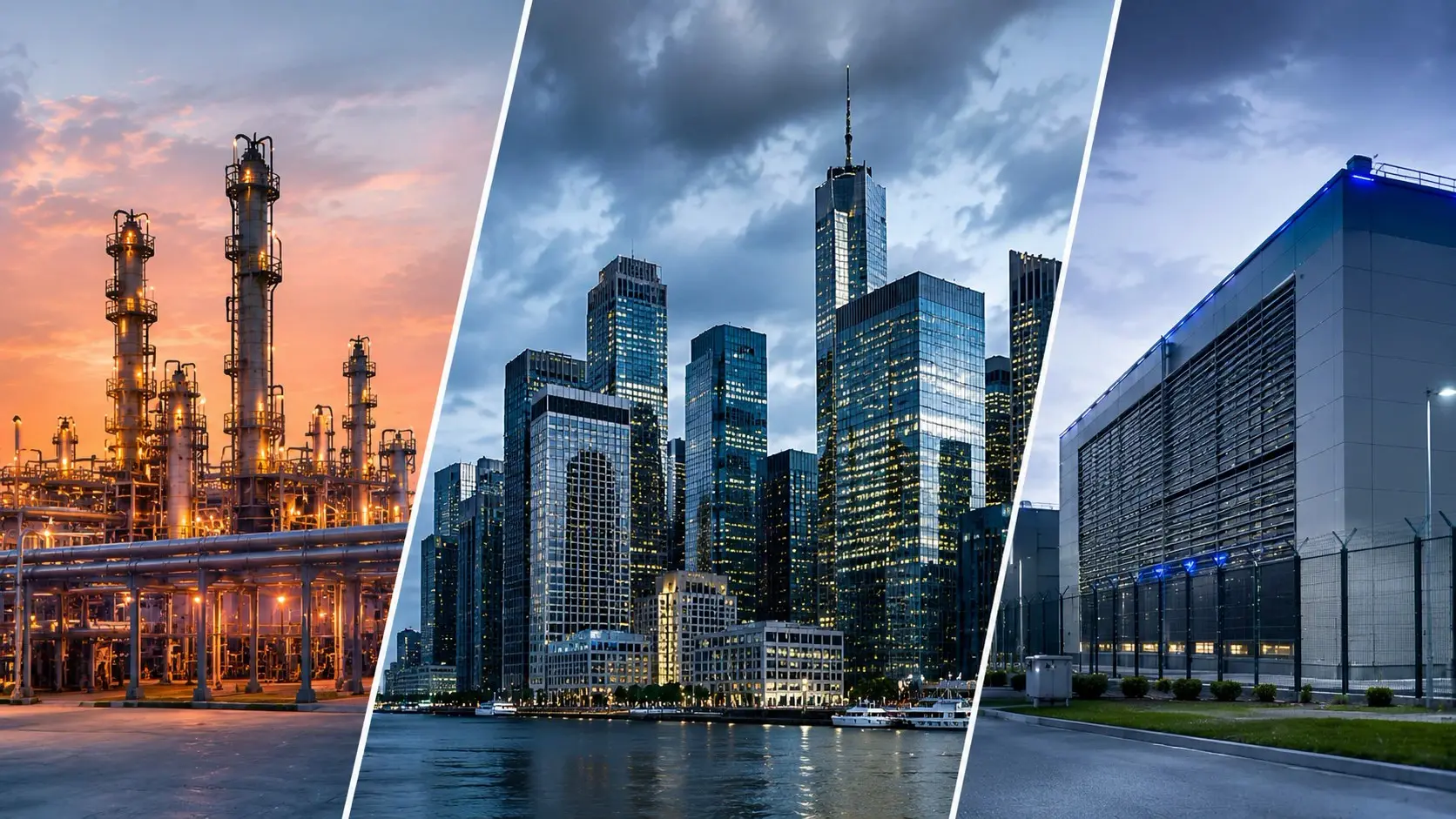
Report page: summary and downloads →
The Takeaway: The Edge’s new macroeconomic report reads the official record on two shocks at once: an energy shock that still holds Brent 29.2% above its prewar level, and an AI borrowing boom that added $208.2 billion of long-term debt at three hyperscalers in nine months. Only one official exercise, the IMF’s Global Bank Stress Test, models the two together, and it finds capital depletion rather than collapse. The report sets out the links that would have to align for anything worse, and the published markers that would show it first.
The Edge has published Twin Shocks, its macroeconomic report on how dear oil and the AI boom’s debt could meet in prices, interest rates and bank balance sheets. The full report, in English and Arabic, is available for download below.
The first shock is measured and visible. Brent crude stood at $92.14 a barrel on 11 November, still 29.2% above its level before the regional conflict began, on The Edge’s calculation from the US Energy Information Administration’s daily series. Energy has carried headline inflation to 3.7% in the United States, 4.0% in the euro area and 3.5% in Britain, and all three central banks have raised rates this year. The US two year Treasury yield has climbed 139 basis points since the end of 2025.
The second shock is still building on balance sheets. The five companies the IMF calls hyperscalers report capital spending between 1.7 and 3.4 times its level a year earlier, and fund more of it with debt. Three of them added $208.2 billion of reported long-term debt in nine months, larger lease commitments sit off the balance sheet, and Oracle’s November notes priced at 7% and above. In November the boom’s bellwether changed leadership abruptly, when Nvidia’s founder resigned as chief executive with immediate effect and the shares closed 4.34% lower.
Banks meet the boom partly at one remove, as lenders to private credit funds and other non-banks, an exposure the IMF puts at $1.44 trillion of US bank loans. In the Fund’s adverse stress test, which pairs an energy supply shock with a sharp AI repricing, banks holding 22% of global banking assets would emerge weak, against 18% a year earlier; it is a scenario classification, not a description of banks today, and no official baseline in the report projects a global recession or crisis.
Inside the Report
The report runs the official record end to end: the oil market’s turning points and the official 2027 price forecasts, inflation and policy rates in the major economies, hyperscaler spending, debt and lease commitments from the companies’ own filings, private credit and the banking system’s exposure to it, the energy the AI buildout needs, the IMF stress test unpacked, where the Middle East stands, and three qualitative paths to 2027 with the markers that would tell them apart, with ten tables and four charts built from the originators’ own publications.
Download the Report
The full report is available on the report page, with the English and Arabic editions for download: Twin Shocks: Energy Prices, AI Leverage and Global Financial Stability. The English edition is here and the Arabic edition is here.
What to watch: Nvidia’s third quarter results on Tuesday 17 November, the first under its interim chief executive, and UK and euro area October inflation on Wednesday 18 November.
Figures are as published in Twin Shocks: Energy Prices, AI Leverage and Global Financial Stability, The Edge, 13 November 2026; changes marked as The Edge’s are its calculations from the originators’ published figures. Sources: The Edge.