Lebanon’s Salam Reports Significant Progress Toward an Energy Agreement With Qatar

The Takeaway: Qatar has put a comprehensive energy proposal to Lebanon covering production as well as the supply of gas, and the two governments are preparing an intergovernmental agreement. Lebanon’s prime minister reported significant progress after talks in Doha, and an energy ministry technical team arrived the same evening. No financial terms have been published: Lebanon’s Council of Ministers has asked its energy minister to negotiate the tariff and guarantees and return with the outcome for a decision.
Lebanon’s Prime Minister Nawaf Salam said on Sunday that talks in Doha had brought significant progress in preparing an intergovernmental energy agreement between Lebanon and Qatar.
Salam met His Excellency Sheikh Mohammed bin Abdulrahman bin Jassim Al-Thani, Qatar’s Prime Minister and Minister of Foreign Affairs, on Sunday. Lebanon’s Energy and Water Minister Joe Saddi and Qatar’s Minister of State for Energy Affairs, Saad bin Sherida Al-Kaabi, joined them. The National News Agency said the meeting was devoted to Lebanese-Qatari cooperation in the electricity sector.
In a post on X after the meeting, the Lebanese prime minister said the two sides had further discussed Qatar’s comprehensive energy proposal, which covers both production and the supply of gas. A technical team from the energy ministry arrived that evening to follow up on the technical aspects, he wrote. The post gave no figures and no date for completing the text.
The Doha agenda ran from new power plants to talks on 20-year gas supply
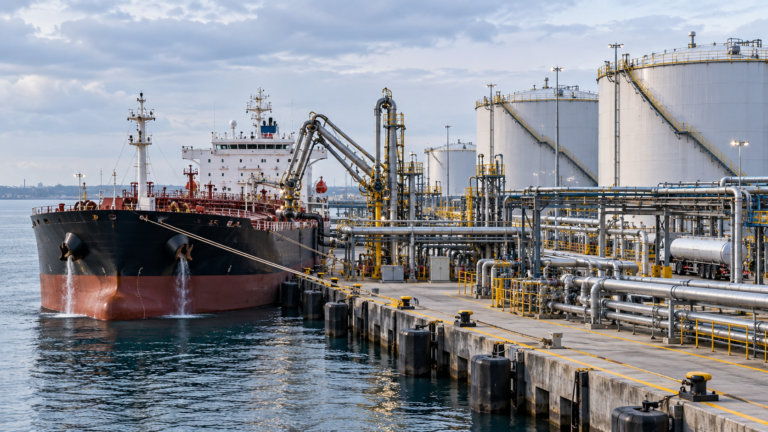
Before the meeting, the agency listed the projects on the table: developing power generation in Lebanon, importing gas and electricity via Syria, building new power plants and setting up a floating storage and regasification unit, a moored ship that turns liquefied natural gas back into gas.
Negotiations on a 20-year agreement for Qatar to supply liquefied natural gas were also on the agenda, alongside renewable energy projects. The agency’s reports, the prime minister’s post and the Qatar News Agency’s account give no volume, price or start date for that supply.
Salam’s account after the talks named production and gas supply. It did not say which of the listed projects the agreement being prepared would cover, and the table below sets the Doha agenda against what Lebanon’s cabinet recorded two days earlier.
Qatar’s proposals and the Doha agenda
| Project | Cabinet, 13 November | Doha agenda, 15 November |
|---|---|---|
| Power plants | Noted; faster delivery at Deir Ammar, Zahrani and Zouk to be explored | New plants listed |
| LNG import and regasification | Noted | Floating unit listed |
| LNG supply | Not among the Qatari items | 20-year deal under negotiation |
| Renewable energy | Noted | Listed |
| Battery storage | Noted | Not listed |
| Gas and power via Syria | Route not stated; the plan brings gas to Deir Ammar through the Arab Gas Pipeline | Listed |
Cabinet column: the projects proposed by Qatar that the Council of Ministers took note of, and the pipeline step of its own plan. Doha column: the agenda the agency published before the meeting; the statements issued afterwards did not report on each item.
Lebanon’s cabinet approved the plan the Qatari offer would feed
The talks came two days after Lebanon’s Council of Ministers approved Saddi’s power plan on Friday, as set out here on 14 November. It aims to lift generating capacity to at least 3,000 to 3,500 megawatts in the next few years, most of it from renewables, chiefly solar and wind, with battery storage.
Imported liquefied natural gas is the plan’s main near-term pillar. It would feed the existing Deir Ammar plant and the Zahrani and Zouk plants, so the state could stop burning costly liquid fuel oil, according to the official statement. Gas plants would provide the core capacity and keep the grid stable.
The cabinet took note of four projects proposed by Qatar: power plants, infrastructure to import and regasify liquefied natural gas, renewable energy and battery storage. Talks with Qatar are to explore building the plants at Deir Ammar, Zahrani and Zouk faster and easing the guarantees asked of the Lebanese state.
They are also to examine a government to government framework that brings in private companies under design, build, operate and transfer contracts, in which the builder runs a plant before handing ownership to the state.
The agreement now waits on its financial terms and a cabinet decision
The agreement is at the preparation stage. None of the statements reports a signing or a published text, and Salam described the progress as made in preparing it, not in concluding it.
On Friday the cabinet mandated Saddi to pursue the negotiations with the Qatari side and reach agreement on the full financial component, including the tariff, the guarantees and the government to government cooperation. He is to return to the Council of Ministers with the outcome for a decision. The published statements do not say whether any further approval would be needed after that.
The Qatar News Agency said the two prime ministers discussed ways to strengthen cooperation, particularly in the energy and economic sectors, in light of the outcomes of the Qatari prime minister’s recent visit to Lebanon. Sheikh Mohammed reiterated Qatar’s firm support for Lebanon’s stability, sovereignty and territorial integrity, and for efforts to strengthen Lebanese state institutions. The agency’s account did not refer to the agreement being prepared.
Salam also wrote that he had expressed to the Qatari prime minister Lebanon’s strong condemnation of the targeting of Qatari gas tankers.
In The Edge’s reading, the open question after Doha is the price rather than the principle. The published accounts name the projects and, before the meeting, a 20-year supply negotiation, but give no cost, volume or tariff, and the tariff and the guarantees are the terms the cabinet asked its minister to settle and bring back.
What to watch: the energy ministry team’s technical follow-up, and Saddi’s return to the Council of Ministers with the outcome of the negotiations on tariffs and guarantees. No date has been published for either.
Method: facts are from the National News Agency’s reports of 15 November 2026 on Prime Minister Nawaf Salam’s arrival in Doha, his meeting with the Qatari prime minister and his post on X; from the Qatar News Agency’s report of the same date; and from the official statement of Lebanon’s Council of Ministers of 13 November 2026, published by the Presidency of the Council of Ministers. The two-day interval between the cabinet session and the talks is The Edge’s calculation.
Sources: National News Agency (Lebanon), Presidency of the Council of Ministers (Lebanon), Qatar News Agency, The Edge.