UK to Legislate for Face-to-Face Banking as Review Finds Over 3 Million Rely on It

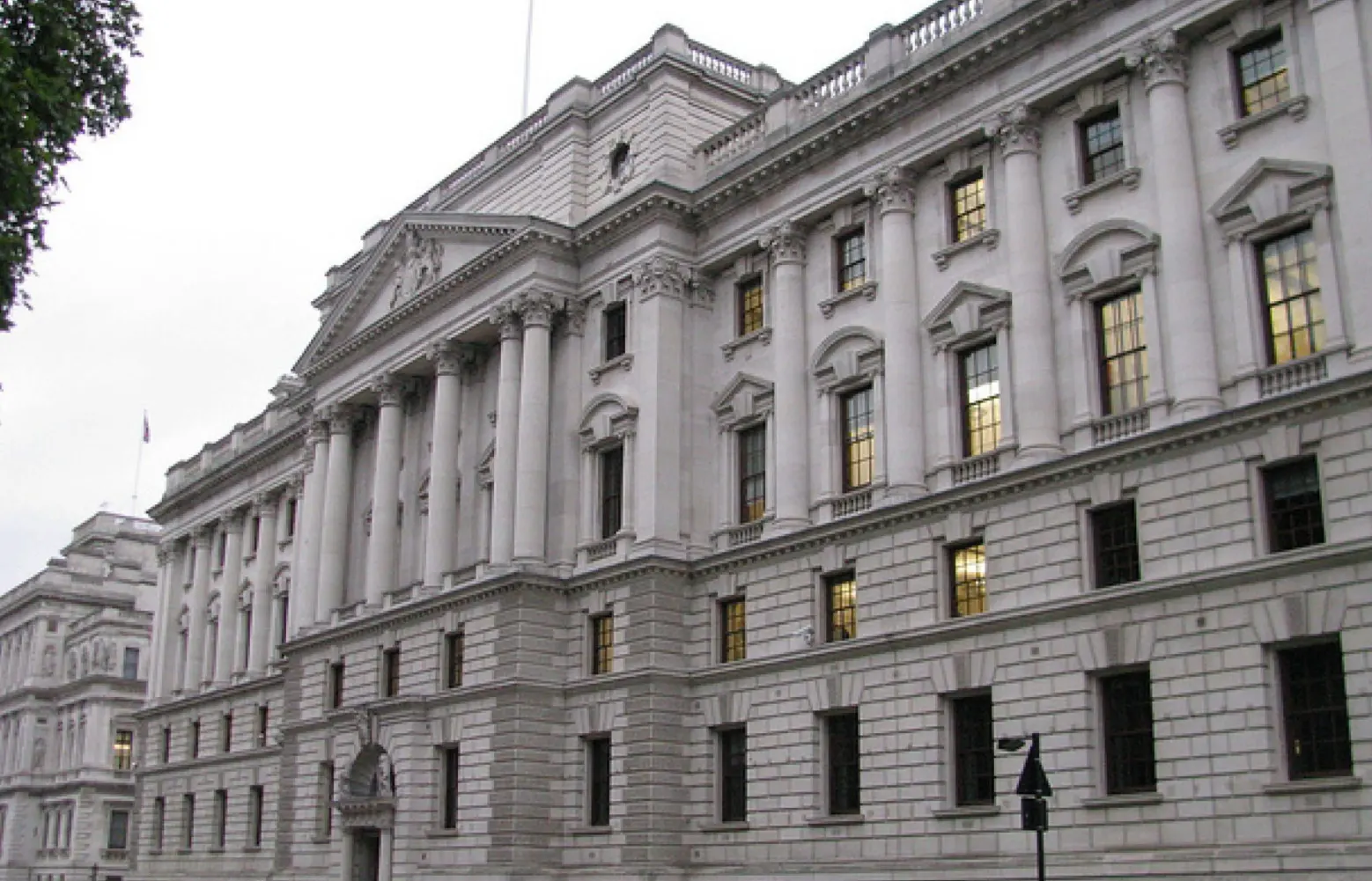
The Takeaway: Britain will put access to in-person banking on a statutory footing after HM Treasury accepted the central recommendation of an independent review chaired by Richard Lloyd. The review found that more than three million adults regularly rely on banking in person and that declining access has led to widespread poor outcomes and to harm that is material and recurring. The detailed framework, including what counts as reasonable access, will be designed with the Financial Conduct Authority, industry and consumer groups.
Banks and building societies have shut 2,382 branches since January 2021, and the UK government now says it will legislate to protect access to the face-to-face services that remain.
HM Treasury made the commitment on Monday 16 November, the day it published the report of the independent Review into Access to Banking Services, which it had commissioned to assess whether declining access to in-person banking is harming consumers. The review drew on more than 18,000 public responses, alongside evidence from businesses, charities, consumer groups and industry.
Its central recommendation is a new statutory framework, a legal duty set by Parliament rather than a voluntary industry scheme, to ensure people can keep reaching the essential banking services they need in person. The government said it accepts that recommendation and will legislate.
“We will act to protect the access they need,” said Lucy Rigby, Economic Secretary to the Treasury. She thanked Lloyd and the thousands who took part, and said the new framework must be agile and adaptable because both people’s needs and technology are changing quickly.
The review counts more than three million regular in-person users
More than three million adults in the UK regularly rely on banking services provided in person, rising to more than four million when less frequent users are included, according to evidence given to the review.
Face-to-face banking is particularly important for older people, disabled people, people on low incomes, those facing negative life events and those who find digital services harder to use, the Treasury said.
The report sorts essential services into two kinds. Day-to-day banking is built around opening and managing personal current accounts; for small businesses, charities and clubs it is built around cash, including deposits, withdrawals and coin change. Complex services are the tasks people face less often, after unplanned life events or in circumstances that need tailored support.
Declining access has led to widespread poor customer outcomes and to harm that is material and recurring, the review concludes, from financial costs and lost time to stress and reduced confidence. It cites estimates that around 40% of consumers have been unable to reach a local in-person banking service after cuts to banking infrastructure, and that nearly one in five of those affected could not complete the task they needed.
In responses to the review’s call for evidence, 34% of consumers named physical access as a difficulty. Older people were the group respondents most often said needed in-person services, cited by 57.9%, ahead of disabled and vulnerable consumers at 33.7%.
Regular branch use has more than halved since 2017
The number of day-to-day account holders visiting a branch at least once a month fell to 9.7 million in May 2024, from 19.8 million in 2017, according to the Financial Conduct Authority’s (FCA) Financial Lives survey as cited in the report. On The Edge’s calculation, that is a fall of 51%.
Day-to-day account holders visiting a branch at least monthly
| Year | Share (%) | People (million) |
|---|---|---|
| 2017 | 40 | 19.8 |
| May 2024 | 18 | 9.7 |
Visits to a specific branch over the previous year, as printed in the review report.
Cash keeps the remaining users coming. Some 41% of regular branch users go for cash-related activities, about 4.0 million people on The Edge’s calculation. And 34% of regular users had done non-cash or wider banking in a branch in the previous year, most often opening accounts or resolving problems.
The branches closed since the start of 2021 equal approximately 45% of the network, the report says. Lloyd’s foreword puts closures since the 1980s at around 15,000.
Three-mile branch coverage stands at 79.6% as rural areas trail
In 2025, 79.6% of the UK’s population lived within three miles of a branch of one of the larger banks and building societies offering personal current accounts, on FCA data quoted by the Treasury, against 87% in 2022. The report sources the 2025 figure to a three-mile measure, a slightly narrower radius than the five kilometres behind the 2022 figure, so the comparison is indicative rather than like-for-like. On that basis the decline is 7.4 percentage points in three years, on The Edge’s calculation.
Every nation for which the report prints both years shows lower coverage in 2025 than in 2022, again comparing three miles with five kilometres. Northern Ireland has the lowest coverage of the four, while Wales shows the largest fall of the three, 8.6 points, on The Edge’s calculation from the report’s figures.
Population near a larger bank’s branch (in %)
| Area | 2022 | 2025 | Change |
|---|---|---|---|
| UK | 87.0 | 79.6 | -7.4 |
| Scotland | 82.3 | 74.6 | -7.7 |
| Wales | 78.1 | 69.5 | -8.6 |
| Northern Ireland | 70.4 | 63.1 | -7.3 |
Larger banks and building societies providing personal current accounts and offering branches. Change in percentage points, The Edge’s calculation. Not shown: England, 81.2% in 2025; the report prints no 2022 figure for England. 2025 is within three miles and 2022 within five kilometres, as the report’s sources measure them, so the change is indicative, not like-for-like.
The divide between town and country is wider than any between nations. Across the UK, 28.7% of rural residents live within three miles of such a branch, against 91.5% in urban areas.
Coverage within three miles by area type, 2025 (in %)
| Area | Rural | Urban | Overall |
|---|---|---|---|
| England | 29.2 | 92.3 | 81.2 |
| Northern Ireland | 18.6 | 89.7 | 63.1 |
| Scotland | 26.6 | 85.9 | 74.6 |
| Wales | 33.6 | 86.8 | 69.5 |
| UK | 28.7 | 91.5 | 79.6 |
Larger banks and building societies providing personal current accounts and offering branches, second half of 2025, as reproduced in the review report.
Cash itself is closer to hand than a branch: at the end of 2025, 94.6% of the population lived within one mile of a physical cash access point, the report says.
Banking hubs and Post Offices cover part of the gap
Banking hubs, shared counters run by Cash Access UK and the Post Office where a different participating bank’s staff attend on each weekday, numbered 250 across the UK in September 2026.
The government’s terms of reference for the review restate its commitment to support the industry’s roll-out of 350 hubs by the end of this Parliament. On The Edge’s calculation, the network stands at 71% of that mark.
Hub customers completed more than 9 million transactions in 2025, worth GBP 1.58 billion in all. Of customers giving feedback, 95% said the hub had met their cash and banking needs, though the report finds understanding of hub services limited among users and non-users alike.
The Post Office operates around 11,800 branches, above its required minimum of 11,500. Customers of the banks and building societies signed up to its Banking Framework, a commercial agreement that runs to 2030, can use them for basic banking.
The duty would extend the FCA’s cash rules to wider banking
Only cash access has statutory protection today. The Financial Services and Markets Act 2023 set up the access to cash regime, under which the FCA writes rules requiring banks and building societies designated by the Treasury under the Act to assess and fill gaps in cash withdrawal and deposit services.
Beyond cash, the current framework is not equipped to tackle harm from the inaccessibility of banking, the review finds. The FCA’s branch closure guidance sets expectations on notice and alternatives, and its Consumer Duty, the requirement that firms avoid foreseeable harm to retail customers, does not prescribe channels and cannot be used to stop closures.
The report’s first recommendation is legislation as soon as possible to create an access to banking services obligation on designated banks, extending the FCA’s remit and powers. Those banks would have to assess and fill gaps in in-person provision across community catchment areas, consulting local authorities, charities, advice bodies, credit unions and other community groups.
They could meet the duty through their own branches or shared hubs, with standards set and supervised by the regulator, and anyone disagreeing with the outcome of an assessment would have a right to independent review, as under the cash regime. The review prefers a single combined regime for cash and banking, with one Treasury policy statement.
Personal current account holders report high satisfaction overall across branches, hubs, apps and digital channels, the review found, though sizeable groups face access barriers in every one of those channels. And 75% of day-to-day account holders used a mobile banking app in the 12 months to 2024.
The cost of physical provision is ultimately met by bank customers, Lloyd writes, and the government says the framework will be carefully targeted and proportionate while supporting competition and innovation.
In The Edge’s reading, the commitment would turn what has so far been a voluntary, industry-run safety net into a regulated duty, and the review’s own coverage tables show where it would matter most: in rural areas, where three-mile branch coverage trails urban coverage by 62.8 percentage points.
What to watch: The Treasury gave no date for the legislation; it will first design the framework with the FCA, industry and consumer groups, including what counts as reasonable access. The review judges it feasible for industry to act in 2027, so that new approaches can be piloted well ahead of any regulatory implementation period in 2028.
Method: figures are from HM Treasury’s press release of 16 November 2026 and the report of the independent Review into Access to Banking Services published the same day, which cites FCA, Cash Access UK and Post Office data. Percentage-point changes, the 51% fall in regular branch users, the estimate of cash users, the share of the hub target and the rural-urban gap are The Edge’s calculations.
Sources: HM Treasury, Access to Banking Services Review, Financial Conduct Authority, The Edge.