Oman and Uzbekistan Become Strategic Partners With 30 Accords and a $1bn Trade Goal

The Takeaway: Oman and Uzbekistan have raised their relationship to a strategic partnership, backed by 30 signed accords and a bilateral trade goal lifted to $1 billion. The documents include a plan to raise the capital of their joint investment company, which Uzbekistan says will double to $500 million. In The Edge’s reading, Oman’s ports sit at the center of the partnership: the joint communique casts them as the gateway for Uzbek products, and Uzbekistan as the gateway for Omani goods and investment into Central Asia and Eurasia.
His Majesty Sultan Haitham bin Tarik and President Shavkat Mirziyoyev of Uzbekistan raised ties to a strategic partnership on 17 November, with proposed joint projects worth about $5 billion.
The decision came during a two-day state visit by the Uzbek president to Oman on 16 and 17 November, according to the joint communique carried by the Oman News Agency (ONA). The two leaders held official talks at Al Alam Palace in Muscat and then presided over the exchange of the documents their governments had signed.
The communique said the visit produced 30 agreements and memoranda of understanding, which “form a solid foundation for the strategic partnership between the two nations.” Uzbekistan’s national news agency, UzA, reported the Agreement on Strategic Partnership as a separate text and put the documents exchanged at more than 30.
Thirty Accords Run From Visa Exemption to a New Commercial Bank
Memoranda of understanding account for 21 of the documents on the Omani agency’s itemized list, and the full breakdown is in the table below.
The framework agreement covers cooperation on setting up a new commercial bank in Uzbekistan. The other texts cover the strategic partnership, mutual visa exemption for holders of ordinary passports, customs cooperation and mutual assistance, the accession of the Uzbek Fund for Reconstruction and Development and the Central Asia and Caucasus Fund, the raising of the capital of the joint investment company, and the creation of an Omani-Uzbek Business Council.
The memoranda reach from economic diplomacy, local content and government procurement to agriculture and food security, health care, housing and urban planning, economic zones and transit corridors for goods. Oman Investment Authority (OIA) agreed a cooperation program with Uzbekistan’s Ministry of Investment, Industry and Trade, and Sultan Qaboos University signed with the International Islamic Academy of Uzbekistan.
The leaders also welcomed the signing of the terms of reference for a preferential trade agreement, the document that sets the scope of the talks, and committed to negotiations toward concluding it. The aim, the communique said, is to liberalize trade, diversify exports and widen market access. The Uzbek agency reported that the two sides agreed to adopt a roadmap for the agreements reached and to set up a Coordination Council to follow them.
The Trade Goal Doubles to $1 Billion
Trade between the two countries grew 70% in 2026, President Mirziyoyev told the Oman-Uzbekistan Business Forum and Exhibition in Muscat, according to the Omani agency, which gave no comparison period. The available potential, he said, led both sides to raise their ambitions.
They now target $1 billion, the Uzbek president said, instead of the previous target of $500 million; the Uzbek agency reported the new goal as one for the longer term. Opening the expanded talks, the Sultan had welcomed the agreement to raise trade to $500 million over the next few years, so the forum figure is twice that level.
The starting point is small. Bilateral trade came to about $2.3 million in 2025, Laziz Kudratov, Uzbekistan’s Minister of Investment, Industry and Trade, told the sixth session of the two countries’ joint committee for economic and trade cooperation in Muscat on the eve of the visit, according to the Foreign Ministry of Oman. In January to September this year it rose more than 70%, to $3.3 million, he said.
The Uzbek agency put the nine-month total at $3.2 million and described the volume as relatively modest, and the Sultan said the current volume of trade “still remains below our aspirations” and does not reflect the potential available to both sides.
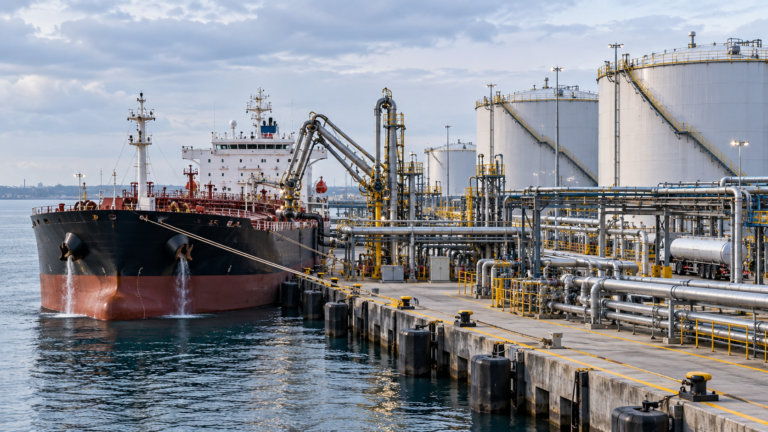
Ports and transport carry much of the plan. The communique casts Oman, through its ports, as a gateway for Uzbek products, and Uzbekistan as a gateway for Omani goods and investment into Central Asian and Eurasian markets. The Sultan pointed to corridors linking Uzbekistan to Omani ports, opening routes to the GCC states, India and East Africa, and encouraged Uzbek businesspeople to set up joint industrial projects in Oman.
The Uzbek president said the two sides agreed to build logistics infrastructure for Uzbek companies in Sohar and a single trade and logistics platform to cut transport costs, with projects in this field worth $350 million. Direct flights between the two capitals began in July, the Uzbek agency reported, and the forum discussed more flights and dedicated air cargo services.
A $5 Billion Portfolio Takes Shape in Industry and Mining
The portfolio of joint projects was put together during the visit, Mirziyoyev told the forum. The minister said work is under way on a package of agreements and projects worth close to $5 billion, covering energy, manufacturing, mining, logistics, agriculture, construction and digital technologies.
Electrical industries lead the list. Uzbekistan imports more than $200 million of cable and transformer products a year, the Uzbek president said, and talks with Omani companies produced understandings on projects in the sector worth close to $1 billion. That is close to five times the annual import bill he cited.
In minerals, he said, opportunities and projects worth $800 million have been identified in chemical industries, geological exploration and the development of promising mines. The Uzbek agency reported an agreement with Minerals Development Oman (MDO) for the joint development of copper-bearing areas in Uzbekistan, and an agreement signed with Al Tasnim Group on mining and processing critical industrial materials.
The three sector figures the president gave, for electrical projects, Sohar logistics and minerals, add up to about $2.15 billion; the Omani agency’s account does not say whether they form part of the $5 billion portfolio.
Omani and Uzbek companies signed 20 agreements and memoranda at the forum, said Faisal bin Abdullah Al Rowas, Chairman of the Oman Chamber of Commerce and Industry. The Omani agency listed sectors from industry, energy and mining to tourism, space and geographic information technologies, and automotive and artificial intelligence technologies.
The Uzbek agency also reported that Omani investors are taking part in the New Tashkent project, where a Muscat district is to be built, and that work is under way on a joint venture to launch satellites.
The Joint Investment Company Is Set to Double Its Capital
The authorized capital of the Uzbek-Oman Investment Company is to double to $500 million to promote joint projects, the Uzbek agency reported, which puts its current level at $250 million. The Omani agency’s list of documents includes the raising of the company’s capital.
The Sultan called the company “a successful model of practical economic cooperation” that has built a diversified investment portfolio. A feature the Uzbek agency published on the morning of the visit said the UzOmanCapital investment company has financed 15 projects totaling $255.7 million, and that eight enterprises with Omani capital operate in Uzbekistan.
Investment also runs the other way. Companies registered in Oman with Uzbek participation numbered 57 at the end of 2025, said Anwar bin Hilal Al Jabri, Minister of Commerce, Industry and Investment Promotion. In 2020 there were six, so the count has grown more than ninefold.
Kudratov told the forum that Uzbekistan’s gross domestic product grew 8.3% in the first nine months of 2026, and the communique records an invitation from Mirziyoyev for the Sultan to pay a state visit to Uzbekistan, which was accepted.
Projects and targets named during the visit (in $ millions)
| Item | Value |
|---|---|
| Joint-project portfolio | 5,000 |
| Trade target, new | 1,000 |
| Trade target, previous | 500 |
| Investment company capital, target | 500 |
| Electrical industry projects | 1,000 |
| Uzbek cable and transformer imports a year | 200 |
| Sohar logistics projects | 350 |
| Mining opportunities and projects | 800 |
| UzOmanCapital financing to date | 255.7 |
The Omani agency prints the portfolio as “approximately” $5 billion and the electrical projects as “close to” $1 billion. It puts the imports at “more than” $200 million. Only the Uzbek agency reported the investment company’s capital target and the UzOmanCapital financing; the previous trade target and the electrical, import, Sohar and mining figures are the Omani agency’s, and both agencies reported the portfolio and the new trade target.
Documents exchanged at Al Alam Palace, 17 November (count)
| Document | Count |
|---|---|
| Document of terms | 1 |
| Framework agreement | 1 |
| Agreements | 6 |
| Memoranda of understanding | 21 |
| Cooperation program | 1 |
| Total | 30 |
As itemized by the Omani agency; the total matches the joint communique’s 30 agreements and memoranda of understanding.
Method: figures are from the Oman News Agency’s reports of 17 November 2026 on the official talks, the exchange of documents, the joint communique and the Oman-Uzbekistan Business Forum and Exhibition, from UzA’s reports of the same day, and from the Foreign Ministry of Oman’s report of 15 November 2026 on the joint committee for economic and trade cooperation; the implied current capital of the investment company, the sum of the three sector figures, the import multiple and the growth in Omani-registered companies are The Edge’s calculations.
Sources: Oman News Agency, Foreign Ministry of Oman, UzA (National News Agency of Uzbekistan), The Edge.