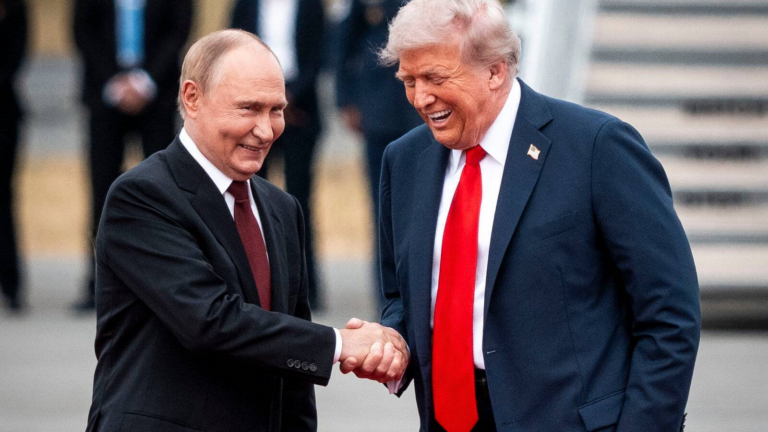
Trump’s Beijing Visit Puts US-China Tensions Back at the Center of Global Markets
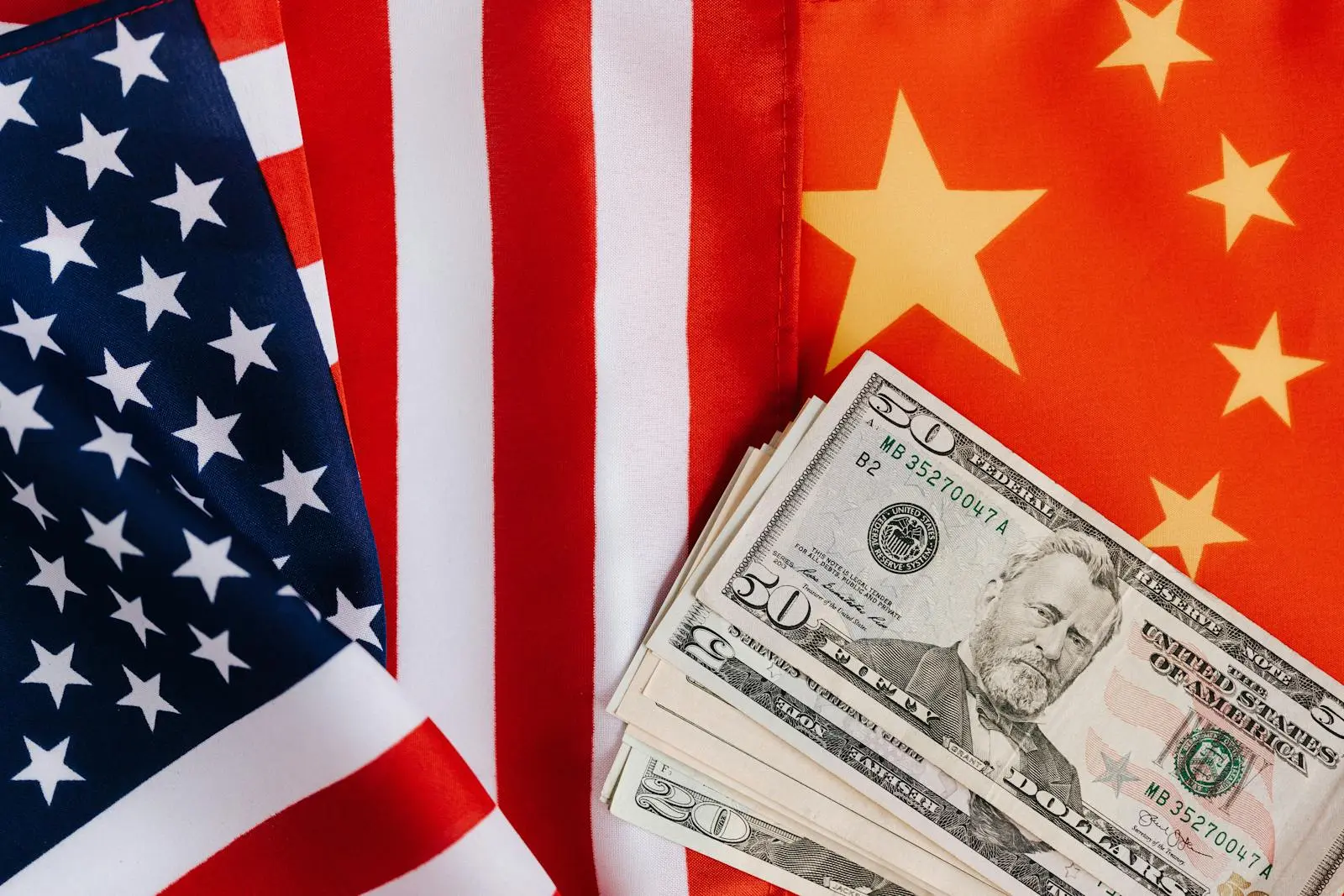
American and Chinese flags with US dollar banknotes.
President Donald Trump’s expected visit to Beijing marks the first visit by a US president to China since November 2017, placing the world’s two largest economies back in market focus.
The summit comes amid rising trade, technology, and geopolitical tensions, with key files including tariffs, semiconductor restrictions, artificial intelligence, rare earths, Taiwan, Middle East risks, and navigation security through the Strait of Hormuz.
ADVERTISEMENT
Sponsorships
Align your brand with trusted regional economic intelligence
Learn more →
Key insights:
- US-China goods trade reached USD 414.7 billion in 2025. US exports to China fell 25.8 percent to USD 106.3 billion, while imports from China declined 29.7 percent to USD 308.4 billion.
- The US goods deficit with China stood at USD 202.1 billion in 2025, down 31.6 percent from 2024, but still equal to around 49 percent of total bilateral goods trade.
- The deficit narrowed mainly because US imports from China fell by USD 130.4 billion, compared with a USD 36.9 billion decline in US exports, suggesting trade diversion rather than full decoupling.
- The 2024 US services surplus with China covered only about 16 percent of the 2025 goods deficit.
- Tariffs remain a central pressure point, while semiconductor controls, AI restrictions, and China’s rare earth leverage remain key supply chain risks.
The main takeaway is that this summit may reduce short-term uncertainty, but it is unlikely to resolve the deeper structural rivalry. Markets will watch whether it delivers practical de-escalation or simply extends a tactical pause in a longer phase of managed competition.
ADVERTISEMENT
Advertise with Us
Reach business leaders and decision makers across the region
Learn more →

Disclaimer: Information, opinions, market data, and content published by The Edge for Economic Consultancy Company W.L.L. on its website, social media channels, and other communications are provided for informational purposes only and do not constitute investment, financial, legal, or tax advice, nor an offer, solicitation, or recommendation regarding any security, financial instrument, or investment. Opinions are subject to change without notice. While sources are believed to be reliable, no representation or warranty is made as to the accuracy, completeness, or timeliness of any information. Past performance is not indicative of future results. Readers should seek independent professional advice before making financial decisions. To the fullest extent permitted by law, The Edge for Economic Consultancy Company W.L.L. shall not be liable for any loss arising from reliance on this content.