Egypt’s Agricultural Exports Exceed 5.8 Million Tons in the First Six Months as Citrus Leads and the Crop Mix Shifts
Egypt’s agricultural exports exceeded 5.8 million tons in the first six months of the year, Minister of Agriculture and Land Reclamation Alaa Farouk announced on Saturday, citing data from the ministry’s Central Administration for Agricultural Quarantine, up from the more than 5 million tons the ministry had reported as of 12 June, though the rounded totals do not allow a precise calculation of the increase.
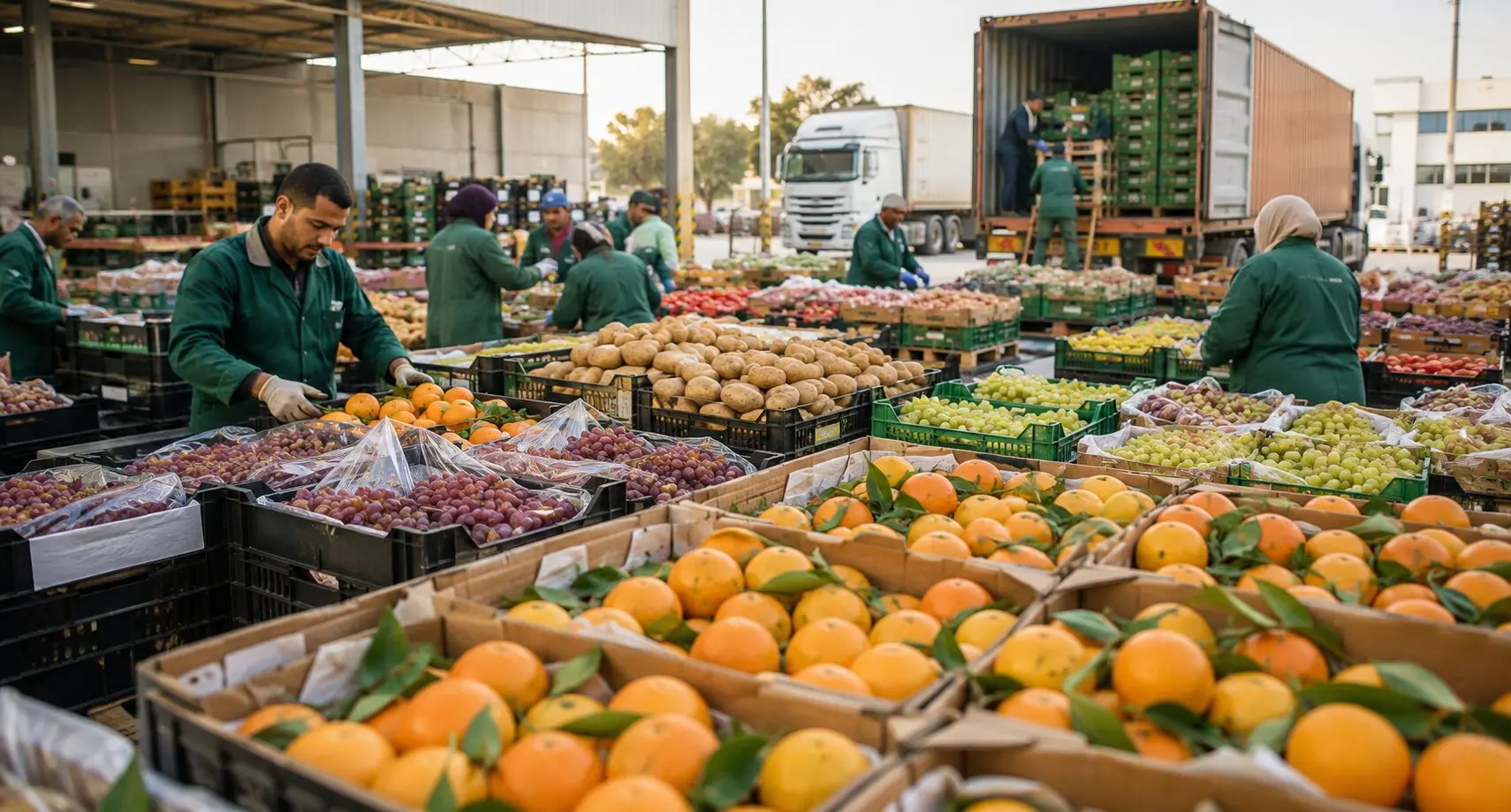
Citrus remained the top export at more than 2.2 million tons, followed by fresh potatoes at more than 908,000 tons, sweet potatoes at about 218,000 tons, grapes at more than 147,000 tons, fresh and dried beans at about 125,000 tons, fresh onions at more than 123,000 tons, fresh strawberries at more than 39,000 tons, garlic at about 34,000 tons and fresh tomatoes at about 20,000 tons, with guava and pomegranates also among the shipments. Citrus and potatoes together account for slightly more than half of the reported total, and the nine commodities with disclosed volumes sum to about 3.8 million tons, roughly two thirds of it, our calculations.
The aggregate needs careful reading. The ministry’s update at a comparable point last July also placed exports above 5.8 million tons, so the new tally does not by itself demonstrate growth in total volume over last year. What it does show is a markedly different mix: citrus, sweet potatoes and grapes are running higher than a year earlier, while potatoes, onions and beans are running lower, according to our reading of the two ministry datasets. The move is sharpest in grapes, where shipments of more than 147,000 tons stand at roughly two and a half times the 58,000 tons in the 12 June tally, our calculation, a jump that partly reflects the grape season reaching full swing.
The export push is running alongside market diversification. The ministry said in June that Egyptian produce had entered 21 new markets in the first half, including Uzbekistan and Vietnam in Asia and Mexico, Peru, Uruguay, Panama, El Salvador and the Dominican Republic in Latin America and the Caribbean, and the minister said the expansion reflects growing international confidence in Egypt’s monitoring and traceability systems. For full-year context, Egypt’s agricultural exports reached 9.5 million tons in 2025, up about 10.5 percent from 8.6 million tons in 2024, and the six-month tally already stands above 61 percent of last year’s full volume, our calculation, though the seasonal pattern of crop shipments makes a straight-line projection inappropriate.
Why it matters: Agricultural exports are one of the non-oil foreign currency earners Egypt is counting on while Suez Canal receipts remain depressed by the regional shipping disruption. The release reports physical volumes rather than values, so it confirms the scale and composition of shipments without establishing whether export earnings have risen; that outcome will depend on international prices, destination markets and the crop mix. On volumes, the sector enters the second half holding last year’s pace with a stronger weighting toward citrus and grapes.
Outlook: The markers to watch are whether the new markets opened this year begin absorbing commercially significant volumes, whether the strength in citrus, grapes and sweet potatoes offsets the lower runs in potatoes, onions and beans, and whether the ministry’s coming statements show the total moving clearly above the comparable 2025 level.
Table – Egypt’s agricultural exports by commodity, first six months:
| Commodity | Volume (thousand tons) |
|---|---|
| Citrus | 2,200+ |
| Fresh potatoes | 908+ |
| Sweet potatoes | ~218 |
| Grapes | 147+ |
| Beans (fresh and dried) | ~125 |
| Fresh onions | 123+ |
| Strawberries | 39+ |
| Garlic | ~34 |
| Fresh tomatoes | ~20 |
Sources: Egyptian Ministry of Agriculture and Land Reclamation; Egypt’s State Information Service.