Egypt’s Current Account Gap Widens to 14.6 Billion Dollars as Imports Jump, but Strong Inflows Hold the Overall Balance Steady
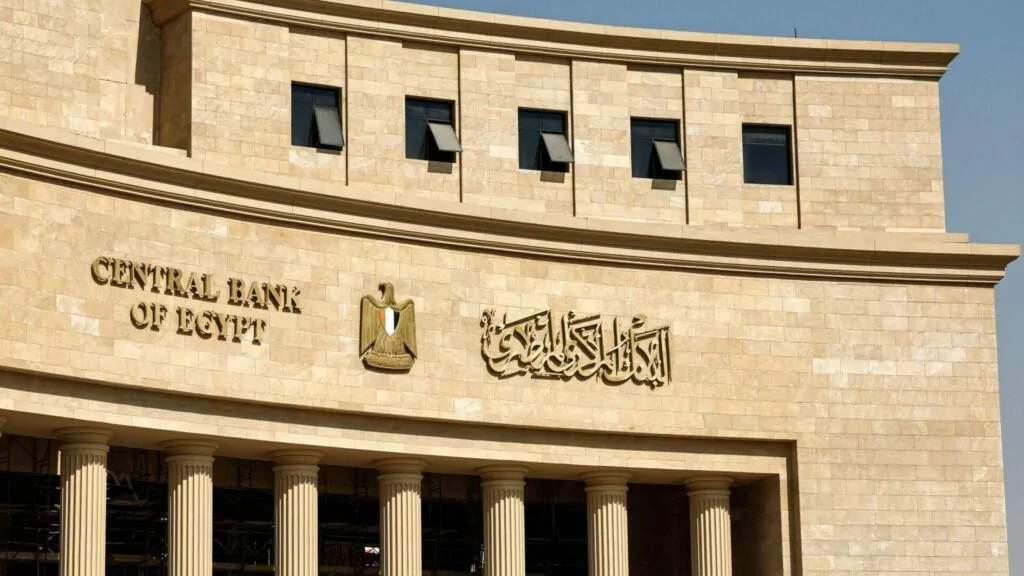
Egypt’s current account deficit widened to 14.6 billion dollars in the first nine months of the 2025/2026 fiscal year from 13.2 billion dollars a year earlier, the Central Bank of Egypt said in a statement on Sunday, as a 24.6 percent jump in the merchandise trade deficit to 47.8 billion dollars outweighed strong gains in remittances, tourism and Suez Canal receipts. The overall balance of payments still improved, with the deficit narrowing 2.9 percent to 1.8 billion dollars for July through March.
The foreign currency earners did the heavy lifting. Remittances from Egyptians working abroad rose 32.0 percent to 34.9 billion dollars, tourism revenues climbed 14.9 percent to 14.4 billion dollars, and Suez Canal transit receipts increased 22.1 percent to 3.2 billion dollars as net tonnage rose 18.5 percent to 426.9 million tons and transiting vessels increased 7.6 percent to about 10,000. The central bank said canal receipts have begun to regain their former levels, and the services surplus rose 19.2 percent to 12.9 billion dollars. Taken together, those three earners brought in combined gross receipts of 52.5 billion dollars, equivalent to about 110 percent of the merchandise trade deficit, our calculation, an illustration of scale; other payment lines still left the current account in deficit.
The widening came from the import side. Non-oil imports rose 15.6 percent to 61.9 billion dollars, with intermediate goods accounting for 44.3 percent of the increase, a composition the central bank noted is vital for production and higher growth. Non-oil exports rose 6.6 percent to 27.3 billion dollars, led by vegetables, household electric appliances, ready-made clothes and fruits. The oil trade deficit widened 26.8 percent to 13.1 billion dollars as natural gas imports rose by 2.6 billion dollars and crude imports by 831.1 million dollars on higher volumes. The investment income deficit grew 18.2 percent to 14.4 billion dollars, including 6.1 billion dollars in interest payments.
The financial account carried the strain of the conflict quarter. Foreign direct investment recorded a net inflow of 13.0 billion dollars, up from 9.8 billion; greenfield investment and capital increases brought a net 7.2 billion dollars of that, including the 3.5 billion received under the Alam El-Roum development deal in October through December, with reinvested earnings adding 4.5 billion. Portfolio investment, by contrast, swung to a net outflow of 4.4 billion dollars from a 2.1 billion inflow, driven by a 9.5 billion dollar outflow in January through March that the central bank said coincided with the outbreak of the regional conflict. Medium and long-term loans shifted to a net disbursement of 2.7 billion dollars from a net repayment a year earlier, and the capital and financial account overall brought in 9.9 billion dollars against 7.7 billion.
The quarterly arithmetic shows where the pressure landed. Against the 9.5 billion dollar first-half deficit in the central bank’s April release, the January-March quarter alone ran a current account gap of about 5.1 billion dollars, more than double the roughly 2.3 billion dollars of the year-earlier quarter, our calculation from the CBE’s successive releases. The full-period deficit is 10.1 percent wider year on year, our calculation. Canal receipts, while recovering strongly, remain about 45 percent below the 5.8 billion dollars of the same period two fiscal years ago, before the shipping disruption, our calculation.
Why it matters: This is the external position Egypt carried into the conflict quarter, and it held. A trade gap about 9.4 billion dollars wider and a 9.5 billion dollar quarterly portfolio outflow were absorbed by strong private inflows, and the overall balance still improved, consistent with the record 55.07 billion dollars in net international reserves at end-June covered on this site. The release reports the nine months through March; the full force of the strait disruption falls in the quarter that ended in June.
Outlook: The April-June release will capture the full conflict period: whether portfolio outflows extended or reversed, how far the canal’s recovery carried into the disruption, and what the strait disruption does to the oil import bill. IMF Executive Board consideration of the seventh review, following the June staff-level agreement, is the other marker on the external file; no board date had been published as of Sunday.
Table – Egypt’s balance of payments, July-March, in billions of dollars:
| Item | FY2024/25 | FY2025/26 |
|---|---|---|
| Current account balance | -13.2 | -14.6 |
| Trade balance | -38.3 | -47.8 |
| Non-oil exports | 25.6 | 27.3 |
| Oil exports | 4.2 | 4.2 |
| Non-oil imports | 53.6 | 61.9 |
| Oil imports | 14.5 | 17.3 |
| Services surplus | 10.8 | 12.9 |
| Workers’ remittances | 26.4 | 34.9 |
| Tourism, travel receipts | 12.5 | 14.4 |
| Suez Canal dues | 2.6 | 3.2 |
| Investment income balance | -12.2 | -14.4 |
| Net FDI in Egypt | 9.8 | 13.0 |
| Portfolio investment in Egypt | +2.1 | -4.4 |
| Capital and financial account | 7.7 | 9.9 |
| Overall balance | -1.9 | -1.8 |
Sources: Central Bank of Egypt; CNBC; International Monetary Fund.