Egypt Moves to Turn Car Assembly Into a Hard-Currency Earner as Three Manufacturers Reportedly Seek to Start Exports This Year
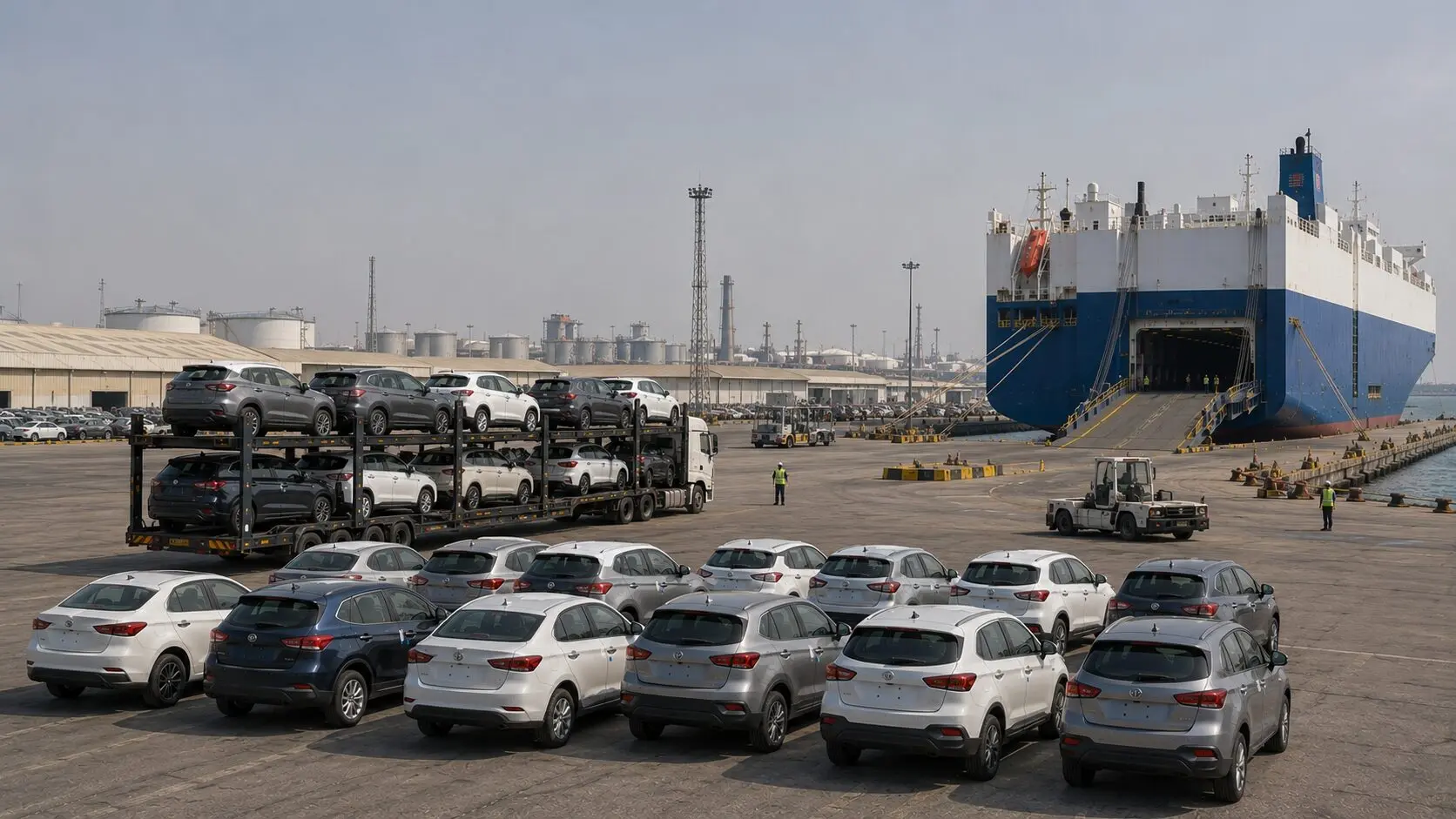
Three car manufacturers operating in Egypt have applied to the Ministry of Industry to begin exporting locally assembled vehicles in the final quarter of the year, according to a report by Asharq Business citing a government official, in an early test of the state’s push to turn the assembly industry into a source of the foreign currency the economy needs most. The companies are reported to target 10,000 to 30,000 vehicles in the first year, building toward 100,000 a year by 2030, with Arab and African markets as the first destinations.
The push sits on an official framework. Egypt’s national automotive strategy targets production of 400,000 to 500,000 vehicles a year by 2030, with a quarter of output earmarked for export, a flow the government projects at about 4 billion dollars a year in hard currency. A revamped seven-year automotive industry development programme took effect in 2025, paying incentives tied to actual production, local content, investment and exports, with a 60 percent local value added target and a local industrial component ratio above 35 percent, and the state allocated 90 billion pounds in the 2026/2027 budget to support production and exports across industry.
The export base is already established. Exports of cars and components reached 1.27 billion dollars last year and 434.6 million dollars in the first four months of 2026, according to figures attributed to the Engineering Export Council in Egyptian press reports. Nissan, one of the reported applicants, has shipped about 25,000 Egyptian-built vehicles to African markets over three years, and the State Information Service has carried the company’s description of Egypt as an export hub for Africa.
The foreign currency logic is direct. The central bank’s balance of payments release on Sunday showed non-oil imports rising 15.6 percent to 61.9 billion dollars in the nine months to March while non-oil exports reached 27.3 billion dollars, and vehicles remain a heavy import line. Localizing assembly and exporting a quarter of it works on both sides of that ledger at once, cutting the import bill while adding export receipts, our reading. Net international reserves stood at a record 55.07 billion dollars at end-June.
Why it matters: Egypt’s external accounts are carried today by remittances, tourism and the canal; manufactured exports are the missing pillar. A 4 billion dollar annual automotive export flow, if the 2030 targets hold, would rank alongside Suez Canal receipts as a hard-currency earner and would be the clearest evidence yet that the localization programme is generating exportable capacity rather than just import substitution.
Outlook: The markers are the ministry’s decision on the export applications, whether shipments actually begin in the fourth quarter, and the localization rates the new programme certifies, which determine both the incentive payouts and the export economics.
Table – Egypt’s automotive export push, key numbers:
| Item | Figure |
|---|---|
| Car and component exports 2025 | $1.27 billion, attributed |
| Exports Jan-Apr 2026 | $434.6 million, attributed |
| Reported first-year export target | 10,000-30,000 vehicles |
| Reported 2030 export target | 100,000 vehicles/year |
| Strategy production target 2030 | 400,000-500,000 vehicles/year |
| Projected export proceeds | ~$4 billion/year |
| Budget support FY2026/27 | EGP 90 billion, production and exports |
Sources: Asharq Business report; Central Bank of Egypt; Egypt’s State Information Service.