Europe Market Wrap 25 August: German Data Beat Lifts the DAX as Sector Leadership Turns Over

The Stoxx Europe 600 rose 0.35 percent to 656.48 on Tuesday, but the benchmark’s modest gain is the least interesting number of the session. Beneath it, six of the eight Stoxx Europe 600 sector indices we track changed direction from Monday, on our calculation, and the sector that led Monday’s market by the widest margin finished last. Only three of the fourteen national and regional benchmarks we track fell, and the strongest gains were concentrated in the Nordic markets and Germany.
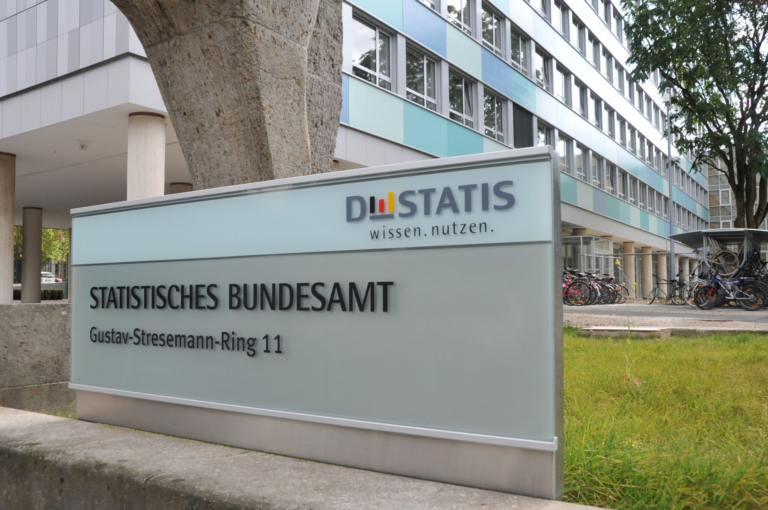
The macro anchor came from Germany. The Federal Statistical Office revised second-quarter gross domestic product up to 0.3 percent quarter on quarter from the 0.2 percent flash estimate published on 30 July, with growth of 1.0 percent year on year, and attributed the upgrade primarily to exports, which rose 2.0 percent on the quarter. Gross fixed capital formation fell 0.2 percent. Separately the Ifo business climate index rose to 88.8 in August from 86.7 in July, its highest reading in a year and above the 87.2 that analysts had forecast in a Reuters poll, as reported by Reuters. Statistics office president Ruth Brand said the German economy “is maintaining the growth momentum seen at the start of the year”, per Reuters, which noted that output has now grown modestly for three consecutive quarters after two quarters of stagnation in 2025.
Where the money went
Finland’s OMX Helsinki was the strongest board in Europe, up 1.58 percent to 13,712.16, reversing Monday’s 0.37 percent decline. Sweden’s OMXS30 added 0.83 percent to 3,318.26 and Denmark’s OMXC 25 rose 0.77 percent to 1,935.07. Germany’s DAX gained 0.61 percent to 26,266.14 on the data, a full reversal of Monday’s 0.11 percent slip.
Portugal’s PSI 20 rose 0.57 percent to 9,445.44 and Switzerland’s SMI 0.54 percent to 14,525.29. Belgium’s BEL 20 added 0.36 percent to 5,834.53 and Italy’s FTSE MIB 0.34 percent to 52,720.31. The FTSE 100 in London closed 0.29 percent higher at 10,886.16 and the Euro Stoxx 50 added 0.12 percent to 6,455.63.
Three boards finished lower, and all three had been among Monday’s stronger performers. Spain’s IBEX 35, up 0.69 percent on Monday and the strongest of the large national markets that session, was Tuesday’s weakest at minus 0.21 percent to 20,056.60. The CAC 40 in Paris fell 0.16 percent to 8,439.20 and the AEX in Amsterdam 0.15 percent to 1,108.34.
The sector table turned over
The eight Stoxx Europe 600 sector indices we track produced a spread of 2.28 percentage points between best and worst, narrower than Monday’s 2.96 points, on our calculation, but six of the eight changed direction. Healthcare, Monday’s third weakest sector at minus 0.83 percent, led on Tuesday with a gain of 1.25 percent to 1,171.39. Telecommunications rose 1.08 percent to 289.10 and basic resources 0.91 percent to 865.50.
Personal and household goods, the index that carries the European luxury complex and Monday’s clear leader at plus 1.39 percent, was Tuesday’s worst at minus 1.03 percent to 978.52. Banks, up 0.63 percent on Monday, eased 0.23 percent to 426.88. Automobiles and parts, Monday’s second weakest, fell a milder 0.34 percent to 445.82. Two sectors held their Monday standing: basic resources was strong on both days and automobiles weak on both, so this was a sharp rotation rather than a clean reversal.
The most instructive line is oil and gas. The sector index finished effectively unchanged at 537.21, a gain of 0.07 percent, on a session in which Brent crude fell close to 4 percent. Reuters reported that shares in BP and Shell dipped as crude declined more than 3 percent, with traders treating the latest United States sanctions campaign as posing less risk to physical supply than a military escalation would. That a sector benchmark can absorb a near 4 percent fall in the underlying commodity and finish flat is consistent with investors reading the decline as the unwinding of a supply risk premium rather than as a signal about energy demand. One session is not proof of that reading, but it is the more natural explanation for the divergence.
Outside the eight we track, industrial goods and services rose 1.13 percent and construction and materials 0.93 percent, the latter alongside the United Kingdom housing announcement described below.
London’s housebuilders and the day’s corporate tape
The Ministry of Housing, Communities and Local Government announced nearly 10 billion pounds of allocations on Tuesday, the first wave of funding from the government’s 39 billion pound Social and Affordable Homes Programme. The release states the first wave will support delivery of more than 70,000 homes across England through 33 strategic partners, comprising councils, housing associations and other providers. Reuters put the figure at about 13.6 billion dollars and reported that around 60 percent of the homes are intended for social rent, a subsidised tenure built by local councils or housing associations.
The market response was immediate. Reuters reported that the homebuilders index rose 1.9 percent and that Vistry jumped 15.6 percent, leading gains in the midcap index, after receiving initial funding of 350 million pounds to deliver more than 3,000 affordable homes under the programme. At 11:14 GMT Reuters had the FTSE 100 up 0.2 percent at 10,880.17 and the midcap FTSE 250 up 0.6 percent at 24,866.99.
In Germany, Reuters reported that Volkswagen chief executive Oliver Blume faces two rival restructuring proposals submitted by labour and state government stakeholders ahead of the carmaker’s supervisory board meeting on 4 September, after he addressed more than 10,000 workers at the Wolfsburg headquarters on the first stop of a tour of German plants. In Italy, Reuters reported that Economy Minister Giancarlo Giorgetti said the Treasury will not sell its 4.8 percent stake in Monte dei Paschi di Siena until the contest for control of the bank concludes.
Italy’s 10-year yield holds below France’s, and the gap widened
The relationship we flagged on Monday held and extended. At 16:09 GMT the Italian 10-year benchmark yield stood at 4.0066 percent against the French 10-year at 4.0564 percent, leaving the Italian benchmark 5.0 basis points below the French, wider than the 4.6 basis points recorded at our capture on 24 August, on our calculation. Measured against the German 10-year at 3.2040 percent, the Italian spread was 80.3 basis points and the French 85.2 basis points, both tighter than Monday. The 10-year gilt at 4.9912 percent stood 178.7 basis points over the Bund.
All four benchmarks richened on the day, by between 4.7 and 6.9 basis points against our own intraday capture of 24 August. A major euro-area sovereign long associated with a higher fiscal risk premium now yields less at 10 years than the currency union’s second-largest economy, and the gap is widening rather than closing. These are traded benchmark yields rather than either government’s current marginal funding cost, but they are the reference both markets price against.
Currencies, commodities and the wider tape
The euro firmed 0.08 percent against the dollar to 1.1671 and sterling added 0.03 percent to 1.3634, with the ICE dollar index down 0.05 percent at 98.949. Brent crude for October delivery fell 3.82 percent to 88.65 dollars a barrel and West Texas Intermediate for October 3.46 percent to 82.07 dollars, a second consecutive session of sharp declines. COMEX gold for December rose 0.24 percent to 4,708.90 dollars and September silver 0.32 percent to 68.82 dollars. The United States 10-year Treasury yield fell about 5.7 basis points to 4.647 percent, the VIX eased 1.89 percent to 15.55 and bitcoin gained 0.73 percent to 79,374.56 dollars.
Wall Street was higher through the European close, with all four major United States benchmarks in positive territory at the time of our capture.
European equities, 25 August close
| Index | Close | Change |
|---|---|---|
| OMX Helsinki (Finland) | 13,712.16 | +1.58% |
| OMXS30 (Sweden) | 3,318.26 | +0.83% |
| OMXC 25 (Denmark) | 1,935.07 | +0.77% |
| DAX (Germany) | 26,266.14 | +0.61% |
| PSI 20 (Portugal) | 9,445.44 | +0.57% |
| SMI (Switzerland) | 14,525.29 | +0.54% |
| BEL 20 (Belgium) | 5,834.53 | +0.36% |
| Stoxx Europe 600 (Europe) | 656.48 | +0.35% |
| FTSE MIB (Italy) | 52,720.31 | +0.34% |
| FTSE 100 (United Kingdom) | 10,886.16 | +0.29% |
| Euro Stoxx 50 (euro area) | 6,455.63 | +0.12% |
| AEX (Netherlands) | 1,108.34 | -0.15% |
| CAC 40 (France) | 8,439.20 | -0.16% |
| IBEX 35 (Spain) | 20,056.60 | -0.21% |
Stoxx Europe 600 sector indices, 25 August close
| Sector | Close | Change |
|---|---|---|
| Healthcare | 1,171.39 | +1.25% |
| Telecommunications | 289.10 | +1.08% |
| Basic resources | 865.50 | +0.91% |
| Technology | 1,016.99 | +0.21% |
| Oil and gas | 537.21 | +0.07% |
| Banks | 426.88 | -0.23% |
| Automobiles and parts | 445.82 | -0.34% |
| Personal and household goods | 978.52 | -1.03% |
European 10-year benchmark government bond yields, intraday 25 August
| Government bond | Yield | Change |
|---|---|---|
| United Kingdom 10-year | 4.9912% | -6.7 bp |
| France 10-year | 4.0564% | -6.5 bp |
| Italy 10-year | 4.0066% | -6.9 bp |
| Germany 10-year | 3.2040% | -4.7 bp |
Commodities, intraday 25 August
| Contract | Level | Change |
|---|---|---|
| COMEX gold, December 2026 | $4,708.90 | +0.24% |
| COMEX silver, September 2026 | $68.82 | +0.32% |
| ICE Brent crude, October 2026 | $88.65 | -3.82% |
| WTI crude, October 2026 | $82.07 | -3.46% |
Currencies, rates, volatility and crypto, intraday 25 August
| Instrument | Level | Change |
|---|---|---|
| Bitcoin | $79,374.56 | +0.73% |
| USD/JPY | 159.22 | +0.09% |
| EUR/USD | 1.1671 | +0.08% |
| GBP/USD | 1.3634 | +0.03% |
| ICE dollar index | 98.949 | -0.05% |
| VIX | 15.55 | -1.89% |
| US 10-year Treasury yield | 4.647% | -5.7 bp |
| USD/KWD, Central Bank of Kuwait | 0.306850 | official rate, 25 August |
| USD/EGP, Central Bank of Egypt | 50.3513 buy / 50.4906 sell | official rate, 25 August |
United States, intraday 25 August, for reference
| Index | Level | Change |
|---|---|---|
| Nasdaq Composite | 26,129.33 | +0.57% |
| Russell 2000 | 3,005.80 | +0.36% |
| S&P 500 | 7,672.75 | +0.26% |
| Dow Jones Industrial Average | 53,497.35 | +0.15% |
Asia, 25 August close, for reference
| Index | Close | Change |
|---|---|---|
| Kosdaq (South Korea) | 827.15 | +1.70% |
| Straits Times (Singapore) | 5,735.68 | +0.97% |
| Taiex (Taiwan) | 45,169.46 | +0.91% |
| Kospi (South Korea) | 6,742.74 | +0.68% |
| S&P/ASX 200 (Australia) | 9,164.60 | +0.68% |
| Nikkei 225 (Japan) | 65,856.43 | +0.50% |
| Topix (Japan) | 4,093.67 | +0.50% |
| Nifty 50 (India) | 24,334.55 | +0.48% |
| Shanghai Composite (China) | 3,889.45 | +0.19% |
| Hang Seng (Hong Kong) | 25,511.10 | -0.02% |
| Shenzhen Component (China) | 13,745.87 | -0.35% |
Middle East, 25 August close, for reference
| Index | Close | Change |
|---|---|---|
| Tadawul All Share (Saudi Arabia) | 11,231.61 | +0.51% |
| MSCI Tadawul 30 (Saudi Arabia) | 1,512.92 | +0.50% |
| QE Index (Qatar) | 9,785.09 | +0.46% |
| FTSE ADX General (Abu Dhabi) | 10,070.02 | +0.22% |
| EGX 30 (Egypt) | 55,277.03 | +0.20% |
| Kuwait Premier Market | 9,321.47 | +0.03% |
| MSX 30 (Oman) | 7,502.53 | +0.02% |
| Kuwait All-Share | 8,901.90 | +0.02% |
| Nomu Parallel Market (Saudi Arabia) | 21,622.39 | -0.11% |
| DFM General (Dubai) | 5,834.57 | -0.53% |
European closes taken from each exchange or index administrator after its own close on 25 August 2026. Sector indices, bond yields, commodities, currencies, volatility, crypto and United States levels are a single intraday capture taken at 16:09 GMT and may differ from later screen values; the United States session was still open at that time. Bond yield changes are measured against our own intraday capture of 24 August and are not close-to-close moves. Asian and Middle East closes are carried from our Asia and Middle East wraps of the same date. Sources: Euronext Paris, Amsterdam, Brussels and Lisbon; Deutsche Boerse; London Stock Exchange; Borsa Italiana; BME Exchange; SIX Swiss Exchange; Nasdaq for the Nordic indices; STOXX; CNBC for sector indices, bond yields, commodities, currencies, volatility, crypto and United States levels; Federal Statistical Office of Germany; Ministry of Housing, Communities and Local Government of the United Kingdom; Reuters; Central Bank of Kuwait; Central Bank of Egypt; The Edge calculations.
WHY IT MATTERS
Two sessions that produce similar benchmark outcomes and largely opposite sector outcomes are not the same market twice. Monday’s tape rewarded luxury and banks and punished healthcare, technology and energy; Tuesday reversed each of those four. Miners were strong on both days and carmakers weak on both, so this was a sharp rotation, not a wholesale change of view. That pattern is more consistent with positioning being unwound and reset than with investors forming a fresh judgment on European growth, and it argues for treating a single session’s sector ranking as noise until it persists.
The German data is the exception, because it is the one input that changed the underlying picture rather than the day’s flows. A second-quarter growth rate revised up on the back of exports, arriving alongside a business climate index at a one-year high, is the third consecutive quarter of modest expansion after two quarters of stagnation. For Gulf exporters of petrochemicals, aluminium and refined products, a German industrial base that is expanding rather than contracting is a demand story that outlasts any single equity session.
The sovereign market carried the more consequential signal for a second day. Italy’s 10-year yield is not merely below France’s, the gap widened, and both tightened against the Bund. If that ordering persists it reflects a repricing of relative fiscal risk inside the euro area rather than a technical dislocation.
WHAT IS AHEAD
Nvidia reports second-quarter results after the United States close on Wednesday at about 20:20 GMT, and the United States releases July personal consumption expenditures inflation the same day at 12:30 GMT. The Jackson Hole symposium runs from Thursday to Saturday with the Federal Reserve chair’s keynote on Friday. Volkswagen’s supervisory board meets on 4 September on the restructuring plan. Boursa Kuwait is closed on Thursday 27 August for the birth of the Prophet Muhammad, peace be upon him, and resumes on Sunday 30 August.