Syria’s H1 2026 Deficit Reaches 1 Billion Dollars as Spending Already Exceeds All of 2025
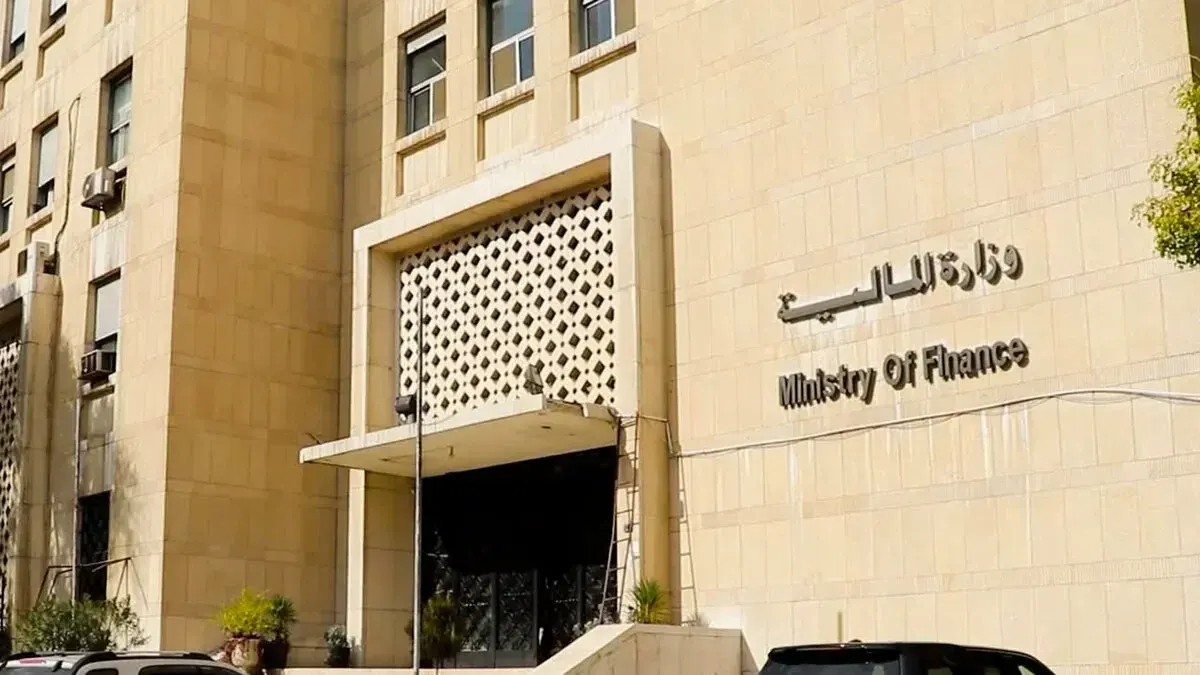
Syria recorded public revenues of about 2.7 billion dollars in the first half of 2026 against expenditure of about 3.7 billion dollars, leaving a fiscal deficit of roughly 1 billion dollars, according to the Ministry of Finance’s first half budget performance report. Revenue increased 111 percent from the first half of 2025, while expenditure increased 331 percent, meaning spending grew roughly three times faster than revenue.
More Than Half the Planned Annual Deficit Has Already Appeared
The Ministry of Finance budgeted 8.716 billion dollars of revenue and 10.516 billion dollars of expenditure for 2026, implying a full year deficit of 1.799 billion dollars, equivalent to 5.3 percent of projected GDP of 33.7 billion dollars. The 1 billion dollar deficit reported for January through June is an actual first half result, not the full year budget gap, and it already represents about 55.6 percent of the entire deficit budgeted for 2026, on our calculation.
Revenue execution stood at approximately 31 percent of the full year target, while spending execution reached about 35 percent, per the ministry’s own rounded figures. On our calculation from the ministry’s first half totals against the full year budget, spending execution was closer to 35.2 percent.
That leaves demanding second half arithmetic. To reach the annual budget figures, Syria would need to collect another 6.016 billion dollars between July and December and spend another 6.816 billion dollars, on our calculation. That would require second half revenue to be about 123 percent higher than first half revenue, while second half expenditure would have to be about 84 percent higher.
Six Months of Spending Already Exceeds All of 2025
The ministry reported total 2025 revenue of 3.493 billion dollars and expenditure of 3.447 billion dollars, leaving a small 46 million dollar surplus, the first reported annual surplus since 1990. First half 2026 expenditure of 3.7 billion dollars is therefore already about 7.3 percent greater than Syria spent during the whole of 2025, on our calculation. First half revenue is already equivalent to about 77.3 percent of the entire 2025 revenue total.
The full 2026 budget is larger still. Planned revenue is about 149.5 percent above the 2025 outturn, while planned spending is about 205.1 percent higher, on our calculation, meaning the budget assumes spending will more than triple in a single year while revenue rises to roughly two and a half times its 2025 level.
Hydrocarbon Revenue Becomes Critical in the Second Half
The annual budget expects approximately 2.434 billion dollars from oil and gas, equal to about 27.9 percent of total revenue. Taxes and fees account for 2.500 billion dollars and customs for another 1.900 billion dollars, meaning taxes, fees and customs together account for roughly 50.5 percent of projected revenue, on our calculation. Oil and gas receipts only began transferring to the ministry in May, which helps explain why annual revenue execution was still only around 31 percent after six months.
The International Monetary Fund said in August that Syria’s 2025 budget ended with a small surplus and that tax and customs revenue had risen significantly in the first half of 2026, driven partly by rising hydrocarbon revenue and one off receipts including telecom license and fuel transit fees. It added that resource constraints will likely require capital spending to be contained in 2026.
Why it matters:
Syria’s fiscal recovery is no longer primarily a story about revenue rebounding from a low base. The more important 2026 development is that expenditure is rising far faster than revenue. The first six months have already consumed more than half of the deficit planned for the entire year, and spending in those six months exceeded the whole of 2025.
Outlook:
The second half balance will depend heavily on whether newly flowing oil and gas receipts, stronger customs and tax collection and one off revenue can raise monthly receipts fast enough to absorb an expected acceleration in wages, investment and reconstruction related spending.
Sources: Syrian Ministry of Finance; International Monetary Fund.