UAE Money Supply Reaches 3.44 Trillion Dirhams as Non-Resident Deposits Grow 6.8 Percent
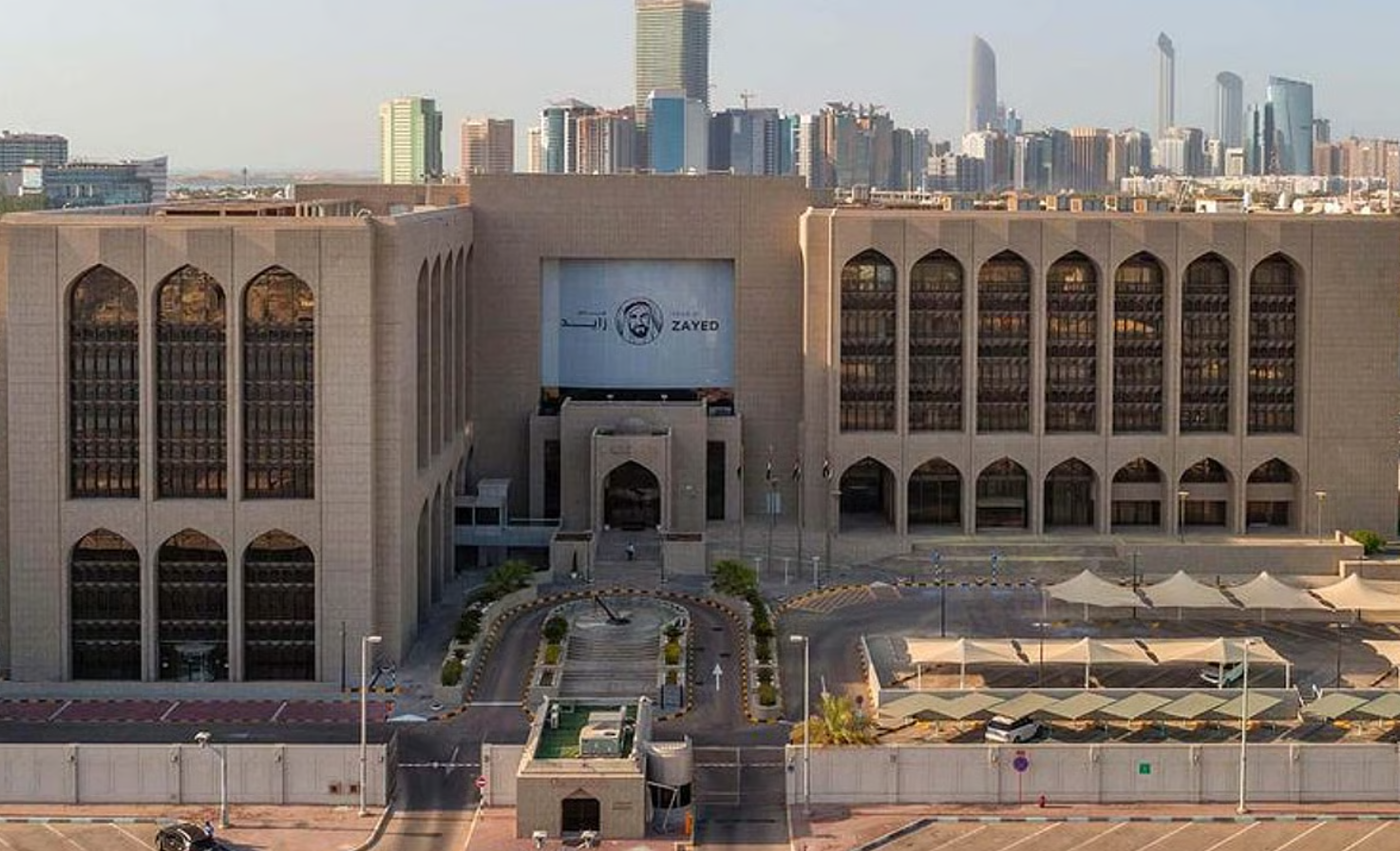
The broadest measure of money in the United Arab Emirates reached 3,440.8 billion dirhams at the end of July, rising 0.4 percent over the month, while deposits held by non-residents grew 6.8 percent, according to the Central Bank of the UAE.
Resident deposits rose 0.5 percent over the same month. Non-resident money therefore grew at 13.6 times the rate of resident money on our calculation, and accounts for 8.9 percent of total bank deposits.
The three money measures, and what sits inside them
| Money supply, end July 2026 | Billion dirhams | Monthly change |
|---|---|---|
| M3 | 3,440.8 | 0.4% |
| M2 | 2,900.3 | 0.8% |
| M1 | 1,047.4 | 0.7% |
| Monetary base | 792.7 | 1.2% |
Levels and monthly changes as published. The bank does not publish the end June levels for the three money measures.
The narrowest measure is almost entirely deposit money rather than cash. Of the 1,047.4 billion dirhams in M1, currency circulating outside banks accounted for 159.2 billion, or 15.2 percent, with monetary deposits making up the remaining 84.8 percent, both on our calculation.
M1 itself is 36.1 percent of M2, and M2 is 84.3 percent of M3, on our calculation. The 540.5 billion dirham difference between M3 and M2 is government money on the bank’s own definition, deposits held at commercial banks and at the central bank together. The release reports government sector deposits at banks separately at 445.4 billion, but does not say whether that line and the M3 component are drawn on the same basis, so the two are not netted here.
The bank attributes the M2 rise to two deposit categories. Corporate deposits rose 0.9 percent and contributed 0.5 percentage points; deposits of government related entities rose 3.7 percent and contributed 0.4 points. For M3 the same two contributed equally at 0.4 points each, with a smaller positive contribution from individuals, whose deposits rose 0.2 percent to 896.5 billion dirhams.
Households borrowed faster than companies
Gross credit reached 2,798.9 billion dirhams, an increase of 41.2 billion or 1.5 percent over the month.
| Domestic credit, July 2026 | Increase, billion dirhams | Monthly change |
|---|---|---|
| Individuals | 13.9 | 2.3% |
| Corporate | 10.9 | 1.1% |
| Government | 4.2 | 1.7% |
Increases and rates as published. The release does not give the outstanding level for any of the three.
Outstanding credit to individuals grew by 27.5 percent more in absolute terms than outstanding credit to companies, and at 2.09 times the corporate rate, both on our calculation. These are changes in the stock of loans over one month, not a measure of new lending, since the release publishes balances rather than originations.
Domestic credit as a whole rose 1.4 percent to 2,206.0 billion dirhams and foreign credit rose 1.8 percent to 592.9 billion. Domestic lending is 78.8 percent of the gross figure and foreign lending 21.2 percent, on our calculation. Gross bank assets reached 5,669.1 billion dirhams, up 1.3 percent, which puts total credit at 49.4 percent of the balance sheet, also on our calculation.
The system is funded well ahead of what it lends
| Deposits, end July 2026 | Billion dirhams | Monthly change |
|---|---|---|
| Total bank deposits | 3,509.8 | 1.1% |
| Resident | 3,198.4 | 0.5% |
| Resident private sector | 2,344.4 | 0.7% |
| Non-resident | 311.4 | 6.8% |
As published. Total deposits is the only aggregate for which the end June comparison is given, at 3,472.8 billion.
Deposits exceed gross credit by 710.9 billion dirhams, and gross credit is 79.7 percent of deposits, both on our calculation. The release publishes no funding breakdown, so the ratio describes the relationship between the two aggregates and nothing beyond it.
Deposits grew 37.0 billion dirhams over the month against a 41.2 billion rise in credit, so credit grew by more than deposits did in July, on our calculation. Government related entity deposits rose 3.7 percent, an increase of about 12.4 billion dirhams on our calculation, and the same category appears on both sides of the release, among the deposit lines and among the drivers the bank names for the money supply.
Banks’ reserve balances at the central bank rose 4.7 percent to 256.9 billion dirhams, which is 32.4 percent of the monetary base on our calculation.
The release carries no commentary, no revision note and no statement that the data are preliminary. Its one interpretive phrase is that gross credit continued its growth. Every other line is a level, a rate or a contribution.
Why it matters: Three movements in a single month, each large against its own comparison. Non-resident deposits grew 6.8 percent against 0.5 percent for residents. Credit to individuals grew 2.3 percent against 1.1 percent for companies. Deposits of government related entities grew 3.7 percent and were among the two categories the bank names as driving both M2 and M3. The release does not connect them and neither do we; what it establishes is the scale on which they are happening, a system holding 3,509.8 billion dirhams of deposits against 2,798.9 billion of credit on a balance sheet of 5,669.1 billion.
Outlook: The August edition is the one to read for whether July was a turn or a month. Two figures decide it: whether household credit keeps growing at roughly double the corporate rate, which would begin to change the composition of bank books rather than just their size, and whether non-resident deposits hold their pace or give back the 6.8 percent. The release does not publish the previous month’s levels for the money measures, so a genuine two month comparison needs the June edition alongside it.
Sources: Central Bank of the UAE.