Bank of England’s Bailey Sets Out Four Ways an AI Asset Bubble Could Burst
The Takeaway: Bank of England Governor Andrew Bailey said on 9 November that the risk of an AI asset price bubble exists, and named four ways it could burst: overvaluation, returns that arrive late, too many companies priced as winners, and a loss of public trust. He said UK activity is proving more resilient than the Bank expected, partly on AI investment, and warned that fading memories of the financial crisis are feeding pressure to ease regulation. The Bank’s Financial Policy Committee judged in September that the risk of a sharper AI correction spilling over to core markets persisted.
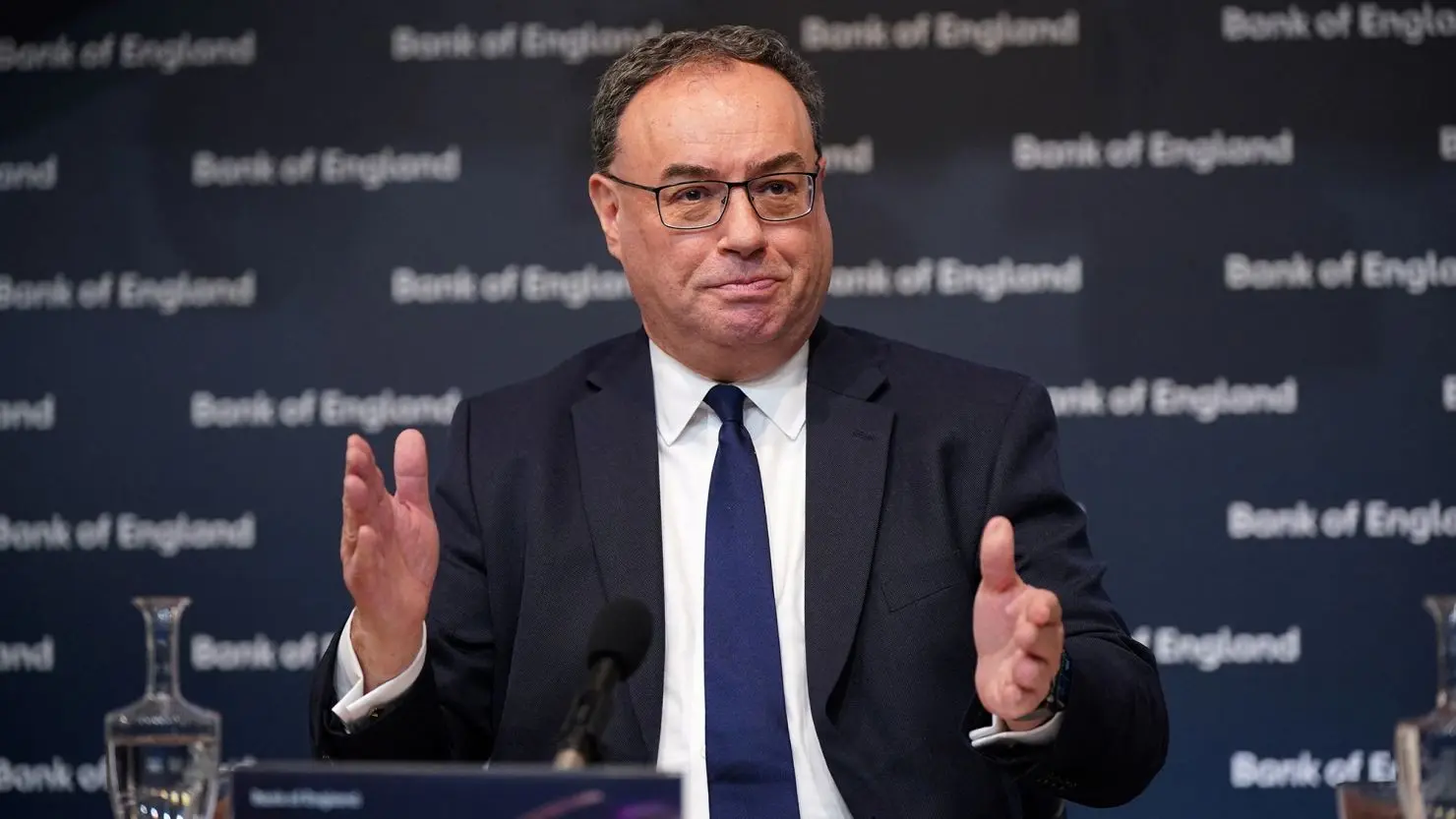
Speaking in Zurich, the Governor of the Bank of England argued that a shock-prone world makes independent central banks more important, then turned to how an AI bubble might burst.
The Governor gave the remarks at the SIAF Lecture Series at Zurich University, and the Bank published the text at 17:25 GMT on 9 November. He presented them as opening comments to start a discussion, and they give no guidance on the next interest rate decision.
The Governor lays out four routes from an AI bubble to financial losses
Bailey said there is a lot of speculation about whether AI assets are in a bubble, and that the risk should be recognised even though “bubble spotting is an imprecise science.” He then gave four arguments for how such a bubble could burst and cause problems.
The first is valuation itself. Pricing uncertain future returns is the job of financial markets, he said, and they may overvalue AI even if its returns turn out well.
The second is timing. Returns could match expectations yet arrive later than predicted, as happened with earlier general purpose technologies such as electricity in Edison’s day. The world moves faster now, he said, but the timing may still fall short of what markets expect.
The third is crowding. Markets are pricing every company as a winner, while history suggests that not all of them will be; he pointed to Netscape as a reminder.
The fourth is public trust. Concerns about AI could erode confidence in the technology, and until that problem is solved it could weigh on asset valuations, he said. He added that all of this comes before cyber risk is counted explicitly.
On trust, the Governor listed what he wants to see: more extensive testing of AI models before and after release, possibly more points of human intervention in how they operate, and better incident reporting and follow-up. Public trust, in his view, will depend on assured human intervention, with AI working as a tool in human hands.
He described himself as an optimist on AI, digital technology and probably robotics, which he said could lift sustainable growth in many economies by raising productivity. In the world of central banking, he added, frontier AI has increased the risk of cyber attacks.
The Governor links UK growth to AI investment and warns against easing rules
The backdrop he described is one of supply shocks from military conflicts in Europe and the Middle East, which tend to push prices up and activity down at the same time. Alongside them, he sees growing signs of the beginnings of a positive supply shock from AI and the investment it requires.
In the UK, economic activity is proving stronger than the Bank had expected, and some of that strength comes from AI investment, especially in business services, the Governor said.
On independence, he argued that difficult periods are when strong institutions matter most. Independent central banks still serve, and answer to, the whole public of their countries, which he called the basis of their legitimacy.
He drew a line between the two halves of a central bank’s job. The independence of interest rate decisions is not in doubt, he said, but financial stability decisions are far more contested, with louder lobbying and more sharply defined interests.
Fading memories of the financial crisis are adding to pressure to ease back regulation, he said. He did not claim every UK rule is perfect, but argued that sustained growth depends on financial stability.
The post-crisis reforms, in his account, are part of why the financial system came through the latest economic shocks in good shape. He also said risks are moving into new parts of the financial system.
The Bank’s own committees already track AI valuations and AI debt
The speech follows the Financial Policy Committee’s Record of 30 September, from its meeting on 25 September. The Committee judged then that the risks it monitors had grown since July and that interconnected risks were more likely to crystallise at the same time.
AI-related and semiconductor stocks fell sharply in July, the Record said, and forced selling by leveraged investors amplified the move. Markets kept functioning in an orderly way, with no spillover to core markets, but the Committee said the risk of a sharper correction spilling over to core markets persisted.
The debt side has grown quickly. Global AI-related debt issuance reached around $450 billion by early September, more than double the total for all of 2025, according to Morgan Stanley estimates cited in the Record.
In sterling credit markets, AI hyperscalers had accounted for 47% of corporate bond issuance this year by the time of the September meeting. Their sterling issuance remained far smaller than in the US and the euro area, the Committee noted.
The Committee also tied AI to public finances. Growth and fiscal projections rest partly on expected productivity gains from AI, so a reassessment could hit sovereign debt markets as well as AI asset prices. It kept the UK countercyclical capital buffer at its neutral setting of 2%.
On the monetary side, the Bank raised Bank Rate to 4% by an 8 to 1 vote on 5 November, as set out on The Edge that day. The minutes credited some of the recent momentum in growth to the deployment of AI, and said its impact on the UK economy was uncertain but likely to affect both demand and supply.
The July Financial Stability Report had already warned of stretched valuations and fast-growing AI financing, as set out on The Edge in July. The IMF’s October Global Financial Stability Report named a correction in AI-linked assets among three possible triggers for tighter financial conditions, as set out on The Edge in October.
In The Edge’s reading, the speech puts the Governor’s own voice behind a link his Financial Policy Committee drew in September: the AI investment he credits for firmer UK growth is also behind the valuations whose repricing he now lists as a stability risk. He stopped short of saying a bubble exists, and the July sell-off passed without spillover to core markets.
What to watch: The Bank publishes its November Financial Stability Report and the Financial Policy Committee Record on 26 November at 10:30 GMT. The Monetary Policy Committee announces its next decision on 17 December.
The speech is the Bank of England’s text “Central Bank independence in today’s world”, published on 9 November 2026; context is from its Financial Policy Committee Record of 30 September 2026 and its Monetary Policy Summary and minutes of 5 November 2026.
Sources: Bank of England, International Monetary Fund, The Edge.