Bank of England Holds at 3.75 Percent on a 6 to 3 Vote and Projects Inflation Above 4 Percent
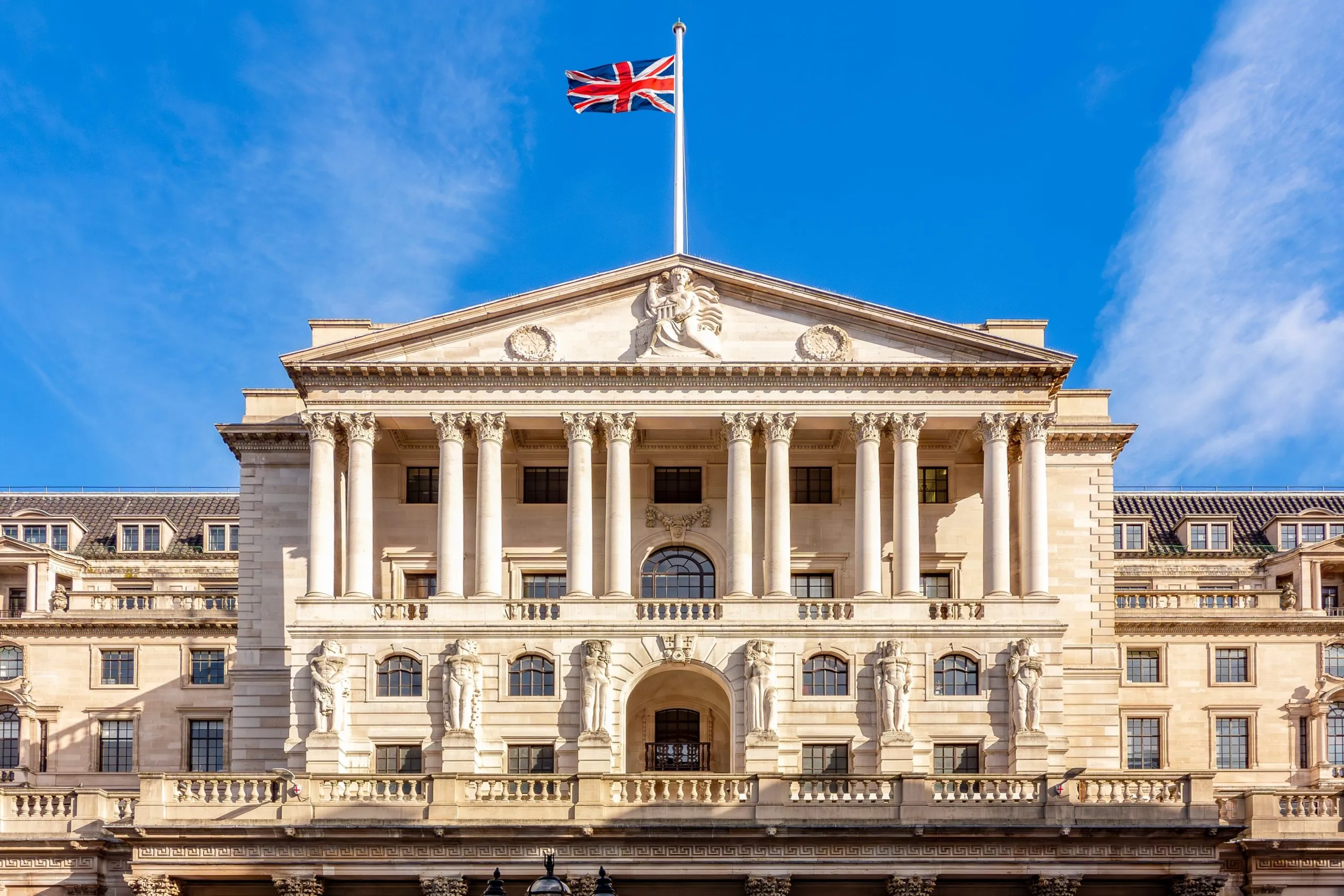
The Bank of England kept Bank Rate at 3.75 percent, it said on 17 September, with 3 of the 9 members of the Monetary Policy Committee voting for a 0.25 point rise to 4 percent at the meeting that ended on 16 September. The Bank now expects consumer price inflation to reach around 3.75 percent in the fourth quarter and slightly above 4 percent in the first quarter of 2027, up from the 3.2 percent it projected for the end of this year in July.
3 votes to raise, and warnings from the majority
Megan Greene, Catherine Mann and Huw Pill voted to raise the rate, as all 3 had in July. Governor Andrew Bailey sided with the majority but wrote that “if the conflict in the Middle East persists for an extended period, as appears to be the case, and the risk of second-round effects emerging increases, it is likely that policy may have to tighten”. In the majority, Clare Lombardelli said “the case for raising Bank Rate is building the longer the conflict continues without lasting resolution”, and Dave Ramsden said “there could be a case for increasing Bank Rate”. Swati Dhingra and Alan Taylor placed particular weight on slack, restrained pass-through and a restrictive Bank Rate, and Taylor put his estimate of the neutral rate at 3 percent.
The committee said the risks to inflation are tilted to the upside, more so than in July. It also said there is little evidence so far that higher energy prices are feeding into wages and other prices. Services inflation was 3.4 percent in August, unchanged from July and down from 4.5 percent in March. Private sector regular pay growth slowed to 2.9 percent in the 3 months to July, though the committee puts underlying wage growth nearer 3.5 percent.
| Measure | Latest | Period |
|---|---|---|
| CPI inflation | 3.1% | August |
| Services inflation | 3.4% | August |
| Private regular pay growth | 2.9% | 3 months to July |
| Unemployment rate | 4.9% | 3 months to July |
| GDP growth | 0.4% | Second quarter |
As cited in the September minutes.
Energy explains most of the overshoot
Inflation was 3.1 percent in August, 1.1 points above the 2 percent target. The minutes attribute around 0.7 points of that to the direct effect of energy prices, mostly motor fuels, which on our calculation is 64 percent of the gap. Brent crude closed at 106 dollars a barrel on 14 September, 36 percent above its level in the run-up to the July report, and UK wholesale gas was up 78 percent at 207 pence a therm.
At its current setting, Bank Rate is 0.65 points above August inflation on our calculation, but below the inflation rate the Bank projects for early 2027. The short-term interest rate curve cited in the minutes peaks at around 4.9 percent by the end of 2027, roughly 1.15 points above Bank Rate on our calculation. The minutes also put quoted 2 year fixed mortgage rates about 0.95 points higher than before the conflict.
Activity has been slightly stronger than expected. GDP rose 0.4 percent in the second quarter and staff now project 0.4 percent for the third, against 0.1 percent in July’s projection.
The monetary policy gilt portfolio runs down by 2034
The committee voted unanimously to reduce the gilts it holds for monetary policy purposes, financed by reserves, to zero. The stock stood at 488 billion pounds on 16 September, down from a peak of 895 billion pounds in February 2022. The Bank will set aside 120 billion pounds of its longest dated gilts to back banknote issuance, leaving 368 billion pounds to unwind. Of that, 222 billion pounds will be left to mature and 146 billion pounds sold, at 20 billion pounds a year.
| Quantitative tightening | £ billion |
|---|---|
| Peak stock, Feb 2022 | 895 |
| Stock, 16 Sep 2026 | 488 |
| Set aside to back banknotes | 120 |
| To mature | 222 |
| To be sold | 146 |
Planned average reduction of 46 billion pounds a year until September 2034.
The plan averages 46 billion pounds a year, on our calculation 34 percent slower than the 70 billion pounds by which holdings fell over the past 12 months. On our calculation, sales make up 40 percent of the remaining unwind, and the holdings have already fallen 45 percent from their peak. The Bank is pausing its gilt sale auctions while a model of selling gilts to the government awaits a final decision, and will review progress before April 2027.
Why it matters: For the UK, the vote held at 6 to 3, but on our reading the pressure for tighter policy has grown inside the majority, with the Governor saying policy is likely to have to tighten if the conflict persists. The inflation overshoot so far comes mainly from motor fuels and other energy rather than wages, so on our reading the case for a rise rests on whether second-round effects appear in pay and services prices.
Outlook: The next decision is due on 5 November 2026, alongside the November Monetary Policy Report. Ofgem’s headline energy price cap for October to December rises to 1,723 pounds, and the minutes expect a substantial further increase in the first quarter of 2027.
Sources: Bank of England.