Canada and China Agree Tariff Relief for CAD 400 Million of Pork and Seafood Exports

The Takeaway: Shenzhen adds frozen pork and four seafood lines to the Canadian goods spared China’s extra tariffs, and Ottawa pays with wider relief for Chinese steel and aluminum where Canadian supply falls short. Canada says more than 90% of the trade once hit by tariff action has regained access. Beijing’s own accounts of the meeting carry no tariff detail, and no Chinese tariff notice had appeared by Tuesday.
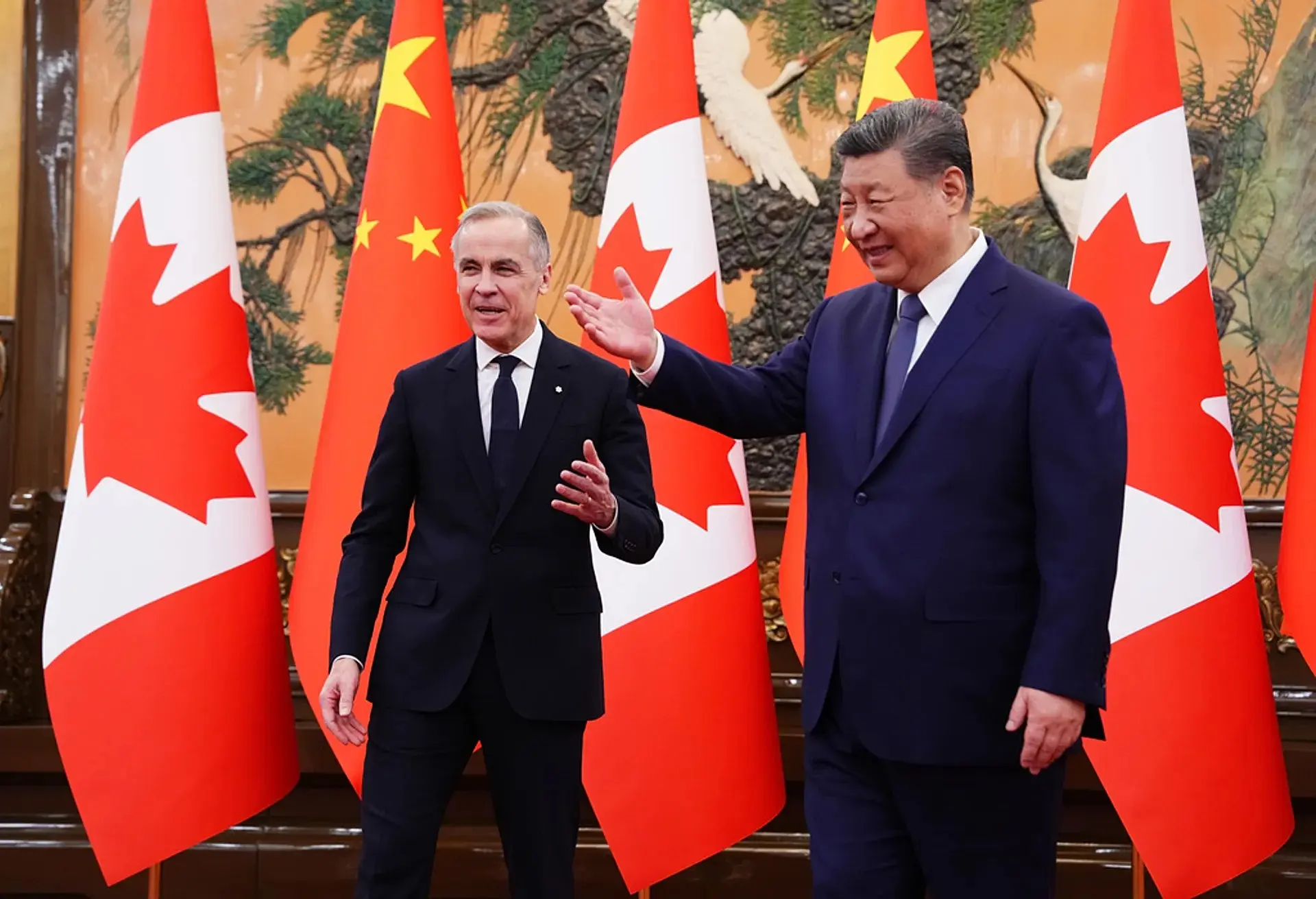
Canada and China agreed on Tuesday to widen tariff relief to about CAD 400 million more of Canadian pork and seafood exports, after Mark Carney met Xi Jinping in Shenzhen.
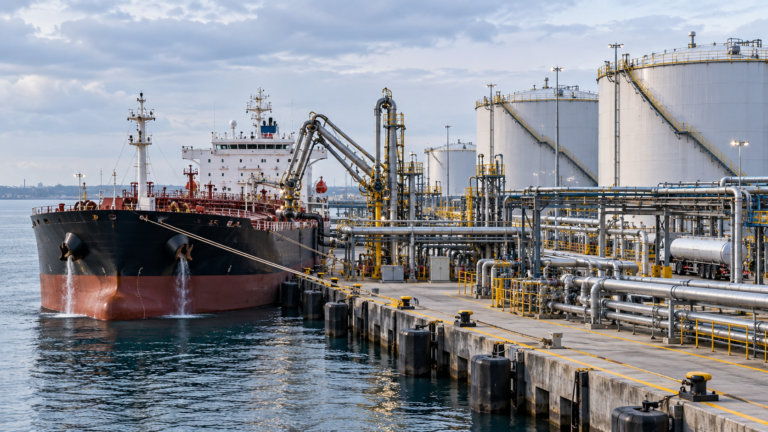
The package extends and expands the Preliminary Joint Arrangement the two governments reached in January, the Canadian Prime Minister’s Office said. It covers CAD 116 million of frozen pork cuts and CAD 285 million of fish and seafood: certain frozen cold-water shrimp and prawns, certain molluscs including geoduck, sea cucumber and Greenland halibut.
Carney is in Shenzhen for the Asia-Pacific Economic Cooperation leaders’ meeting on 18 and 19 November. Xi will also host Vladimir Putin and Donald Trump in the city on 19 November for a China-Russia-US summit, as The Edge set out earlier.
Canada says China will lift its 25% tariffs on five product groups
A Global Affairs Canada backgrounder says China will remove its 25% anti-discrimination tariffs on most frozen pork cuts and the four seafood lines. It values each line at its 2024 level, before the additional tariffs were imposed. A second backgrounder, from Carney’s office, says China agreed to suspend the application of those tariffs from 1 January 2027 to 31 December 2028. The Global Affairs text gives the removal as effective 1 January 2026, and Beijing has published no notice of its own.
Canadian exports covered by the new tariff relief (CAD million, 2024)
| Product | Value |
|---|---|
| Most frozen pork cuts | 116.0 |
| Greenland halibut | 96.0 |
| Certain frozen cold-water shrimp and prawns | 87.5 |
| Certain molluscs, including geoduck | 61.4 |
| Sea cucumber | 39.4 |
| Total | 400.3 |
Values before the additional tariffs were imposed, as the backgrounder prints them; the total is The Edge’s sum. Ottawa’s release puts the four seafood lines at CAD 285 million and the whole at about CAD 400 million.
Pork is the largest single line, at 29% of the total. The four seafood lines supply the other 71%.
The new lines join canola meal, peas, lobster and crab. Canada announced on 4 November that the two sides had extended the relief on those four by two years, to the end of 2028, at a meeting of their Joint Economic and Trade Commission in Beijing.
Ottawa also says the two sides will advance market access for Canadian faba beans, chickpeas and lentils. They will sign an arrangement on pet food and have committed to one on wild aquatic products by the end of this year.
China gets wider relief for its steel and aluminum
In exchange, Canada will extend to 31 December 2028 its tariff remission measures, which waive the duties, for certain Chinese steel and aluminum products. They now cover goods imported on or before 31 December 2026. It will also widen coverage to 32 more tariff items where Canadian supply is insufficient or unavailable. Canada first set out the extension on 4 November; the 32 items are new.
The 16 November backgrounder splits the new items into 23 for steel and 9 for aluminum, covered in whole or in part.
The January arrangement also opened Canada to Chinese electric vehicles, with an initial quota of 49,000 cars at a most-favored-nation tariff rate of 6.1%, the standard rate for trading partners without a trade deal.
Canada says 16,211 of them have been imported since March. Roughly half came in at an import price under CAD 35,000. Next year a tenth of the quota will be reserved for vehicles at or below that price, a share that reaches half by 2030.
Canola shows what the first arrangement delivered
Canada says it has now restored market access for more than 90% of the trade previously subject to tariff action, nearly CAD 7.5 billion of Canadian exports.
Canola seed exports to China reached CAD 1.74 billion from March to August, the first six months of the lower tariffs, 43% more than a year earlier.
China cut its tariffs on Canadian canola seed to a combined rate of about 15% from 1 March. On the same date it suspended its 100% tariffs on canola meal and peas, and its 25% tariffs on lobster and crab.
Canada-China trade in the products covered by the January arrangement (CAD million)
| Product | March to August 2026 | Year 2024 |
|---|---|---|
| Canola seed | 1,740 | 4,000 |
| Peas | 347 | 363 |
| Lobster | 336 | 875 |
| Canola meal | 327.5 | 1,000 |
| Crab | 57.4 | 252 |
March to August 2026 as the 16 November backgrounder prints them: exports for canola seed, imports to China for the other four. The 2024 column is the approximate annual value of Canadian exports to China before the trade irritants, as printed.
Peas came back fastest. Six months of shipments reached 95.6% of a full year before the dispute, and Canada calls it a rebound to 2024 levels.
In The Edge’s reading, the other four lines still trail: each brought in less than half its 2024 annual value over the six months, with crab furthest behind at 22.8%.
Beef shipments reached CAD 245 million in the same period. Canada says that is 27% more than in all of 2021.
The finance track and the wider trade
Carney also endorsed the joint outcomes of the second Canada-China Economic and Financial Strategic Dialogue, which China’s Ministry of Finance posted on Tuesday. Vice Premier He Lifeng co-chaired the talks in Vancouver with François-Philippe Champagne, Canada’s Minister of Finance and National Revenue, and Maninder Sidhu, its Minister of International Trade.
Canada dates the dialogue 9 November, with a meeting of financial regulators in the city the day before; the Chinese text dates the talks 8 to 9 November. The Bank of Canada and the People’s Bank of China plan a tabletop exercise on their local currency swap, a standing line letting each borrow the other’s currency, by the end of 2026, followed by a test drawing in 2027.
The two finance ministries signed a memorandum on macroeconomic and fiscal policy dialogue. Canada’s Office of the Superintendent of Financial Institutions signed a cooperation agreement with China’s National Financial Regulatory Administration.
China invited Canadian pension funds and other institutional investors into its capital market through the Qualified Foreign Investor scheme. Canada welcomed China’s interest in issuing renminbi-denominated sovereign green bonds in the Canadian market.
Canada announced a trade mission to China and a Canada-China Year of e-Commerce, both in 2027. Air Canada will fly from Vancouver to Guangzhou from May 2027.
Canada’s merchandise trade with China rose 5.6% in 2025 to CAD 125.6 billion, the Prime Minister’s Office said.
China took CAD 35.1 billion of Canada’s merchandise exports, and Ottawa aims to raise exports to China by 50% by 2030.
“We have unlocked billions in new export orders for Canadian farmers, ranchers, and fish harvesters,” Carney said.
Beijing’s accounts stay general
Xi told Carney that improving and developing the relationship was “a right choice”, according to the Chinese foreign ministry. He proposed four points, including deeper cooperation in trade, energy, agriculture and finance, and in newer areas such as e-commerce and the digital economy.
Neither the foreign ministry’s readout nor the Xinhua report on the State Council’s website mentions tariffs. The newest notice on Canadian goods from the State Council Tariff Commission, posted on the Ministry of Finance’s site, is dated 27 February, and the Ministry of Commerce had posted no notice on the new measures when The Edge checked on Tuesday.
The joint outcomes document, agreed in Vancouver, had set the aim of tangible, mutually beneficial results from the trade talks before the leaders met at the APEC gathering. The tariff details so far come from Ottawa alone.
What to watch: the APEC Economic Leaders’ Meeting in Shenzhen on 18 and 19 November; the arrangement on wild aquatic products, due by the end of this year; and the swap tabletop exercise by the Bank of Canada and the People’s Bank of China, planned before the end of 2026.
Method: tariff and trade figures are from the Canadian Prime Minister’s Office release and backgrounder of 17 November 2026 and the Global Affairs Canada backgrounder “Expanding trade between Canada and China” of 16 November 2026; finance-track outcomes are from the joint outcomes document posted by China’s Ministry of Finance on 17 November 2026 and by Canada’s Department of Finance; the Chinese account of the meeting is from the Chinese foreign ministry’s readout of 17 November 2026. Sums, shares and ratios not printed in those documents are The Edge’s calculations.
Sources: Prime Minister of Canada, Global Affairs Canada, Department of Finance Canada, Ministry of Finance of the People’s Republic of China, Ministry of Foreign Affairs of the People’s Republic of China, Xinhua, Ministry of Commerce of the People’s Republic of China, The Edge.