China’s Arctic Route to Europe Advertises 20 Days and Its Only Completed Voyage Took 26
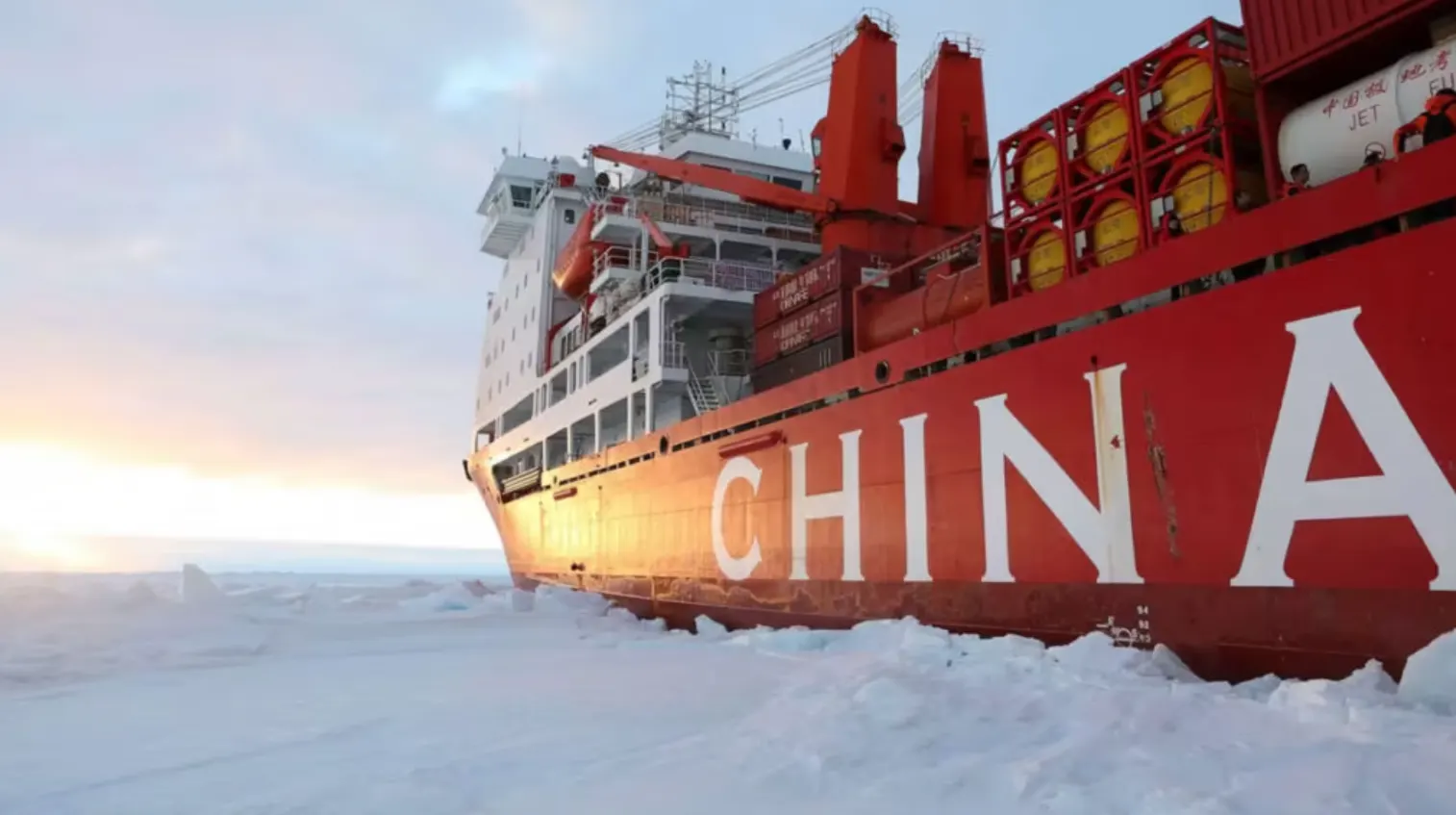
The China to Europe Arctic container express route entered regular weekly operation on Saturday 15 August, Xinhua reported. The vessel Dubai Tower, operated by Zhejiang Seaport Logistics Group, sails from Ningbo-Zhoushan Port to Felixstowe, Rotterdam, Hamburg and Gdynia across the Northeast Arctic Passage, and the operator advertises a transit of approximately 20 days.
What is new is the schedule, not the route. The first voyage was completed almost a year ago, and its published dates are the most useful number available on the service.
The only completed crossing with both dates published took 26 days. Xinhua reported that the Istanbul Bridge, operated by Sea Legend Line Limited and carrying about 4,000 twenty-foot equivalent units, departed Ningbo-Zhoushan on 23 September 2025 and arrived at the Port of Gdansk on 19 October 2025. That is 26 days port to port, 30 percent longer than the approximately 20 days the service advertises, and both figures come from the same news agency.
One voyage is not a distribution, and the September crossing was a trial rather than a scheduled sailing, so the gap may narrow as the operator repeats the run. But it is the only transit for which a departure and an arrival have both been published, and it ran well over the headline figure. Anyone planning against a 20-day Arctic transit this season is planning against a number the route has not yet demonstrated.
The cargo tells you what the route is actually for. Xinhua lists the goods moving on the service as energy storage cabinets, power batteries, photovoltaic modules and new-energy vehicle components. That is not general merchandise. It is the new-energy export complex specifically, which is high in value per container and sensitive to delivery timing ahead of the European installation season. The route is a specialised corridor, not a general Asia to Europe container service.
The season is short and the capacity is small. The operator plans at least eight voyages in 2026 and the navigable season runs from July to October. Weekly operation from 15 August to the close of the season in late October is about eleven weeks, which is consistent with a programme of at least eight sailings. If every sailing matched the roughly 4,000 twenty-foot equivalent units of the one vessel whose capacity has been published, the entire 2026 season would have a nominal ceiling near 32,000 twenty-foot equivalent units, before any allowance for unfilled slots. The route is closed for two thirds of the year by ice.
It competes with Suez, not with the Strait of Hormuz. Xinhua’s own comparison is with the Suez Canal routing, and that is the correct one. Hormuz is an oil and gas chokepoint, and container traffic between China and northern Europe does not pass through it. The two disruptions also transmit differently, one through the oil price and producer export volumes, the other through container freight rates and delivery times. Treating an Arctic container service as a response to Hormuz misreads what it is.
Why it matters: China and the European Union traded 447.8 billion dollars of goods in the first half of 2026, up 14.2 percent year on year, which implies about 392 billion dollars in the same period of 2025 and growth of roughly 56 billion dollars in a year. That is about 2.5 billion dollars of goods moving every day. Against a trade relationship of that size, a four-month corridor with a season ceiling measured in tens of thousands of containers is a specialised channel for time-sensitive new-energy cargo. It is a genuine operational development and it is not a reroute of China to Europe trade.
Outlook: The season closes in October, which gives three tests before the ice returns. Whether the eight planned sailings are completed. Whether transit times converge on the advertised 20 days or stay closer to the 26 days of the first crossing. And whether the cargo mix stays concentrated in new-energy goods, which would confirm the route as a dedicated corridor rather than an early stage of a broader container service.
Sources: Xinhua News Agency. Transit, capacity and trade calculations by The Edge Research Team.