China’s FDI Equity Stock Grows for a 6th Year to 26.8 Trillion Yuan, Second Globally
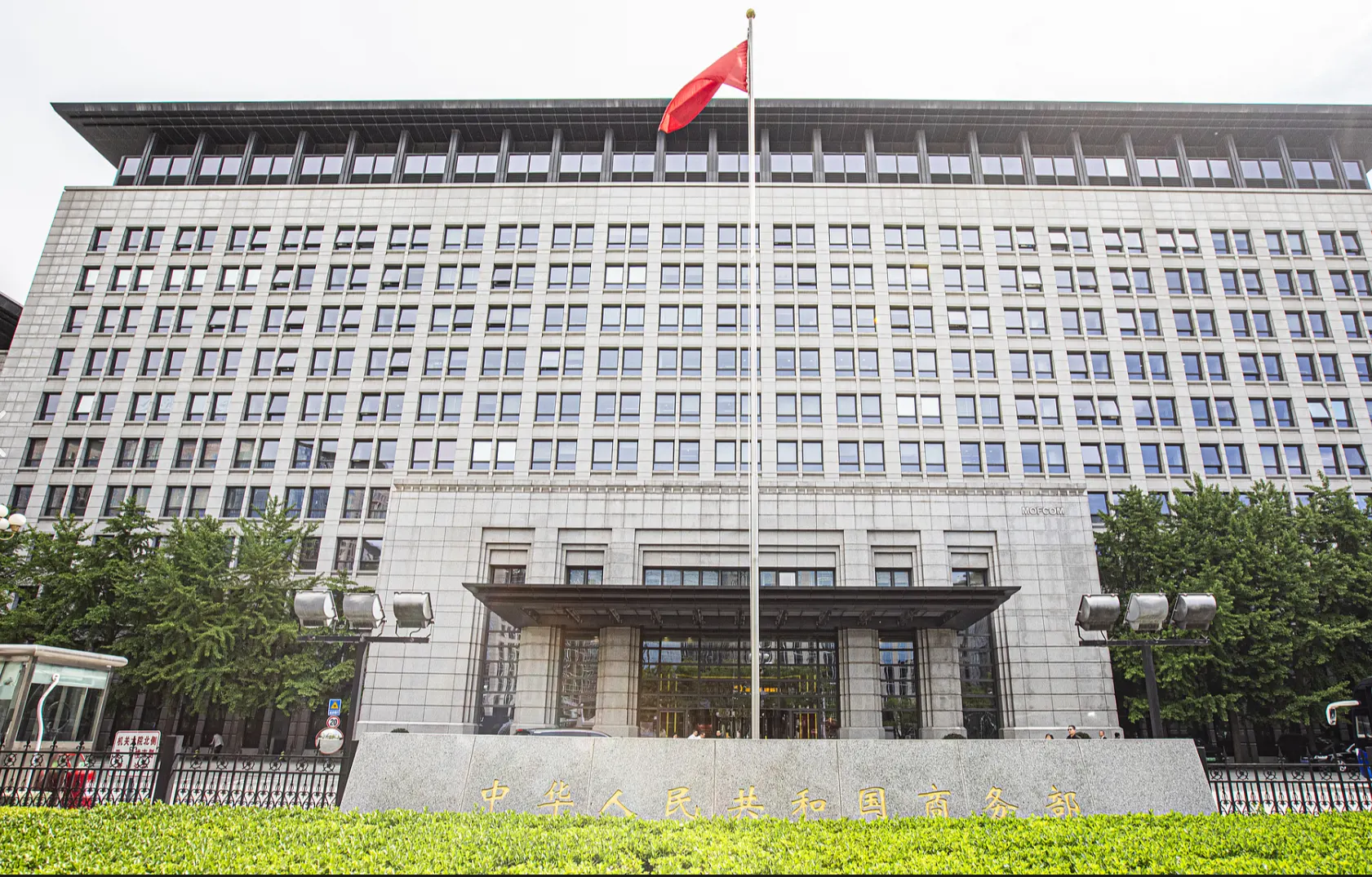
China’s foreign direct investment equity stock reached 26.8 trillion yuan, equivalent to 4.0 trillion dollars, growing for a sixth straight year and ranking second in the world, Ministry of Commerce spokesperson He Yadong said at the ministry’s regular press conference on 15 October. The figures come from the 2025 annual investment reports, which 461,000 foreign-invested enterprises filed, 5.7 percent more than a year earlier. On our calculation the stock is worth more than 19 percent of China’s 2025 gross domestic product of 140.19 trillion yuan.
What the 2025 annual reports show
| Measure | 2025 annual reports |
|---|---|
| Foreign-invested firms filing | 461,000, up 5.7% |
| Foreign direct investment equity stock | 26.8 trillion yuan |
| Consecutive years of growth | 6 |
| Global rank | 2nd |
| Average profit margin of reporting firms | 8.7% |
| Manufacturing margin above all larger industrial firms | 2.2 points |
| Share of China’s goods trade | One-third |
| Share of national tax revenue | One-seventh |
| People employed, 5-year annual average | More than 30 million |
Dollar equivalents in the text are our calculation at the People’s Bank of China central parity of 6.7220 yuan per dollar on 16 October 2026.
Margins run above the industrial average
He put the average profit margin of the reporting foreign-invested firms at 8.7 percent, and said foreign-invested manufacturers earned a margin 2.2 percentage points above that of all industrial enterprises above designated size. For scale, the National Bureau of Statistics put the operating-revenue profit margin of those larger industrial firms at 5.31 percent in 2025 and 5.66 percent in the first 8 months of 2026.
The bureau’s industrial accounts cover a different group: industrial enterprises above designated size only, counting Hong Kong, Macao and Taiwan invested firms with foreign ones. That group earned 1,744.74 billion yuan of profit in 2025, up 4.2 percent in a year when profits across all larger industrial firms rose 0.6 percent, giving the group 23.6 percent of industrial profit, on our calculation.
Profit growth in 2026 has come mainly from elsewhere. From January to August, profits at the foreign-invested group rose 2.3 percent while the whole sector grew 15.7 percent, leaving them with 22.4 percent of industrial profit, on our calculation. State-controlled firms gained 10.3 percent and joint-stock companies 20.4 percent over the same months, and profits in computer, communications and other electronic equipment more than doubled.
Foreign-invested industrial firms against all larger industrial firms
| Measure | 2025 | Jan to Aug 2026 |
|---|---|---|
| Profits of foreign-invested firms, billion yuan | 1,744.74 | 1,179.47 |
| Profit growth, foreign-invested firms | 4.2% | 2.3% |
| Profit growth, all larger industrial firms | 0.6% | 15.7% |
| Foreign-invested share of industrial profit | 23.6% | 22.4% |
| Profit margin, all larger industrial firms | 5.31% | 5.66% |
Industrial enterprises above designated size; foreign-invested includes Hong Kong, Macao and Taiwan invested firms. Growth rates are on a comparable basis. Shares are our calculation.
Inflows narrow their decline as high technology climbs
Actual use of foreign capital from January to August 2026 came to 479.95 billion yuan, equivalent to 71.40 billion dollars, 5.3 percent less than a year earlier. The decline is narrower than the 6.2 percent recorded for January to July. On our calculation, the eight-month total already equals 64.2 percent of the 747.7 billion yuan China received in the whole of 2025, a year in which inflows fell 9.5 percent.
August alone brought 41.62 billion yuan, against 36.19 billion in July, a rise of 15.0 percent on our calculation. New foreign-invested enterprises numbered 42,582 over the eight months, up 0.3 percent, of which 4,871 were set up in August.
The mix is where the change shows. High-technology industries absorbed 200.26 billion yuan, up 35.1 percent, taking 41.7 percent of all inflows, 12.4 percentage points more than a year earlier. On our calculation, that is already 82.8 percent of the 241.8 billion yuan the category drew in all of 2025, when it fell 15.6 percent. Research and design services rose 74 percent, services converting scientific results 64.2 percent and electronic and communications equipment manufacturing 41.9 percent. On the same arithmetic, services took 73.0 percent of the eight-month total and manufacturing 24.9 percent; manufacturing’s 119.55 billion yuan is 64.4 percent of its 2025 total of 185.5 billion.
By source, investment from France rose 39.2 percent, from Switzerland 16.7 percent and from South Korea 16.5 percent, counting flows routed through free ports. In the January to July figures, Saudi Arabia had led the named sources with growth of 343.7 percent.
China’s actual use of foreign capital in 2026, cumulative
| Period | Billion yuan | Change on a year earlier | High-tech share |
|---|---|---|---|
| Jan to Jun | 402.14 | -5% | 42.4% |
| Jan to Jul | 438.33 | -6.2% | 41.6% |
| Jan to Aug | 479.95 | -5.3% | 41.7% |
Full year 2025: 747.7 billion yuan, down 9.5 percent, of which high-technology industries 241.8 billion yuan. Single-month values in the text are differences between cumulative totals, on our calculation.
One-third of trade, one-seventh of tax
He said foreign-invested firms account for one-third of China’s goods imports and exports and one-seventh of national tax revenue, and have employed more than 30 million people a year on average over the past 5 years. For scale, China’s goods trade totalled 45.47 trillion yuan in 2025 and its tax revenue 17.64 trillion yuan, while private companies handled 57.3 percent of that year’s goods trade.
Why it matters: For China, foreign-invested firms are a large, profitable part of the economy rather than a marginal one: a third of goods trade, an equity stock worth more than 19 percent of annual output and, with Hong Kong, Macao and Taiwan invested firms counted in, 23.6 percent of industrial profit in 2025. Foreign-invested manufacturers earned margins 2.2 percentage points above the industrial average in 2025, and He said the ministry welcomes companies from all countries to keep deepening their presence in China. The weak spot is new money, and there the 2026 data show a narrowing decline and a rapid shift into research, design and electronics.
Outlook: The Ministry of Commerce’s January to September inflow figures are the next test of whether the decline keeps narrowing from 5.3 percent, and the National Bureau of Statistics’ profit data for the same months will show whether foreign-invested industrial firms close the gap on the 15.7 percent sector-wide gain.
Sources: Ministry of Commerce, National Bureau of Statistics, People’s Bank of China, The Edge.