China Seeks an Early Start to Reciprocal Tariff Cuts With the US and Raises 5G Concerns

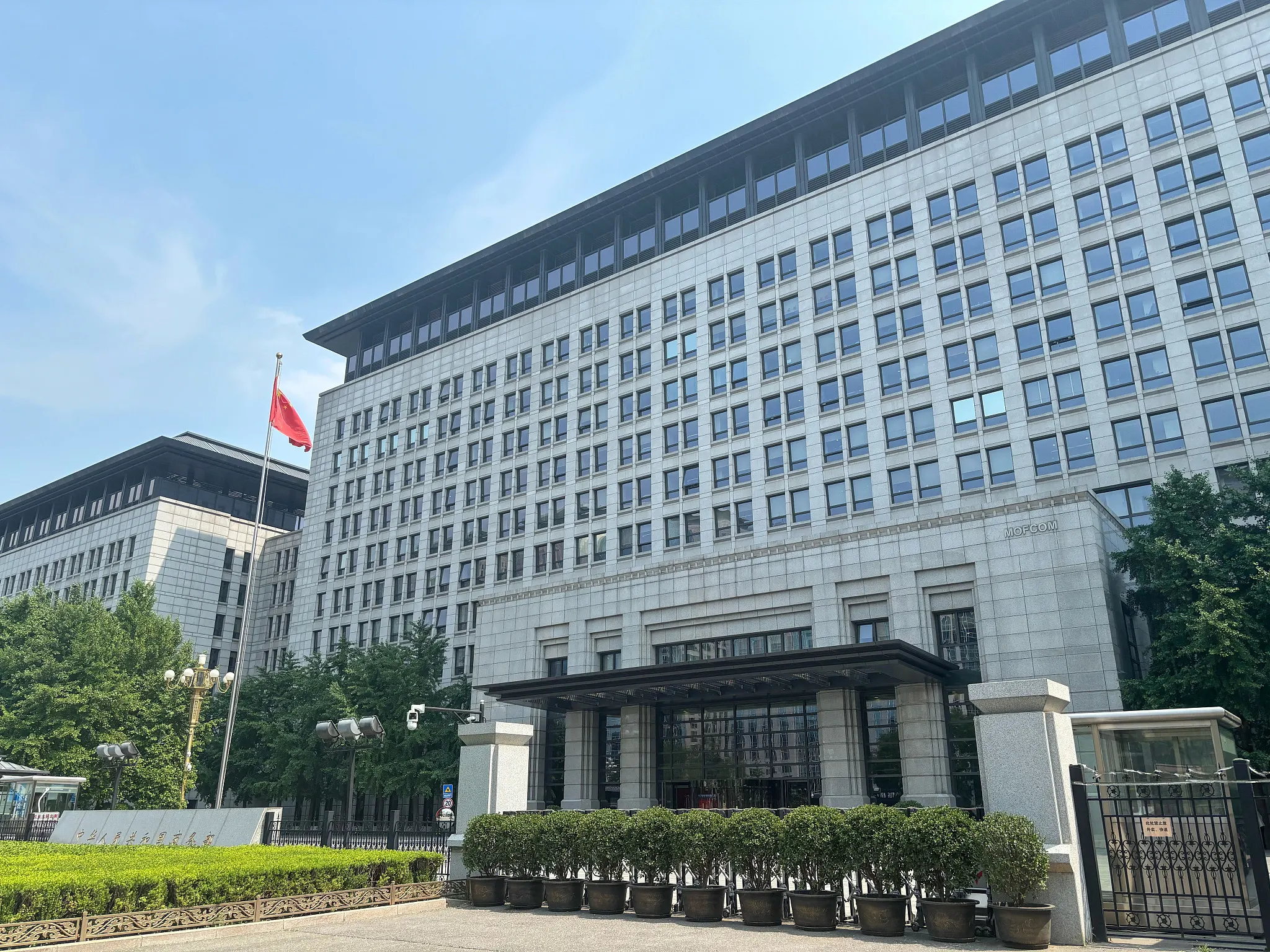
The Takeaway: China’s commerce ministry says putting its tariff cut deal with the US into effect would improve conditions for farm trade between the two countries. The arrangement covers about $30 billion of goods each way and still awaits domestic procedures on both sides. A week ago the ministry said larger Chinese purchases of US farm goods depend on it. Asked about reported 5G curbs on Chinese suppliers in Germany and Portugal, spokesperson He Yadong said China has expressed serious concern to the governments of the countries concerned.
China’s Ministry of Commerce said on Thursday it is in close contact with Washington on a reciprocal tariff reduction deal and hopes both sides can bring it into force soon.
The ministry asks Washington to help bring the arrangement into effect
The “30 billion for 30 billion” reciprocal tariff reduction framework arrangement, a deal under which each side cuts tariffs on an agreed list of the other’s goods, will help stabilize and expand trade between the two countries, He Yadong said at the ministry’s regular press conference. Business communities in both countries have high expectations of it, the spokesperson added.
He Yadong said he hoped the United States would work with China to put the arrangement into effect and deliver results as soon as possible, creating more favorable conditions for farm trade between them. The ministry gave no date and named no obstacle.
The two sides reached consensus on the arrangement at economic and trade consultations in New York and Washington in September, the ministry said on 28 September. Each side agreed to cut tariffs on about $30 billion of goods imported from the other. Tariffs on more than 90% of those goods are to fall to most-favored-nation rates, the standard rates a country applies to trading partners.
The ministry later published the product lists, as set out here on 28 September. China’s list carried 1,619 entries of US goods and the US list 77 entries of Chinese goods. Both sides will apply the cuts at the same time once each completes the procedures required under its own laws, according to the ministry.
The farm purchase condition is not restated
A week earlier, the ministry’s spokesperson Huang Ling said China had always been open to buying more US farm goods, but only once the arrangement both sides reached takes effect. Thursday’s answer did not repeat that condition. It linked the arrangement to better conditions for farm trade and called for it to take effect quickly.
On the wider consultations, the spokesperson said the two sides are in close communication on each other’s concerns in trade, investment and other areas, and that progress will be announced in due course. A reporter had asked whether the Board of Investment, the leaders’ companion body for investment issues, would be the focus of the next talks; the answer did not say.
In remarks dated 11 November and prepared for delivery at a gala of the National Committee on U.S.-China Relations, Treasury Secretary Scott Bessent said the two sides had reached consensus under the Board of Trade, a joint body the two leaders put into operation in September, to identify more favorable tariff treatment for $30 billion of non-sensitive goods each way, as set out here. Bessent also said President Donald Trump would meet Chinese President Xi Jinping in Shenzhen next week.
Eight rounds of consultations since May 2025
Asked about the state of relations with the APEC summit in Shenzhen due next week, as the question put it, He Yadong said the two sides have conducted eight rounds of economic and trade consultations since May 2025. China, he said, has fully implemented the consensus reached in earlier rounds.
Economic and trade ties between the two countries are mutually beneficial in nature, the spokesperson said, adding that “cooperation is the only correct path.” China is willing to keep strengthening cooperation with the United States under the consultation mechanism, manage differences properly and push for steady improvement in relations, according to the ministry.
On 9 November, the Customs Tariff Commission of the State Council, the cabinet body that sets China’s tariff measures, announced that Beijing would keep its 24% additional tariff on US goods suspended, as set out here at the time. The extension took effect at 13:01 Beijing time on 10 November. It runs for two months, and a 10% additional rate stays in force.
China voices serious concern after reports of 5G curbs in Germany and Portugal
A reporter cited media reports that the German government is revising rules to class 5G base stations as critical network components, a basis for barring Chinese equipment, and has said Chinese components will not be allowed in 6G networks. Portugal, the reports said, has reviewed its 5G ban under new cybersecurity rules and still classes Huawei as a high-risk supplier.
China had noted the reports and expressed serious concern to the governments of the countries concerned, He Yadong said. China has always maintained that 5G is important infrastructure for the global digital economy, according to the spokesperson, and that building and running it should respect market rules, international rules and technology neutrality, the principle that rules should not single out particular vendors’ technology.
China firmly opposes politicizing technical issues and stretching the concept of security too far, the ministry’s spokesperson said. He Yadong said China hoped the countries concerned would promptly correct what he called wrong practices and give Chinese companies a fair, just and nondiscriminatory business environment.
Import expo closes as preparations start for the tenth
The ninth China International Import Expo, the annual Shanghai fair where foreign companies show goods to Chinese buyers, ran from 5 to 10 November. Its enterprise exhibition area exceeded 370,000 square meters, He Yadong said, and 69 countries and international organizations presented themselves at the country exhibition.
A new display zone for national brands showed about 100 long-established brands from the guest-of-honor and theme countries, 30 of them more than a century old. Preparations for the tenth expo have already started, the spokesperson said.
Before the opening, the ministry had put the expo’s overall exhibition and display area above 440,000 square meters, with 162 countries, regions and international organizations taking part.
At a China-EU medical device matchmaking event during the expo on 5 November, the ministry worked with the finance ministry and the National Health Commission to bring more than 160 Chinese medical institutions and companies to buy on market terms. The European side brought more than 40 device makers.
More than 100 cooperation intentions were reached, benefiting Germany, Ireland, the Netherlands, Sweden and other member states, according to He Yadong. The spokesperson called the event an outcome of the second regular meeting of the China-EU trade and investment consultation mechanism, and an example of moving China-EU trade toward what the ministry calls upward balance.
In The Edge’s reading, the ministry is asking Washington to work with it to bring the tariff arrangement into effect: it ties the arrangement to better conditions for farm trade, while giving no timetable for the cuts and naming no obstacle.
Correction, 14 November 2026: An earlier version of this article said tariffs on about 90% of the goods would fall to most-favored-nation rates. The Ministry of Commerce’s 28 September statement says more than 90%.
Method: statements are from the Ministry of Commerce of China’s regular press conference transcripts of 12 November 2026 (spokesperson He Yadong), 5 November 2026 (spokesperson Huang Ling) and 29 October 2026, and from its 28 September 2026 reading of the eighth round of China-US economic and trade consultations, all published in Chinese, our translation; reporters’ descriptions of German and Portuguese measures are attributed to the media reports they cited; the tariff suspension is from the Customs Tariff Commission of the State Council’s announcement of 9 November 2026; Bessent’s remarks are from the US Treasury’s text dated 11 November 2026, marked as prepared for delivery; the product-list entries are as set out here on 28 September 2026.
Sources: Ministry of Commerce of China, Customs Tariff Commission of the State Council, US Department of the Treasury, White House.