Commodities Wrap 15 July: Oil Goes Flat at 85 Dollars as the Blockade Premium Stalls, Platinum Jumps 2.3 Percent and the VIX Sinks 4.7 Percent
The oil rally stopped climbing on Wednesday and simply held. Brent was effectively unchanged at its settlement window, quoted up 0.02 percent at 84.75 dollars a barrel against Tuesday’s 84.73 dollar close, its first flat session since the blockade on Iranian shipping was announced, our reading of the week’s closing sequence, even after a fresh wave of US strikes near the Strait of Hormuz during the day. The energy of the session went elsewhere: platinum jumped 2.34 percent to 1,681.10 dollars, the VIX sank 4.73 percent to 15.72, and June US producer prices delivered the week’s second disinflation print, after Tuesday’s negative consumer inflation reading, on a 12.0 percent drop in gasoline.
The closing sequence tells the premium story in four prints, our calculation from the week’s marks: 76.01 dollars on Friday before the announcement, 83.30 after Monday’s surge, 84.73 on Tuesday and 84.75 now, a blockade premium that built to about 11.5 percent in two sessions and has since added nothing. WTI matched the pattern, up 0.04 percent at 79.37 dollars, and US natural gas rose 0.55 percent to 2.92 dollars per million British thermal units. Wednesday’s strikes, which US Central Command said targeted coastal defense systems and cruise missile sites used against commercial shipping, per CNBC, produced no separate oil move at all, the clearest sign yet that the market has, so far, priced the campaign as a contained and shipping-focused conflict, our reading, which is a judgment the next escalation can overturn.
The demand side keeps arguing against a higher premium. China’s second-quarter growth of 4.3 percent, the weakest since late 2022 per the statistics bureau release, landed a day after customs data showed June crude imports down 41.3 percent, a volume signal that also reflects refinery runs and inventories rather than final consumption alone, both covered in our market wraps, and June US producer prices confirmed the disinflationary pull from the other direction: the final demand index fell 0.3 percent on the month as energy dropped 6.4 percent and gasoline 12.0 percent, accounting for nearly two-thirds of the goods decline, per the Bureau of Labor Statistics. Producer inflation still runs at 5.5 percent annually, but the month’s direction gave bonds their signal, the 10-year Treasury yield easing about 4 basis points to 4.55 percent.
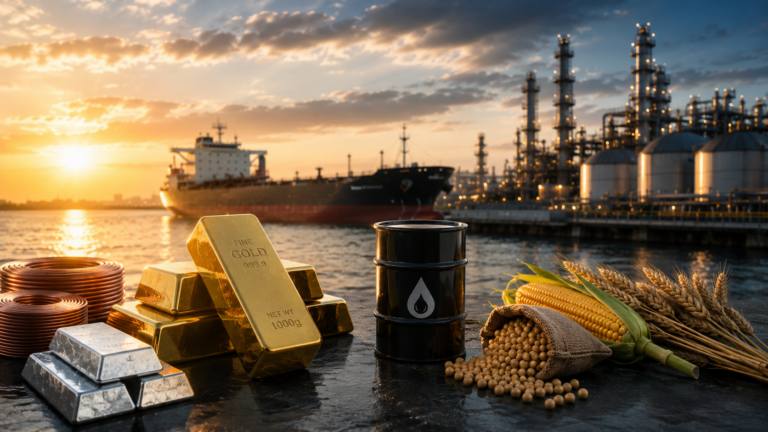
Metals split along the policy line. Platinum led the board at 1,681.10 dollars, up 2.34 percent and about 4.3 percent above Monday’s late print, our calculation, with palladium adding 0.60 percent to 1,315.50 and gold a quiet 0.22 percent to 4,078.60, holding comfortably above the 4,000 dollar line it defended through the crisis. Silver was the outlier, down 1.08 percent at 58.47 dollars, and copper was near flat at 6.3865 dollars a pound. Bitcoin rose 0.74 percent to 65,021 dollars, and US equities traded higher in the afternoon session, the Nasdaq up 0.61 percent.
The volatility complex is quietly pricing the acute phase as over, whether or not the conflict agrees. The VIX at 15.72 sits about 4.6 percent above its close before the blockade announcement, our calculation from the session record, meaning four days of escalation, a nearly ten percent oil surge and a Korean circuit breaker have left barely a twentieth of fear premium in the index. Chair Warsh’s Senate appearance, his second testimony in two days, generated headlines about Fed communication with the administration rather than about the rate path, per CNBC.
Why it matters: A flat oil settlement on a strike day is information: the market has separated the military campaign from the supply outlook, and with China printing its weakest quarter since 2022 and importing near-decade-low crude volumes, the demand side is capping what geopolitics can add. For the Gulf, Brent parked near 85 dollars is a materially better fiscal price than June’s, still short of the 94 dollar Saudi breakeven Fitch flagged for 2027, covered on this site, an annual-average benchmark rather than a spot comparison, and the premium’s dependence on a conflict staying contained is the fragility inside the comfort.
Outlook: The markers from here: the Bank of Korea decides Thursday morning with UK GDP the same day, more bank earnings run through the week, and Qatar’s exchange reopening on Sunday gives the region its next sentiment print. In the physical market, the watch items remain war-risk insurance and tanker-rate quotes against a now-static crude price, and whether June’s gasoline-led producer disinflation survives July’s blockade-priced fuel.
Table – Commodities, rates, volatility and crypto, late New York trade 15 July, ranked by change:
| Instrument | Level | Change |
|---|---|---|
| Platinum | $1,681.10 | +2.34% |
| Bitcoin | $65,020.87 | +0.74% |
| Palladium | $1,315.50 | +0.60% |
| US natural gas | $2.92 | +0.55% |
| Gold | $4,078.60 | +0.22% |
| Copper | $6.3865 | +0.13% |
| WTI crude | $79.37 | +0.04% |
| Brent crude | $84.75 | +0.02% |
| US 10-year Treasury yield | 4.55% | -4 bps |
| Silver | $58.47 | -1.08% |
| VIX | 15.72 | -4.73% |
Price basis: CNBC quotes pulled about 18:40 UTC on 15 July, oil at its settlement window, against Tuesday’s closes; figures are market quotes, not independently confirmed official settlements.
Sources: US Bureau of Labor Statistics; National Bureau of Statistics of China; General Administration of Customs of China; CNBC.