Commodities Wrap 30 June: Silver Leads Metals Higher as WTI Slips Below US$70
Silver led a stronger session for metals on Tuesday, natural gas rebounded and crude oil eased, with US West Texas Intermediate settling back below US$70 a barrel while Brent held above US$72. The session showed a clear split across the commodity complex: metals were supported by renewed interest in precious and industrial contracts, while crude gave back part of its regional supply-risk premium as immediate shipping-disruption fears stayed contained.
Gold and precious metals
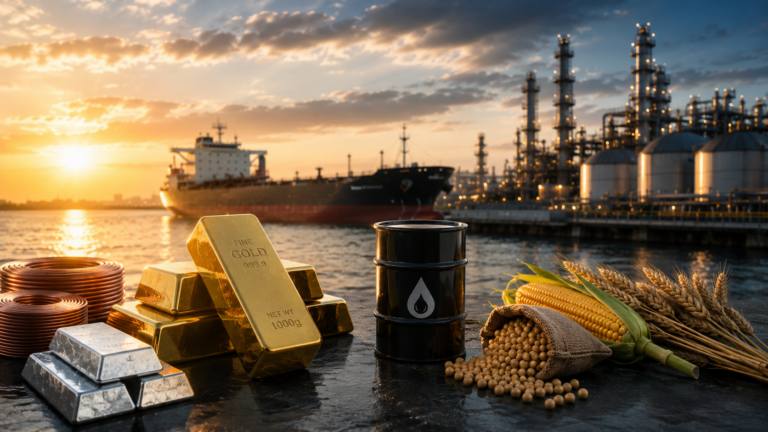
Silver was the standout, settling up 2.78 percent at US$59.79 an ounce on the COMEX July contract, an increase of about US$1.62 from the prior settlement near US$58.17 and a much stronger move than gold. Gold edged up 0.10 percent to US$4,042.80 an ounce on the COMEX August contract, a gain of about US$3.90 from the prior settlement, holding above the US$4,000 level.
The gold-to-silver ratio narrowed to about 67.6 times, from roughly 69.4 times implied by the previous settlements, as silver outperformed gold by about 2.7 percentage points on the day. That matters because silver behaves as both a precious and an industrial metal, so its outperformance points to a broader metals bid rather than a purely defensive move into gold. Gold still held its ground on its strategic reserve role: OMFIF’s Global Public Investor 2026 survey, released this week, reinforces that backdrop, with reserve managers increasingly treating gold as protection against geopolitical risk rather than only as a financial allocation.
Oil
Crude eased after the prior session’s rebound. WTI settled down 1.16 percent at US$69.93 a barrel on the August contract, a decline of about US$0.82, slipping back below US$70, while ICE Brent settled 0.31 percent lower at US$72.92 a barrel, down about US$0.23. The Brent premium over WTI stood at about US$2.99 a barrel. The key signal is that WTI moved below the US$70 threshold while Brent stayed comfortably above it, meaning oil softened but did not fully shed the regional risk premium. The pullback reflected a market still pricing some geopolitical and shipping risk, but with less urgency than during the recent spike. As long as shipping through the Strait of Hormuz stays uninterrupted, the premium is likely to remain contained; any renewed disruption would quickly change that balance.
Natural gas and industrial metals
US natural gas rebounded, settling up 2.48 percent at US$3.26 per million British thermal units on the August contract, recovering part of the prior session’s decline and keeping gas in a range where weather demand and storage expectations remain the main short-term drivers. Copper gained 1.61 percent to US$6.196 a pound on the July contract, up about US$0.10 from the prior settlement. The gain matters because copper is a cleaner read on industrial demand than gold or oil, and its strength, together with silver’s rally, points to firmer demand expectations across the metals complex.
Why it matters
For the region, the session captures a terms-of-trade split. Energy exporters face a modestly softer oil-revenue signal as WTI moves below US$70, although Brent above US$72 and the remaining risk premium still provide support; a one-day WTI decline is not budget-changing, but it weakens the near-term cash-flow signal at the margin. For energy importers in the region, softer crude is a modest relief for import bills, inflation and external balances, though that relief is partly offset if natural-gas strength persists, especially for economies exposed to LNG or gas-linked power costs. For the broader regional investment picture, firmer gold, silver and copper point to two forces at once: reserve managers continue to view gold as strategic insurance, while stronger silver and copper suggest investors are not pricing a broad collapse in industrial demand, a combination more constructive for metals than for crude in the immediate session.
Outlook
The near-term path depends on three drivers. First, oil will stay sensitive to whether regional diplomacy holds and shipping through the Strait of Hormuz stays uninterrupted; if flows remain stable the crude risk premium should stay contained, while a return of disruption risk would likely move Brent faster than WTI. Second, gold and silver will remain tied to the dollar and US rate expectations, with a stronger dollar or higher real-rate expectations capping rallies and renewed reserve-diversification demand supporting gold’s floor. Third, copper needs confirmation from industrial-demand indicators: if it extends gains while oil stays soft, the signal would be more about selective demand resilience than broad commodity strength.
Summary table
| Commodity (Tue 30 Jun settlement) | Price | Change | Move |
|---|---|---|---|
| Silver (COMEX Jul) | US$59.79 /oz | +2.78% | +US$1.62 |
| Natural Gas (Aug) | US$3.26 /MMBtu | +2.48% | +US$0.08 |
| Copper (Jul) | US$6.196 /lb | +1.61% | +US$0.10 |
| Gold (COMEX Aug) | US$4,042.80 /oz | +0.10% | +US$3.90 |
| Brent Crude (Aug) | US$72.92 /bbl | -0.31% | -US$0.23 |
| WTI Crude (Aug) | US$69.93 /bbl | -1.16% | -US$0.82 |
Sources: CNBC; OMFIF Global Public Investor 2026.