EBRD to Buy 30% of Hassan Allam Utilities’ Water Arm in Up to $31m Egypt Desalination Deal

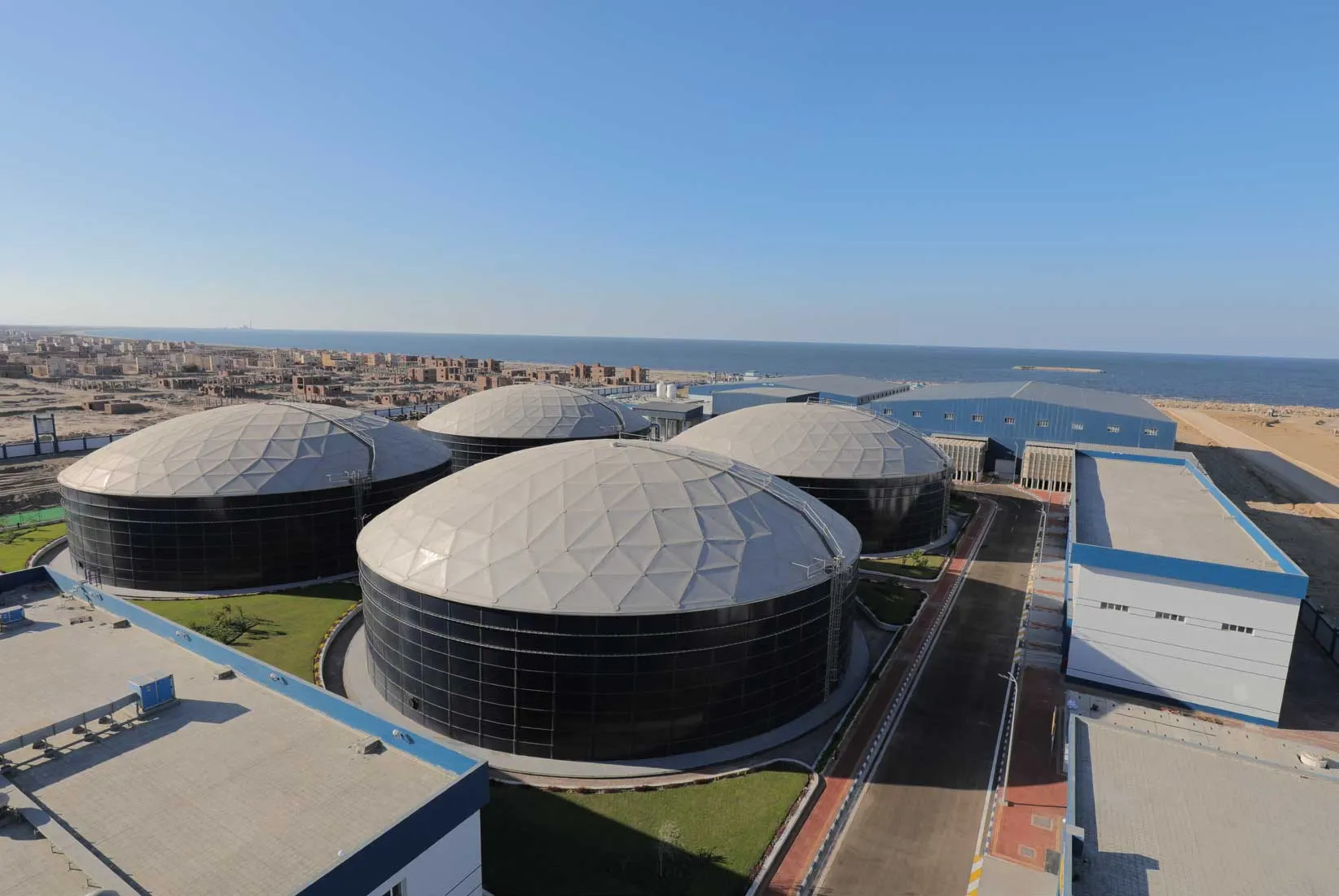
The Takeaway: Development-bank equity is reaching the private end of Egypt’s desalination build-out. RWD Investments owns and operates 79 plants in the country’s coastal cities, and Hassan Allam Utilities supplies about two-thirds of the equity package. RWD plans to add up to 15,000 cubic meters a day of capacity each year for coastal businesses that cannot draw on municipal water.
The European Bank for Reconstruction and Development is investing up to $31 million for a 30% stake in RWD Investments, a water development arm of Egypt’s Hassan Allam Utilities.
The bank announced the equity investment on Tuesday 17 November, putting it at up to EUR 28.1 million in euro terms. The proceeds will pay for the stake and fund RWD’s near and medium term expansion. They will also support future large desalination and wastewater projects through public-private partnerships, contracts under which private firms build and run public infrastructure, the EBRD said.
Hassan Allam Utilities puts in about two-thirds of the $92 million package
Hassan Allam Utilities is contributing up to $61 million toward the overall $92 million of equity investment in the water infrastructure platform. That leaves the parent with about two-thirds of the package; the table sets out the euro amounts and the shares.
Put another way, Hassan Allam Utilities commits almost two dollars for every dollar the bank brings, while the EBRD will take a minority stake of 30% in RWD.
Equity package for the RWD water platform (maximum amounts)
| Investor | $ million | € million | Share of package % |
|---|---|---|---|
| Hassan Allam Utilities | 61 | 55.3 | 66.3 |
| EBRD | 31 | 28.1 | 33.7 |
| Total | 92 | 83.4 | 100.0 |
Amounts are the “up to” figures the bank printed on 17 November 2026; shares are of the dollar total. The bank did not say how the package divides between buying the stake and building new plants.
A 79-plant operator plans up to 15,000 cubic meters a day of new capacity a year
RWD was set up in 2019 and operates in Egypt through three companies: Ridgewood for Water Desalination, Sinai for Environmental Services and Ridgewood Egypt for Infrastructure Projects. The group owns and operates 79 desalination facilities across Egypt’s coastal cities. Their combined design capacity was about 96,340 cubic meters a day as at December 2025, and its customers include tourism and industrial companies.
That works out at about 1,220 cubic meters a day per plant. RWD will add up to 15,000 cubic meters a day of desalination capacity each year through to 2030, from new and upgraded plants, the bank said. The maximum annual addition equals 15.6% of the design capacity the group had at the end of 2025.
In an illustrative case in The Edge’s reading, RWD adds nothing more in 2026 and the full 15,000 in each of the four years from 2027 to 2030. Capacity would then reach about 156,000 cubic meters a day. That is 62% more than at the end of 2025. The EBRD gives the addition as a maximum, not a schedule.
RWD will also rehabilitate existing desalination facilities to cut their energy consumption and improve their energy efficiency, according to the bank.
Coastal developments need water beyond the Nile network
Demand for alternative water sources is growing in Egypt’s coastal areas, where many tourism, industrial and other private developments cannot rely on municipal water networks, the EBRD said. The government has deliberately constrained further extensions of Nile-sourced water infrastructure to coastal tourism developments, the bank said, which makes RWD’s business-to-business desalination model “an essential alternative”.
The investment supports Egypt’s water-security strategy, under which the government plans to use its Red Sea and Mediterranean coastlines for new desalination plants, according to the bank.
The state is adding plants of its own. As set out earlier, Housing Minister Randa El-Menshawy said on 26 October that Egypt runs 129 seawater desalination plants with an estimated 1.41 million cubic meters a day of capacity.
At a meeting on 25 October, Egypt’s High Committee for Partnership Affairs cleared a 900,000 cubic meter a day plant in Port Said and a 1 million cubic meter a day plant in Suez for tender under the public-private partnership law.
In The Edge’s reading, the RWD deal brings a development bank’s equity to the smaller, private end of the same build-out: plants that sell water to hotels and factories, alongside the large plants the state is tendering.
Two leaders cite water security
“Water is a strategic resource for Egypt and essential to the country’s resilience and future growth,” EBRD President Odile Renaud-Basso said. The bank, she said, is “acting as a long-term equity partner to scale up sustainable infrastructure” and expects the partnership to support “a private sector-led utilities outsourcing model” for Egypt’s water sector.
Amr Allam, Group Co-CEO of Hassan Allam Holding and Chairman of Hassan Allam Utilities, called water security “a strategic priority for Egypt’s long-term economic development”. He said it underpins industrial growth, agricultural productivity and the needs of a growing population.
The bank adds a second Egypt commitment the same day
The EBRD announced a second Egypt deal the same day. The bank is also lending up to $100 million to the National Bank of Egypt, to be channeled through microfinance institutions to microenterprises, with a focus on women-led businesses.
Hassan Allam Utilities is already an EBRD partner. Established in 2017, it is the sustainable infrastructure investment and development arm of Hassan Allam Holding, working in renewable energy, water, transport and logistics, digital infrastructure and social infrastructure. As set out earlier, HAU Energy, a developer behind the Benban and Minya solar projects, is owned by Meridiam, Hassan Allam Utilities and the EBRD.
The EBRD has invested almost EUR 17 billion in Egypt across 245 projects since it began operating there in 2012, it said.
Method: deal terms, RWD’s figures and quotations are from the EBRD’s announcement “EBRD invests up to US$ 31 million in Egypt’s desalination infrastructure” of 17 November 2026; the National Bank of Egypt loan is from the EBRD’s announcement of the same date; shares, ratios, the per-plant average and the illustrative case not attributed to a source are The Edge’s calculations.
Sources: European Bank for Reconstruction and Development, The Edge.