Egypt’s Monthly Inflation Was Zero in July and the Annual Rate Still Rose to 14.9 Percent
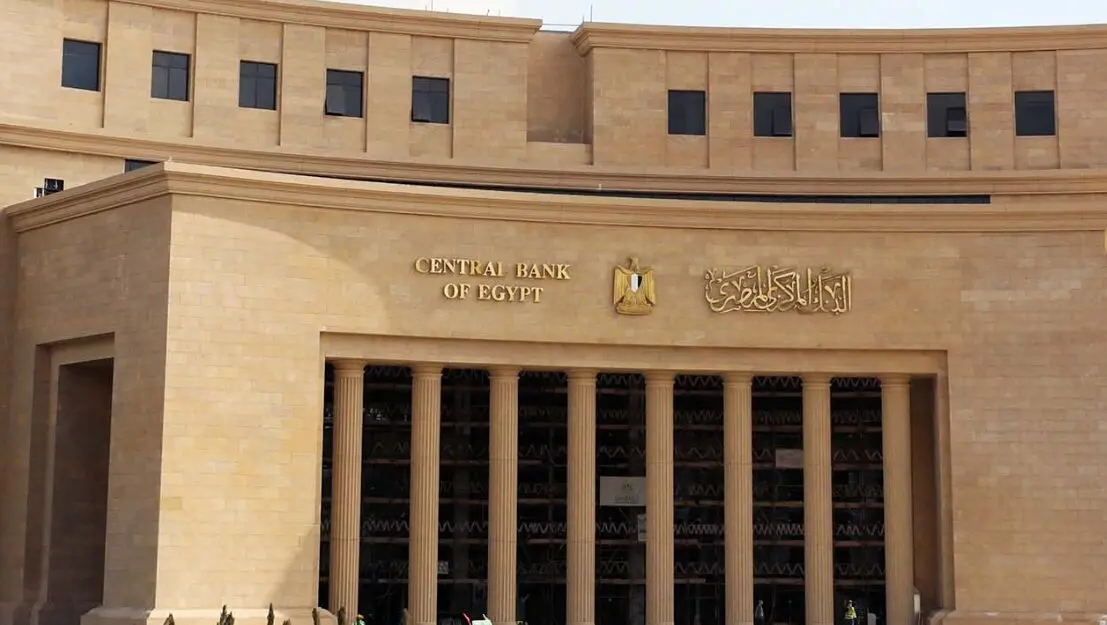
The Central Bank of Egypt published its monthly inflation note on 18 August, two days before the Monetary Policy Committee meets. Annual urban headline inflation was 14.9 percent in July against 14.3 percent in June, while the monthly rate was zero. The Bank attributes the annual increase to an unfavourable base effect.
The aggregate urban index was unchanged in July, and the annual rate rose anyway. Monthly urban inflation was 0.0 percent, against falls of 0.5 percent in July 2025 and 0.4 percent in June 2026. Because the annual rate compares against a month in which prices fell, a flat month is enough to push the twelve month figure up. Monthly core inflation was also zero, against a fall of 0.3 percent a year earlier.
| Egypt inflation, July 2026 | June | July |
|---|---|---|
| Annual urban headline | 14.3% | 14.9% |
| Monthly urban headline | -0.4% | 0.0% |
| Annual core | 14.3% | 14.7% |
| Monthly core | +0.3% | 0.0% |
| Annual food | 5.4% | 8.0% |
| Annual non-food | 19.9% | 19.1% |
| Annual rural headline | 10.1% | 11.2% |
| Annual nationwide | 12.2% | 13.0% |
Underneath the base effect, the direction is the opposite of the headline. Annual non-food inflation decelerated to 19.1 percent from 19.9, which the Bank describes as continuing to hover around the 20 percent level since early 2025. Monthly non-food inflation was 0.3 percent, which the Bank calls its lowest monthly rate since mid-2025. Monthly food prices fell 0.6 percent, with both the volatile and core food components declining for a second consecutive month. Poultry fell 4.8 percent on the month, alongside eggs, red meat and pasta.
The annual food figure is a base effect too. Food inflation rose to 8.0 percent from 5.4 despite prices falling month on month. Within it, annual volatile food inflation jumped to 31.5 percent from 16.9, driven by fresh vegetables up 50.0 percent over the year, while annual core food inflation was 4.2 percent. Regulated items were unchanged on the month, with no administered prices adjusted, and their annual rate fell to 11.4 percent from 13.7, which the Bank links to slower fiscal consolidation measures. Annual services inflation held at 27.3 percent.
The Bank’s liquidity operation the same day tells a second story. At its weekly fixed rate deposit auction on 18 August the central bank accepted 67.21 billion pounds across six bids at 19.50 percent, a full 100 percent allotment, against 177.4 billion maturing from the previous week.
| Weekly fixed rate deposit auctions | Accepted |
|---|---|
| 7 July | EGP 30.0bn |
| 14 July | EGP 13.9bn |
| 21 July | EGP 22.0bn |
| 28 July | EGP 55.15bn |
| 4 August | EGP 23.25bn |
| 11 August | EGP 177.4bn |
| 18 August | EGP 67.21bn |
Read the series rather than the pair. The 11 August operation is roughly 2.6 times the next largest week and about 5.9 times the seven week median of 30.0 billion pounds, so it is the outlier. At 67.2 billion pounds, 18 August is the second largest week in the run and well above the 13.9 to 30 billion range that prevailed through July. Across the seven weeks the accepted amounts span a range of about 12.8 times from smallest to largest. Every operation clears at the same fixed 19.50 percent with full allotment, so these are volume swings in the banking system’s surplus, not pricing signals.
Why it matters: The committee arrives at the decision with a headline rate that rose for arithmetic reasons, an underlying non-food rate that is easing, monthly prices flat, and a banking system whose weekly liquidity absorption has spanned a range of about 12.8 times across seven weeks. The policy rate has been 19.00 percent on overnight deposits, 20.00 on overnight lending and 19.50 on the main operation since 15 February, following the 100 basis point cut decided on 12 February. On a simple ex post comparison, the overnight deposit rate stood 4.10 percentage points above July headline inflation, against 4.70 points in June. That is a backward looking spread against prevailing prices, not a measure of the policy stance, which the Bank sets against its forecast path.
Outlook: The Monetary Policy Committee meets on 20 August. The Bank publishes the meeting date but not the time. The remaining 2026 meetings are 24 September, 29 October and 17 December. The measurable test in the next note is whether monthly non-food inflation holds near its 0.3 percent low, because that, rather than the annual headline, is where the base effect cannot reach.
Sources: Central Bank of Egypt, Monetary Policy Inflation Note July 2026, published 18 August 2026 · Central Bank of Egypt, fixed rate deposit auction results and historical data, read 19 August 2026 · Central Bank of Egypt, Monetary Policy Committee decisions and schedule · Central Agency for Public Mobilization and Statistics for the headline urban index. The weekly auction series, the comparison of the 11 and 18 August operations against the window median, and the spread of the policy rate over current inflation calculated by The Edge Research Team.