Egypt and China Extend Currency Swap Agreement for Three Years
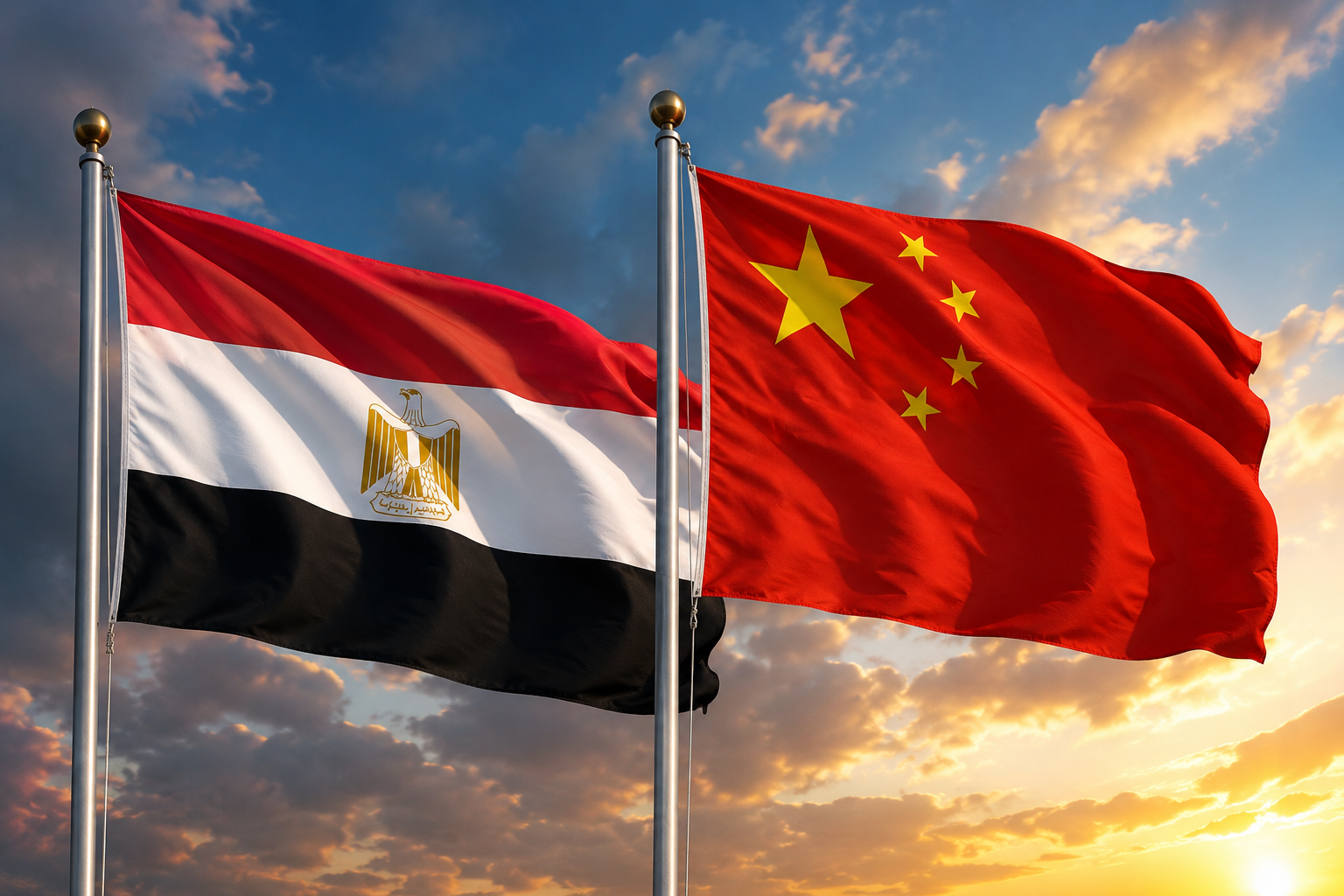
Egypt and China have renewed their bilateral local currency swap agreement for another three years, strengthening monetary cooperation between the two countries and expanding the financial tools available to support trade and investment.
According to the People’s Bank of China, the agreement between the People’s Bank of China and the Central Bank of Egypt has been extended for an additional three years, with the possibility of renewal. The size of the swap facility was also increased from 18 billion yuan to 30 billion yuan, equivalent to around $4.43 billion.
The expansion is significant because it raises the available facility by 12 billion yuan. In percentage terms, this represents an increase of approximately 66.7% from the previous size. Based on the reported dollar equivalent, the implied exchange rate is around 6.77 yuan per US dollar.
What the Agreement Means
A central bank currency swap agreement allows two central banks to exchange currencies under an agreed framework. In this case, it gives Egypt and China a mechanism to access local currency liquidity and facilitate transactions without relying exclusively on the US dollar.
The agreement does not mean that Egypt receives a permanent cash inflow of $4.43 billion. It is better understood as a liquidity facility that may be used under agreed conditions. If activated, it can help support trade settlement, investment flows and financial cooperation between the two countries.
The three-year extension also provides policy continuity. For businesses, banks and investors involved in Egypt-China trade, the renewed facility signals that both central banks want to deepen the use of local currencies in bilateral transactions.
Numeric Analysis
The previous swap line stood at 18 billion yuan. The new facility is 30 billion yuan. That means the agreement has been expanded by 12 billion yuan.
This is equivalent to a 66.7% increase in available yuan liquidity under the facility.
Based on the reported dollar equivalent of $4.43 billion, the previous 18 billion yuan facility would have been equivalent to roughly $2.66 billion at the same implied exchange rate. The expansion therefore adds about $1.77 billion in equivalent liquidity capacity.
This does not mean an annual disbursement of 10 billion yuan over the three-year period. The 30 billion yuan figure refers to the maximum facility size, not a yearly transfer. The practical impact depends on whether the line is drawn, how much is used, and whether banks and companies increase local currency settlement.
Why It Matters for Egypt
For Egypt, the extension comes at a time when managing foreign currency liquidity, trade finance and import costs remains important for macroeconomic stability.
China is a major economic partner for Egypt, and a broader local currency settlement framework can help reduce pressure at the margin on dollar-based transactions. This is particularly relevant for importers, infrastructure projects and companies involved in bilateral trade.
The swap line may also support confidence by showing that Egypt has access to an additional bilateral liquidity arrangement with a major global trading partner. However, it should not be viewed as a substitute for foreign direct investment, export growth, tourism revenues, remittances or external financing from multilateral institutions.
Why It Matters for China
For China, the agreement supports the international use of the renminbi and strengthens financial links with a key Middle Eastern and African economy.
China has used bilateral currency swap agreements as part of a broader strategy to encourage local currency settlement in trade and investment. Egypt is strategically important because of its location, the Suez Canal, its role in Arab and African markets, and its participation in China-linked infrastructure and investment initiatives.
The renewed agreement therefore has both financial and strategic value. It supports practical trade settlement while reinforcing China’s long-term economic relationship with Egypt.
Trade and Investment Implications
The main commercial impact is likely to come through trade settlement and financial cooperation. If Egyptian and Chinese banks make wider use of local currency settlement, some transactions could be conducted with less dependence on the dollar.
This may help companies reduce currency conversion friction, especially where Chinese suppliers are willing to invoice or settle in yuan. It may also support Chinese companies investing in Egypt by improving access to local currency and yuan liquidity channels.
The impact will depend on market usage. Swap agreements are useful frameworks, but their effectiveness depends on banking system readiness, corporate demand, settlement infrastructure and confidence in using local currencies.
Strategic Context
The agreement reflects the growing role of financial cooperation in Egypt-China relations. The two countries already have a broad economic relationship covering trade, infrastructure, investment, industrial zones and development projects.
By expanding the swap facility, both central banks are adding a monetary dimension to that relationship. The goal is not only to provide liquidity, but also to support broader use of local currencies and reduce friction in bilateral commerce.
For Egypt, this fits into a wider effort to diversify external financing sources and reduce pressure on dollar liquidity. For China, it supports the gradual internationalization of the yuan and deepens its financial connectivity with emerging markets.
Key Risks and Limitations
The agreement has clear benefits, but it also has limitations.
First, a swap line is not the same as a direct investment inflow or a permanent reserve increase. It is a facility that may be drawn under specific terms.
Second, local currency settlement does not eliminate Egypt’s broader need for hard currency, especially for transactions priced globally in dollars, including energy, commodities and external debt service.
Third, usage depends on private sector adoption. If companies and banks continue to prefer dollar settlement, the practical impact of the swap line may remain limited.
Outlook
The renewal and expansion of the Egypt-China currency swap agreement is a positive signal for bilateral financial cooperation. The increase from 18 billion yuan to 30 billion yuan strengthens the scale of the facility and gives both countries more room to support trade and investment through local currencies.
The key takeaway is that the agreement gives Egypt and China a larger monetary cooperation tool, but its real economic effect will depend on actual usage. If banks and companies make greater use of yuan and Egyptian pound settlement, the facility could help reduce dollar pressure at the margin and deepen bilateral trade links.
For Egypt, the swap agreement adds another layer to its external liquidity toolkit. For China, it reinforces the international role of the yuan and strengthens financial ties with a strategically important partner in the Middle East and Africa.
Source note: Data used in this article is based on People’s Bank of China announcements, with broader context from public information on central bank swap mechanisms and China-Egypt economic cooperation.