Egypt’s Net International Reserves Climb to a Record US$55.1 Billion in June in the Biggest Monthly Jump of the Year
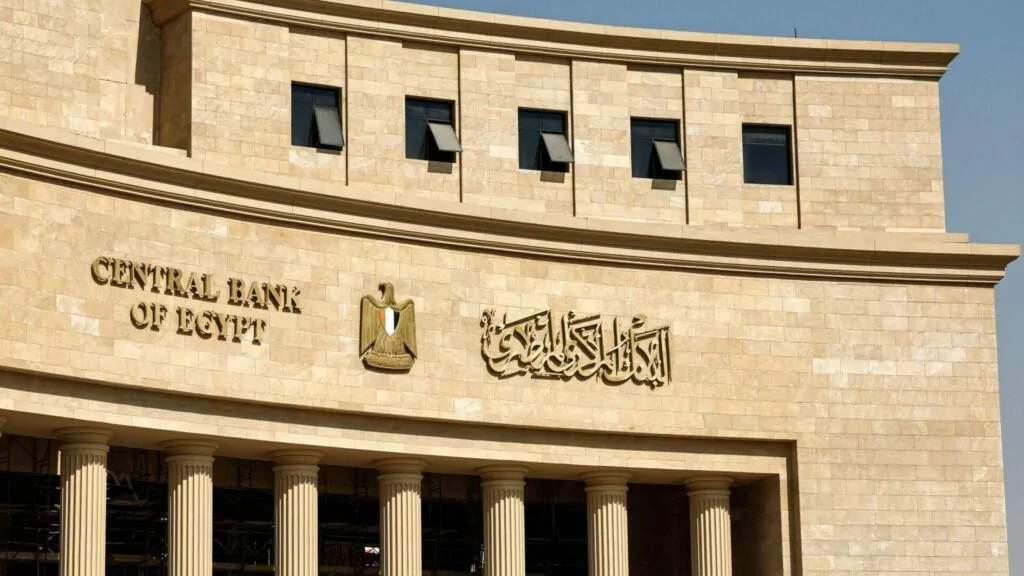
Egypt’s net international reserves rose to a record US$55.07 billion at the end of June, the Central Bank of Egypt reported, in the largest monthly increase of an uninterrupted run of reserve gains that has continued across 2026. The figure, at US$55,072.3 million on a provisional basis, was up about US$1.94 billion, or 3.65 percent, from May, our calculation, a much bigger jump than the small gains of recent months and a fresh peak that extends Egypt’s recovery from the foreign-currency crisis of 2022 and 2023.
The scale of the June gain stands out. Through the earlier part of the run, reserves had climbed steadily but slowly, from US$51.45 billion at the end of 2025 to US$52.59 billion in January, US$53.01 billion in April and US$53.13 billion in May, with monthly increases often measured in the low hundreds of millions of dollars. June’s rise of nearly US$2 billion is an order of magnitude larger. In fact, the June increase alone exceeded the entire rise of about US$1.68 billion recorded over the first five months of the year, accounting for about 54 percent of the year-to-date reserve build, our calculation. On an annual basis, reserves are up US$6.37 billion, or 13.1 percent, from US$48,700.2 million at the end of June 2025, our calculation.
Egypt’s net international reserves in 2026, month by month
| Month, 2026 | Net international reserves (US$ million) | Monthly change |
|---|---|---|
| January | 52,593.8 | +2.22% |
| February | 52,745.5 | +0.29% |
| March | 52,830.6 | +0.16% |
| April | 53,009.2 | +0.34% |
| May | 53,134.2 | +0.24% |
| June (provisional) | 55,072.3 | +3.65% |
January’s monthly change is measured against end-December 2025 (US$51,451.6 million). The June figure is provisional. Source: Central Bank of Egypt; monthly percentage changes are The Edge’s calculations.
The composition of the buffer helps explain the broader build-up over 2025, though not the precise June move, since the central bank does not publish a monthly component split. According to the central bank’s end-2025 breakdown, the value of Egypt’s gold holdings jumped to US$18.17 billion from US$10.64 billion a year earlier, a rise of about 70 percent, our calculation, while the foreign-currency portion of reserves actually fell, to US$33.23 billion from US$36.44 billion. On those figures gold made up roughly 35 percent of total reserves at the end of 2025, our calculation, an unusually high share that reflects both official accumulation and the sharp rise in the gold price. The headline increase in Egypt’s reserves has therefore been driven substantially by gold, even as the country has also worked to rebuild its hard-currency holdings.
That places Egypt squarely within a global trend. In its Global Public Investor 2026 report, published on 30 June, OMFIF found that central banks are turning to gold at an accelerating pace, with 82 percent of the monetary authorities it surveyed now holding physical gold, up from 71 percent a year earlier, and a net 30 percent planning to add more over the next one to two years. The same survey recorded, for the first time since OMFIF began tracking long-term intentions, more central banks planning to reduce their dollar holdings than increase them over the coming decade, with protection against geopolitical risk the most-cited motivation. Egypt’s gold-heavy reserve mix is a concrete regional example of exactly that shift.
The reserve strength rests on a genuinely improving external position, even if the picture is not uniformly positive. The central bank’s balance-of-payments data for the first half of the 2025 and 2026 fiscal year showed the current-account deficit narrowing about 13.6 percent to US$9.5 billion from US$10.9 billion a year earlier, helped by a surge in remittances to US$22.1 billion, up nearly 30 percent, a services surplus of US$8.9 billion and tourism receipts of US$10.2 billion. Net foreign direct investment rose to US$9.3 billion from US$6.0 billion. Suez Canal receipts, at US$2.2 billion, were up about 19 percent year on year but remained well below their pre-disruption levels, a reminder that one of Egypt’s traditional hard-currency earners has yet to fully recover. Notably, the overall balance of payments still recorded a deficit of about US$2.1 billion in the half, wider than a year earlier, which underlines that the reserve build has leaned on official financing and valuation gains as much as on underlying flows.
External financing has provided important support. Egypt’s 46-month Extended Fund Facility with the International Monetary Fund, approved in December 2022 and extended to December 2026, remains on track: the Fund’s Executive Board completed the combined fifth and sixth reviews, along with the first review under the Resilience and Sustainability Facility, on 26 February 2026, releasing roughly US$2.3 billion this year. The IMF has pointed to real growth of about 4.4 percent in the 2024 and 2025 fiscal year and inflation easing into the low teens, while flagging the pace of structural reform and state-asset divestment as the main outstanding risk. More recently, on 29 June, IMF staff reached a staff-level agreement with Egypt on the seventh review under the facility, which, if approved by the Fund’s board, would unlock further financing. The central bank did not specify what drove the June increase in reserves; monthly moves of this size typically reflect a mix of external inflows, official financing and valuation gains rather than any single factor.
The adequacy of the buffer is solid on the standard measures. Even before June’s increase, the central bank had put reserves at about 6.3 months of imports and around 158 percent of short-term external debt, both comfortably above the levels usually treated as adequate, with three months of import cover the common benchmark. Applying June’s 3.65 percent increase mechanically to those earlier ratios, holding the import and debt denominators unchanged, would imply coverage of roughly 6.5 months of imports and about 164 percent of short-term external debt, our calculation, though the official updated figures will depend on new import and debt data. Either way, a reserve position that now covers well over six months of imports gives the central bank meaningful room to manage the currency and absorb shocks, from swings in energy prices to shifts in global capital flows.
Why it matters: Reserves are the foundation of Egypt’s external stability, underpinning the exchange rate, import capacity and investor confidence, so a record above US$55 billion with more than six months of import cover is a tangible marker of recovery from the 2022 to 2023 crisis, and the size of June’s jump suggests the buffer is strengthening rather than merely holding. The gold-driven nature of the longer build-up is the more strategic point: it aligns Egypt with a global reordering of reserve management, flagged by OMFIF, in which central banks are diversifying away from the dollar and toward gold. For a country that relies heavily on imported energy and food and on external financing, a deeper and better-diversified buffer lowers vulnerability and supports the disinflation and rate-easing path the central bank is navigating.
Outlook: With June’s record in hand, the near-term markers are the June inflation reading due 9 July, the central bank’s next rate decision, and whether reserves can hold their gains once any one-off inflows are absorbed. The durability of the buffer depends on the recovery of Suez Canal receipts, the continued strength of remittances and tourism, progress on the IMF programme and asset sales, and the path of the gold price, which now moves Egypt’s reserve valuation more than it has in the past. A sustained narrowing of the current-account deficit alongside steady financing would allow reserves to keep rising on firmer underlying foundations.
Sources: Central Bank of Egypt; International Monetary Fund; OMFIF.