EIA Sees Brent Near $100 Through December, Averaging $77 in the Fourth Quarter of 2027


The Takeaway: The US Energy Information Administration expects Brent to stay around $100 a barrel through December, then ease to an average of $77 in the fourth quarter of 2027 as depleted inventories rebuild and, by its assumption, Middle East output returns. It raised its 2027 forecast for US retail diesel by 12% from October, assuming fuel markets stay tight through the end of next year. The Edge reads the $77 path as resting on Middle East export routes that the agency itself says remain open to disruption.
Falling inventories and tanker attacks pushed Brent to a $124 a barrel average in October, its highest since July 2022, the US Energy Information Administration said on Tuesday.
Brent eases toward $77 on an assumed return of Middle East supply
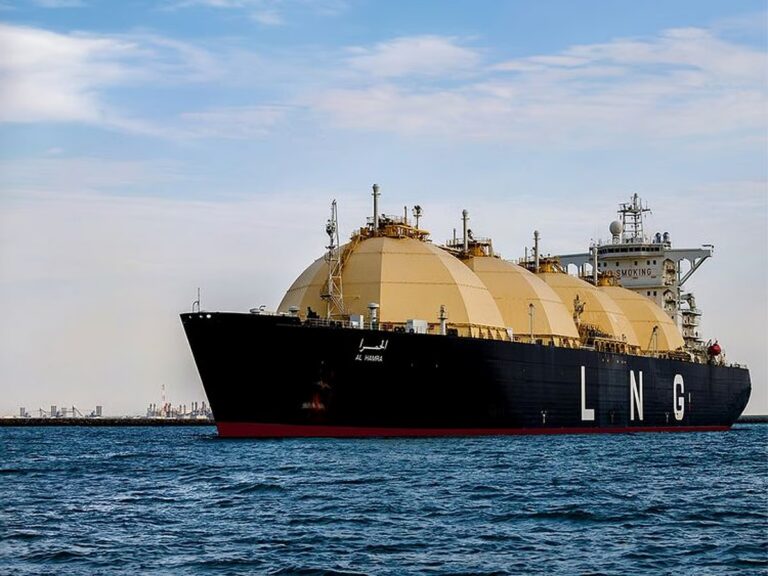
October’s rise was the third monthly gain in a row. The agency compares it with July 2022, when Brent averaged $127 in inflation-adjusted terms. Attacks on tankers around the Middle East and, more recently, in the Black Sea cut the number of available ships and sent tanker rates sharply higher.
The agency expects Brent to average around $100 a barrel in November and December, as flows from the Middle East stay somewhat constrained.
That leaves the fourth-quarter average at $109.13 in the new forecast, against $104.69 in the October edition.
From there the forecast falls gradually. Brent averages $77 in the fourth quarter of 2027, a decline of 29.5% from the fourth quarter of this year, as depleted global inventories rebuild.
The agency sees global inventories building by 3.5 million barrels a day in the first half of 2027, pushing Brent below $90 in the second quarter.
For the full year, Brent averages $85.78 in 2027, against $97.44 in 2026.
The path rests on supply assumptions. The agency assesses that production shut in across the Middle East averaged 2.5 million barrels a day in October, down from a peak of 10.9 million in May, and keeps shut-ins essentially flat for the rest of 2026.
It assumes export workarounds, including pipeline and overland bypass routes, ship-to-ship transfers and new pipeline capacity due in the United Arab Emirates in 2027, will bring shut-ins down gradually. It expects most Middle East production outside Iran to return to pre-conflict averages by the end of the second quarter of 2027, and Iran’s exports to stay constrained throughout the forecast.
Middle East oil exports already rose slightly in October after the restart of Saudi Arabia’s East-West Pipeline, according to ship-tracking data the agency cites. Flows through the Strait of Hormuz continued through ship-to-ship transfers along Oman’s coast, and Brent’s spot price fell below $100 on 4 November.
The model inputs were finalised on 5 November, and the forecast does not specifically account for market events after that day. The agency also warns that flows from the Middle East, through the Strait of Hormuz and alternative routes, remain susceptible to disruption, with more short-term price volatility than its monthly path shows.
Demand losses soften the supply shock as OPEC output recovers
Lower consumption has limited the price impact of the lost supply. The agency now estimates that global liquid fuels consumption will fall by 2.0 million barrels a day in 2026, particularly in China, with Middle East use down largely because of reduced air travel and weaker economic activity.
It expects demand to recover by the same 2.0 million barrels a day in 2027, as oil flows increase and lower prices encourage buying.
OPEC liquid fuels production averages 24.5 million barrels a day in 2026, down from 29.3 million in 2025. It recovers to 28.4 million in 2027, below the agency’s October forecast.
Global inventories fell by an average of 1.2 million barrels a day in the third quarter, the agency estimates, and begin building in the fourth. It cautions that supply risk and longer shipping routes will limit the near-term effect of those builds.
OECD commercial inventories end 2027 at 3,095 million barrels in the forecast, up from 2,739 million at the end of 2026.
Diesel forecast rises 12% as fuel markets stay tight
The retail fuel forecasts moved up. US diesel averages $5.03 a gallon in 2027 in the new forecast, 12% above the October edition.
Gasoline averages $3.73 a gallon in 2027, up from $3.56 in the October forecast.
Both prices still fall from their 2026 averages of $5.25 for diesel and $3.89 for gasoline.
Even after that decline, 2027 diesel would sit 37.4% above its 2025 average of $3.66.
The agency now assumes global petroleum product markets face continued supply constraints through the end of 2027, supporting wider crack spreads and elevated US refinery runs. It ties this year’s high crack spreads to damage at refineries in the Middle East and Russia, which reduced the product exports available to world markets.
US refinery crude inputs averaged 16.6 million barrels a day in October. The agency expects 16.5 million in 2027, against 16.7 million in 2026, and lists maintenance deferred from 2026 among the downside risks.
EIA forecasts for 2026 and 2027, with the October forecast for 2027
| Item | 2026 | 2027 | Prior |
|---|---|---|---|
| Brent, $ a barrel | 97.44 | 85.78 | 83.74 |
| Brent, fourth quarter, $ a barrel | 109.13 | 76.94 | 73.94 |
| WTI, $ a barrel | 88.29 | 80.54 | 79.74 |
| US retail diesel, $ a gallon | 5.25 | 5.03 | 4.49 |
| US retail gasoline, $ a gallon | 3.89 | 3.73 | 3.56 |
| US crude output, million b/d | 13.86 | 14.30 | 14.30 |
| OPEC liquids output, million b/d | 24.5 | 28.4 | 29.2 |
Annual and fourth-quarter averages from the agency’s November 2026 comparison tables. Prior is the 6 October 2026 edition’s forecast for 2027.
US crude stocks fall to their lowest October level since 2014
US commercial crude inventories fell to 410 million barrels at the end of October, the lowest end-of-October level since 2014.
They declined by 14.1 million barrels during the month as imports fell and exports rose, dropping below their low of the previous five years. The agency says the shift likely reflects the wide gap between Brent and WTI, which makes exporting US crude more attractive and importing it less so, even after higher shipping costs.
In the forecast, that gap narrows from $11.81 a barrel in the fourth quarter of 2026 to $5.00 a year later. The agency expects rising Middle East output to put more crude within reach of buyers outside the Atlantic Basin and to cut demand for US barrels in distant markets such as Asia.
The agency’s overview keeps stocks below their five-year average through the middle of 2027. Across that year they rise from 416 million barrels at the end of January to 444 million by the end of December, on higher net imports as the spread narrows and US output reaches a record.
US crude production reaches a record 14.3 million barrels a day in 2027, up 3% on the year, a level unchanged from the October edition. The 2026 average of 13.9 million is itself a record, the agency says.
In The Edge’s reading, the path to $77 is above all a bet on export routes: it relies on Middle East barrels leaving through pipelines, overland routes and ship-to-ship transfers, which the agency itself says remain susceptible to disruption.
What to watch: OPEC’s Monthly Oil Market Report on Wednesday 11 November; the agency’s next Short-Term Energy Outlook on 8 December.
Figures are from the US Energy Information Administration’s Short-Term Energy Outlook of 10 November 2026, and its comparison tables against the 6 October 2026 edition; spreads, percentages and comparisons not attributed to a source are The Edge’s calculations.
Sources: US Energy Information Administration, OPEC, The Edge.