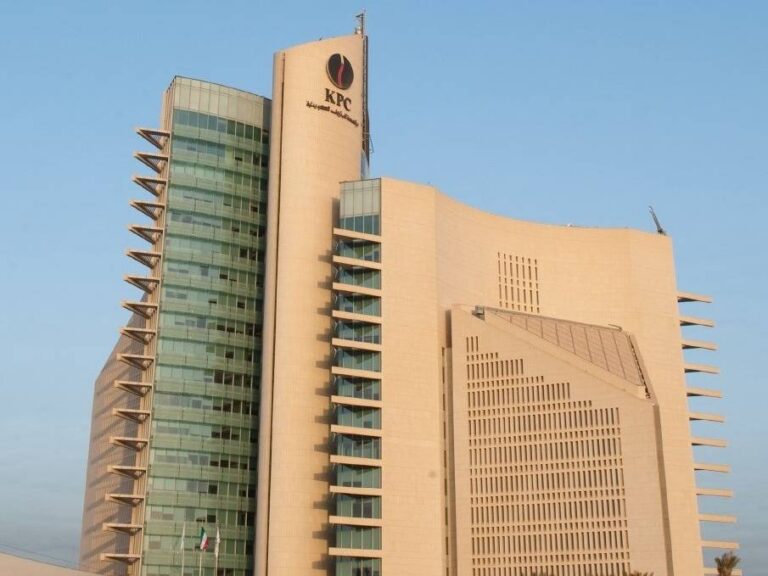
Kuwait Oil Recovery Outlook Strengthens as KPC Signals Readiness After Hormuz Reopening

Kuwait’s oil sector could begin a phased recovery once maritime traffic through the Strait of Hormuz returns to normal, with Kuwait Petroleum Corporation indicating that crude production may recover to nearly 70% of normal levels within 6 to 8 weeks after the route reopens.
The update is important for Kuwait’s energy customers and global oil markets because it gives a clearer indication of how quickly one of the Gulf’s key exporters may restore supply after weeks of disruption linked to regional tensions and shipping risks.
KPC executive comments reported in international energy market coverage indicate that refinery output could return to normal levels within around 2 to 3 weeks after the crisis ends, while the remaining crude production recovery could require additional time. This points to a staged recovery rather than an immediate full return.
Operational Recovery Will Be Gradual
The recovery timeline suggests that Kuwait’s downstream system may normalize faster than upstream crude production. Refineries can often restart and stabilize operations more quickly once feedstock availability, shipping schedules and product logistics improve.
Crude production, however, requires a wider operational chain. Fields, storage, tanker scheduling, export terminals and customer delivery commitments all need to be coordinated before output can return fully to normal.
A recovery to nearly 70% within 6 to 8 weeks would represent a meaningful first stage. If the remaining 30% takes around another month, full recovery could take roughly 10 to 12 weeks, assuming maritime traffic reopens safely and there are no renewed disruptions.
This staged approach is operationally prudent. Restarting production too quickly can create logistical and technical risks if export routes, storage capacity and tanker flows are not fully aligned.
Hormuz Remains the Central Constraint
The Strait of Hormuz remains one of the world’s most important energy corridors. The International Energy Agency estimates that around 20 million barrels per day of crude oil and oil products moved through the Strait in 2025, making it one of the most critical chokepoints in global energy trade.
For Kuwait, the importance of Hormuz is especially high because its crude and refined product exports rely heavily on Gulf maritime routes. Unlike some regional producers with partial pipeline alternatives to the Red Sea or the Gulf of Oman, Kuwait’s export system is more directly exposed to conditions in the Strait.
This is why the reopening of Hormuz and the normalization of maritime traffic are essential for a durable recovery in Kuwait’s oil exports.
Refinery Recovery Is Strategically Important
Kuwait’s refining system has become increasingly important to its energy strategy. U.S. Energy Information Administration data show that Kuwait’s refining capacity reached around 1.4 million barrels per day following the commissioning of Al Zour and refinery upgrades.
The ability to restore refinery output within 2 to 3 weeks would support not only crude demand within Kuwait’s own system, but also refined product exports. This matters because Kuwait has become a more important supplier of products such as diesel, jet fuel, naphtha and low-sulfur fuel oil to regional and Asian markets.
A faster refinery recovery would also help stabilize product availability once shipping conditions improve.
Customer Communication Supports Market Confidence
KPC’s recovery planning is important not only operationally, but commercially. During periods of supply uncertainty, customers need regular updates on cargo availability, delivery schedules and contract performance.
Maintaining communication with international buyers helps protect Kuwait’s long-standing reputation as a reliable energy supplier. It also reduces uncertainty for refiners and trading companies that depend on Kuwaiti crude and refined products.
KPC’s stated readiness to resume export flows once Hormuz reopens reinforces Kuwait’s position as a trusted long-term supplier, even during periods of exceptional market disruption.
Infrastructure Resilience Becomes More Strategic
The crisis has also highlighted Kuwait’s structural exposure to maritime routes. Over the longer term, this may increase the strategic importance of additional storage capacity, emergency logistics planning and regional infrastructure cooperation.
Kuwait’s oil sector remains strong, but its export system is heavily dependent on Gulf shipping lanes. Expanding logistical resilience would help reduce future exposure to maritime shocks and strengthen Kuwait’s ability to protect customer delivery schedules under stress.
This does not weaken Kuwait’s current market position. Instead, it highlights the importance of planning for a more complex energy security environment where shipping, insurance and export continuity are as important as production capacity.
Kuwait’s Capacity Remains a Key Market Factor
Kuwait remains one of the major producers within OPEC and continues to invest in long-term capacity expansion. KPC’s Strategy 2040 targets sustainable crude oil production capacity of 4.0 million barrels per day by 2035 and maintaining that level through 2040.
This gives Kuwait strategic importance in global oil markets. Even temporary disruption to its exports can affect crude availability, refinery planning and regional supply balances, especially for Asian customers that rely heavily on Gulf energy flows.
The recovery of Kuwaiti supply would therefore contribute to easing pressure in global crude and refined product markets, particularly if it coincides with broader normalization of Gulf shipping.
OPEC Plus Dynamics Will Also Matter
Kuwait’s physical ability to restore production is only one part of the market outlook. Once conditions normalize, actual output levels may also be influenced by OPEC Plus production policy and market management decisions.
This means Kuwait may be operationally capable of ramping up faster than the volumes ultimately reflected in market supply, depending on agreed production targets and broader market balancing considerations.
For investors and customers, the distinction is important. Operational readiness supports confidence, while actual supply volumes will depend on both technical recovery and policy coordination.
Market Implications
A phased recovery in Kuwaiti output would be positive for market stability. If Hormuz reopens and Kuwait restores nearly 70% of normal production within 6 to 8 weeks, it would reduce uncertainty around Gulf supply and help normalize cargo planning.
Refinery recovery within 2 to 3 weeks would also support refined product availability, especially if Kuwait can restart product shipments smoothly.
However, the market impact will depend on the broader regional situation. If shipping lanes reopen but security and insurance risks remain elevated, tanker availability and freight costs could still delay full normalization. If maritime traffic returns smoothly, Kuwait’s recovery could be faster and more orderly.
Outlook
Kuwait’s oil sector appears positioned for a disciplined recovery once Hormuz reopens. The expected refinery timeline of 2 to 3 weeks points to operational readiness on the downstream side, while the 6 to 8 week timeframe for restoring nearly 70% of crude output suggests a careful upstream ramp-up.
The main takeaway is that Kuwait remains operationally prepared and commercially focused, but the pace of recovery depends on maritime security, tanker availability, export logistics, OPEC Plus policy and the full normalization of the Strait of Hormuz.
For global oil markets, the key indicators to watch are shipping flows through Hormuz, tanker insurance costs, KPC export schedules, refinery throughput, crude production levels, OPEC Plus decisions and customer delivery updates. If these indicators improve together, Kuwait’s recovery could become an important stabilizing factor for regional and global energy markets.
Source note: Analysis based on KPC executive comments reported in international energy market coverage, Kuwait Petroleum Corporation Strategy 2040, International Energy Agency Strait of Hormuz data, U.S. Energy Information Administration Kuwait refining data and public reporting on Kuwait’s oil production capacity.