Market Wrap MENA-Asia 22 July: Brent Jumps Above 94 Dollars and Gold Reaches a Two-Week High on Hormuz Supply Risk as Saudi Leads a Split Gulf Board

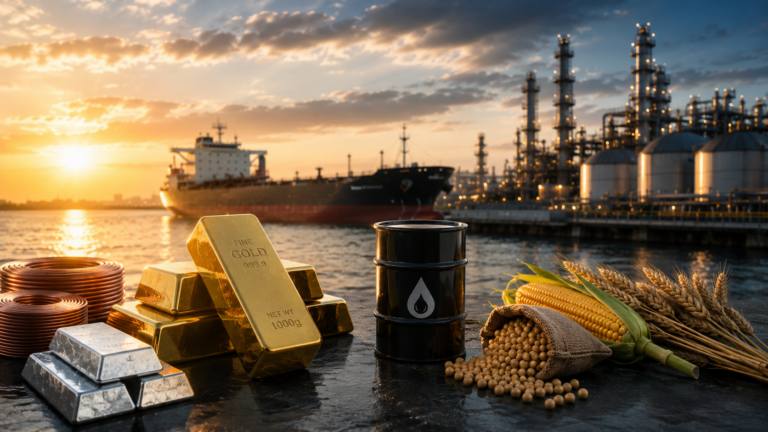
Wednesday belonged to oil. Brent jumped 3.83 percent to 94.50 dollars, touching 95.47 in a near six-week high, after an eleventh consecutive night of US strikes on Iran and comments from the US Secretary of State that the Strait of Hormuz remained a sticking point, per CNBC, and the supply-risk bid carried gold to a two-week high at 4,128.70 dollars. The regional boards split: Saudi Arabia led the Gulf higher, the MSCI Tadawul 30 up 1.09 percent and the TASI up 0.72 percent, while Qatar, Dubai and Abu Dhabi eased and Asia’s chip-led rally faded as China and Hong Kong retreated. The Saudi gain was not a simple energy trade, though: the market rose on its materials and financial names even as its own energy index eased, and that separation of the oil price from the energy shares is the clearest read of the session, our reading.
Asia’s tape opened strong on the chips and closed mixed. Taiwan’s Taiex rose 1.34 percent to 44,825.78, led by technology after Tuesday’s US semiconductor surge, with the AI server maker Wiwynn and the memory chipmaker Nanya both up about 10 percent, per CNBC, though the giant TSMC slipped. Seoul’s Kospi opened up about 5 percent on the same chip momentum, Samsung Electronics and SK Hynix leading, before closing up 0.74 percent at 6,797.70 as the early surge faded, our reading, and Japan’s Nikkei 225 gave back an early gain to end down 0.18 percent at 66,115.60 while the Topix held up 0.45 percent. The yen weakened to a four-decade low near 163 per dollar, with Japan’s finance minister saying the country was ready for decisive action on the currency if needed, per CNBC, even as June exports grew 19.3 percent, the fastest since November 2022. China and Hong Kong were the drag: the Shenzhen Component fell 1.42 percent, Hong Kong’s Hang Seng dropped 0.95 percent and India’s Nifty 50 eased 0.79 percent, while Shanghai was little changed and Australia’s ASX 200 and Singapore’s Straits Times both firmed.
The Gulf traded the oil price rather than the earnings tape. Saudi Arabia led, the TASI up 0.72 percent to 10,775.46 and the MSCI Tadawul 30 up 1.09 percent to 1,448.06, recovering the ground of its two prior red sessions, though the gain came from outside energy: materials rose 1.85 percent, financial services 1.20 percent and banks 1.10 percent while the energy index itself eased 0.39 percent even with crude above 94, per the Saudi Exchange, so higher oil lifted the macroeconomic backdrop rather than the energy shares themselves, our reading. Muscat extended a small gain, the MSX 30 up 0.29 percent to 7,111.42, and Amman firmed 0.47 percent to 3,931.12, while Bahrain’s All Share was effectively flat, off 0.08 percent at 1,965.10. The rest of the Gulf eased: Qatar’s QE Index fell 0.40 percent to 10,066.51, Dubai’s DFM General Index dropped 0.47 percent to 5,785.31, Abu Dhabi’s FADGI slipped 0.13 percent to 9,771.47, and Boursa Kuwait closed effectively flat, the All Share off 0.05 percent at 8,616.52 and the Premier Market off 0.12 percent at 9,029.46. In Egypt, the EGX30 was little changed, off 0.11 percent at 53,931.92 on the latest available reading after touching 54,152.72 during the session, and the currency gave back its recent firming: the pound eased back above the 51 line, the dollar up 0.65 percent to 51.30, on CNBC quotes, as the oil surge weighed on the energy importer, our reading.
The cross-asset board pointed one way. Brent’s 3.83 percent jump to 94.50 dollars left it about 24.4 percent above its 10 July pre-escalation settlement, our calculation, extending the run our wraps have tracked, and West Texas Intermediate rose 3.44 percent to 87.24. Gold’s 1.28 percent gain to 4,128.70 dollars marked a two-week high as investors moved to the safe haven, per CNBC, and the VIX rose 3.46 percent to 17.64, a risk-off tick against the escalation. The 10-year Treasury yield was broadly flat at 4.64 percent, the euro edged up 0.11 percent to 1.1409, sterling was little changed at 1.3368 and the yen held near its four-decade low, while Bitcoin eased 0.92 percent to 65,814 dollars and the Kuwaiti dinar held near 0.3078.
Further west, Tuesday’s closes from our published US-Europe wrap remain the reference: Wall Street turned in a chip-led surge, the Nasdaq up 1.29 percent with the Philadelphia Semiconductor Index up 5.21 percent, and Nvidia’s market-cap lead over Apple widened to about 200 billion dollars, our calculation, from about 120 billion the session before.
Why it matters: The escalation has moved from a price shock in oil to a divider across the region. A near six-week high in Brent and a two-week high in gold say the supply-risk trade is back on, and the Gulf’s split is not a simple energy line: Saudi rose on its materials and financial names even as its own energy index eased, while the UAE and Qatar drifted lower and Egypt’s pound surrendered its sub-51 gains, our reading. Asia’s session showed the same rotation the US set on Tuesday, a chip bid that lifted Taiwan and briefly Korea before fading, with China and Hong Kong left as the drag.
Outlook: The oil market’s binary remains the Strait of Hormuz and the fate of the ceasefire track, with the US Secretary of State’s comments keeping the diplomatic path uncertain, per CNBC. The markers into the rest of the week are whether Brent can hold above 94 dollars, whether Saudi extends its energy-led rebound, whether the Egyptian pound settles above or below 51 as crude stays bid, and a heavy US earnings evening with Alphabet, IBM and Tesla reporting after the New York close.
Table – MENA and Asia equities, 22 July close, ranked by change:
| Market | Close | Change |
|---|---|---|
| Taiex (Taiwan) | 44,825.78 | +1.34% |
| Straits Times (Singapore) | 5,595.42 | +1.24% |
| MSCI Tadawul 30 (Saudi Arabia) | 1,448.06 | +1.09% |
| Kospi (South Korea) | 6,797.70 | +0.74% |
| TASI (Saudi Arabia) | 10,775.46 | +0.72% |
| ASE (Jordan) | 3,931.12 | +0.47% |
| Topix (Japan) | 4,033.13 | +0.45% |
| ASX 200 (Australia) | 8,823.00 | +0.34% |
| MSX 30 (Oman) | 7,111.42 | +0.29% |
| Shanghai Composite (China) | 3,867.03 | +0.07% |
| All Share (Kuwait) | 8,616.52 | -0.05% |
| All Share (Bahrain) | 1,965.10 | -0.08% |
| EGX 30 (Egypt) | 53,931.92 | -0.11% |
| Premier Market (Kuwait) | 9,029.46 | -0.12% |
| FADGI (Abu Dhabi) | 9,771.47 | -0.13% |
| Nikkei 225 (Japan) | 66,115.60 | -0.18% |
| Kosdaq (South Korea) | 751.09 | -0.30% |
| QE Index (Qatar) | 10,066.51 | -0.40% |
| DFM General (Dubai) | 5,785.31 | -0.47% |
| Nifty 50 (India) | 23,996.25 | -0.79% |
| Hang Seng (Hong Kong) | 24,892.66 | -0.95% |
| Shenzhen Component (China) | 14,061.44 | -1.42% |
Table – US and Europe, Tuesday 21 July closes, for reference, ranked by change:
| Index | Close | Change |
|---|---|---|
| Philadelphia Semiconductor (SOX) | 12,356.16 | +5.21% |
| Nasdaq | 25,837.21 | +1.29% |
| Euro Stoxx 50 | 6,285.63 | +0.94% |
| IBEX 35 | 19,379.80 | +0.90% |
| S&P 500 | 7,509.20 | +0.89% |
| FTSE MIB | 52,285.09 | +0.81% |
| Dow Jones | 52,224.64 | +0.74% |
| DAX | 25,011.35 | +0.66% |
| FTSE 100 | 10,585.91 | +0.58% |
| Stoxx Europe 600 | 643.19 | +0.56% |
| CAC 40 | 8,363.14 | +0.28% |
Table – Commodities, rates, volatility, FX and crypto, intraday 22 July:
| Instrument | Level | Change |
|---|---|---|
| Brent crude | $94.50 | +3.83% |
| VIX | 17.64 | +3.46% |
| WTI crude | $87.24 | +3.44% |
| Gold | $4,128.70 | +1.28% |
| USD/EGP | 51.30 | +0.65% |
| EUR/USD | 1.1409 | +0.11% |
| USD/KWD | 0.3078 | +0.03% |
| US 10-year Treasury yield | 4.64% | +1 bp |
| GBP/USD | 1.3368 | -0.02% |
| USD/JPY | 163.05 | -0.07% |
| Bitcoin | $65,813.75 | -0.92% |
Price basis: Saudi Arabia, Qatar, Abu Dhabi, Dubai, Oman, Kuwait and Jordan closes pulled at their exchange originators about 15:00 to 16:00 Kuwait time on 22 July, with the Saudi close confirmed after its closing auction and the Saudi sector figures per the exchange’s indices heatmap; Bahrain and Egypt equities and all Asia, commodity, rate and FX figures via CNBC quotes about 15:00 to 15:20 Kuwait time, intraday and not settlements; the Bahrain figure is an indicative CNBC reading, and the EGX30 figure is the latest available CNBC reading and is not a confirmed close; the Brent pre-escalation calculation is against the 10 July settlement implied by our published record; the US and Europe table repeats our published Tuesday wrap.
Sources: Saudi Exchange; Qatar Stock Exchange; Abu Dhabi Securities Exchange; Dubai Financial Market; Muscat Stock Exchange; Boursa Kuwait; Amman Stock Exchange; CNBC; Reuters.