Morocco’s 2027 Finance Bill Proposes 40% Corporate Tax on High-Profit Fuel Firms

The Takeaway: Morocco’s draft budget for 2027 would tax the profits of its highest-earning fuel importers and distributors at 40%, a band the text also lists for credit institutions. Only companies with net profit of at least MAD 100 million are covered, and the measure is still a proposal awaiting a parliamentary vote. It reaches a sector whose pump pricing the antitrust authority already monitors closely.
The most profitable companies that import or distribute fuel in Morocco would pay corporate tax at 40%, under the government’s Finance Bill now before the lower house of Parliament.
The line covers both importers and distributors of hydrocarbon products, but only those whose annual net profit reaches a set threshold.
What the bill’s text says
The measure sits in Article 7 of Finance Bill No. 60.26, the government’s budget law for next year. That article amends the General Tax Code, the consolidated law that sets Morocco’s taxes, with effect from 1 January 2027.
Its new wording of the code’s rate article sets out a line in the 40% band of corporate tax, the levy on company profits. The line covers companies engaged in the import or distribution of hydrocarbon products whose net profit equals or exceeds MAD 100 million.
Hydrocarbon products are as defined in a dahir of 22 February 1973, a royal decree with the force of law. The same band lists credit institutions, whose entry the bill leaves as it stands.
The threshold confines this line to the sector’s most profitable operators. A fuel distributor earning less than MAD 100 million in net profit falls outside it.
The bill reprints only the amended line of the rate article. The code’s other bands are marked as unchanged and are not set out in the text. Whether the committee changed this article has not been published.
Where the bill stands
The text is a proposal. The House of Representatives’ page for the bill lists it at first reading, the chamber’s initial pass over the text, with the government as its author.
It was referred to the chamber’s Finance and Economic Development Committee. That committee met on Wednesday with Fouzi Lekjaa, Minister of Economy, Finance and Public Efficiency, to discuss amendments to the bill, Maghreb Arabe Presse (MAP), the state news agency, reported.
The proposals it reported from that session centered on customs and tax provisions. They ranged from the licensing of customs brokers to exemptions on livestock and meat imports and duties on imported medicines. The committee also voted on some of them, unanimously deleting the article on customs brokers, according to the same report, which does not mention the corporate tax band.
The chamber has scheduled plenary sittings, debates of the full house, for Friday and Saturday to examine and vote on the bill. After the lower house, the bill goes to the House of Councillors, the upper chamber, before it can become law.
A sector under price scrutiny
Fuel prices are also a concern elsewhere in government. On Wednesday the Ministry of Transport and Logistics began paying exceptional direct support to road transport operators for 1 to 15 November, citing the continued rise in petroleum product prices, MAP reported.
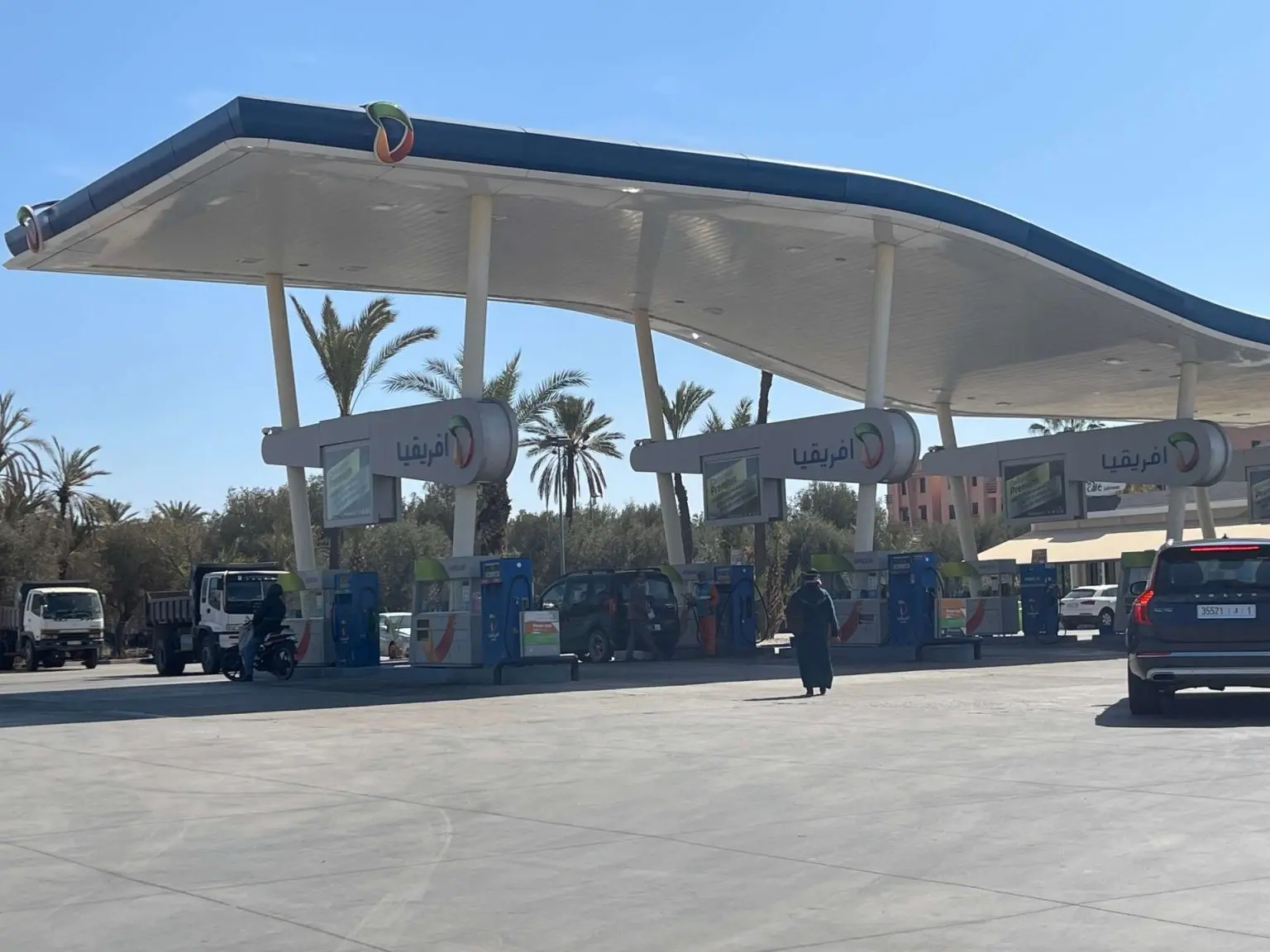
Morocco imports its petroleum products, and pump prices for diesel and gasoline have been free since they were liberalized. The Competition Council, the country’s antitrust authority, tracks how distributors pass world price moves on to drivers.
In its latest note, published on 1 June 2026 and covering 1 March to 16 May 2026, the authority found that pump prices broadly tracked world prices. CIF quotes for diesel, the delivered import price including cost, insurance and freight, rose a cumulative 4.24 dirhams a liter, while pump prices rose 4.18 dirhams.
For gasoline, quotes rose 2.81 dirhams a liter against a 2.43 dirham rise at the pump.
In an earlier note, on 1 to 16 March, the authority reported that distributors still revise prices on the 1st and 16th of each month, a habit inherited from regulated pricing, and said it would continue talks with operators on whether that practice could change.
In The Edge’s reading, because the test is net profit rather than sales, the measure’s weight falls on the firms with the largest earnings, in a market whose pricing is already under official watch.
What to watch: The House of Representatives debates and votes on the Finance Bill in plenary sittings on Friday 13 and Saturday 14 November.
Method: the measure is from the text of Finance Bill No. 60.26 for fiscal year 2027 as deposited with the House of Representatives (Article 7, amending the rate article of the General Tax Code), and the bill’s stage and plenary dates are from the chamber’s own pages, read on 12 November 2026. The bill’s passage to the upper chamber follows Articles 75 and 84 of the 2011 Constitution, as published by the House of Representatives. The committee session is as reported by Maghreb Arabe Presse on 12 November 2026, and the transport support as reported on 11 November 2026. Fuel-price figures are from the Competition Council’s note on 1 March to 16 May 2026, published on 1 June 2026, and its note on 1 to 16 March 2026, published on 31 March 2026.
Sources: House of Representatives of Morocco, Maghreb Arabe Presse, Competition Council.