Norway’s 2.3 Trillion Dollar Fund Rethinks Its Bonds and Warns on Concentration After a Record Half Year
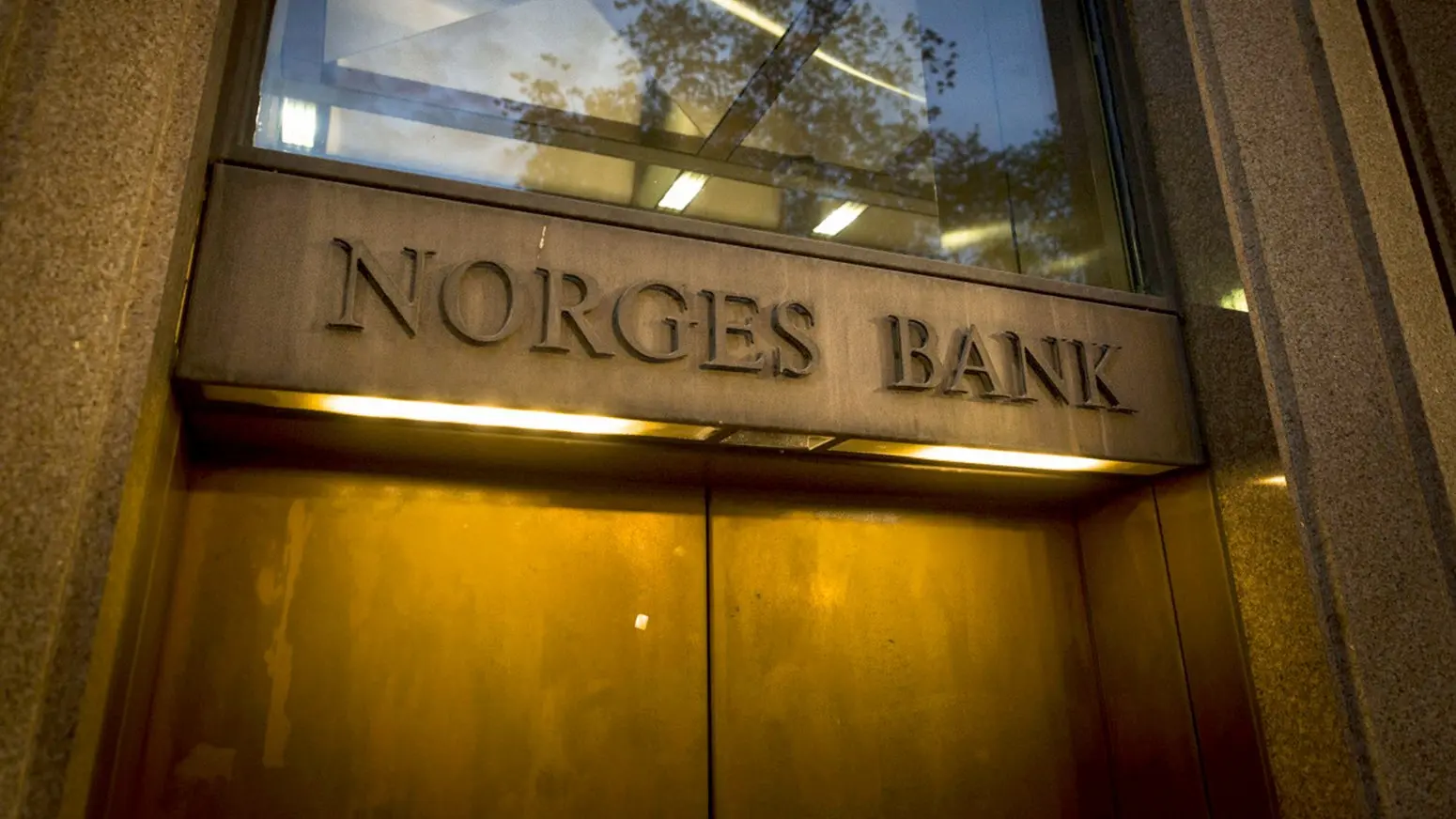
Norway’s Government Pension Fund Global, the largest sovereign investor that publishes its value, has opened September with a set of strategy advice that reopens how it invests. Norges Bank has sent the Ministry of Finance 2 letters, published on the fund’s website this week, that together revisit the investment strategy: one proposing a smaller and market-weighted government bond benchmark, the other a warning that a geopolitical rupture could cut the fund’s value by 30 to 40 percent and that separate 2024 and 2025 stress tests in which artificial intelligence disappointed market expectations produced estimated declines of 18 percent and 35 percent. The fund also announced the departure of its chief governance and compliance officer. The advice lands 3 weeks after a half-year report showing a 9.4 percent return and a record 1,753 billion kroner accounting gain, with the fund worth 22,683 billion kroner at the end of June, about 2.3 trillion dollars per Reuters. The live counter on the fund’s website read 21,833 billion kroner on 7 September.
A record half year, and a warning that it will not repeat
The 9.4 percent first-half return came from equities, which returned 13.0 percent, led by Asian technology stocks, as chief executive Nicolai Tangen put it; fixed income returned 0.9 percent, unlisted real estate 3.0 percent and unlisted renewable infrastructure minus 0.2 percent, and the fund beat its benchmark by 0.22 percentage point. Of the 1,416 billion kroner increase in the fund’s value over the half, the accounting return contributed 1,753 billion, inflows after deduction of costs added 89 billion and a stronger krone reduced the value by 427 billion. At the end of June the fund was 72.1 percent in listed equities and 25.8 percent in fixed income, all of it outside Norway. The letter on risk adds the context the results release did not: the equity portfolio has returned more than 70 percent over 3 years, “a development we cannot expect to continue” in the bank’s words.
The bond proposal: less government debt, and market weights instead of GDP
The bonds letter recommends cutting the government share of the bond benchmark from 70 percent to 50 percent, weighting that share by market value rather than GDP, and broadening the other half across corporate, securitised and government-related bonds so that the whole index sits closer to the Bloomberg Global Aggregate while still excluding emerging markets. That brings in agency mortgage-backed securities at around 13 percent of the recommended index against zero today and lifts government-related bonds from about 4 percent to about 11 percent. Simulations of the fund’s rebalancing rule over 1973 to 2025 show it needs to sell bonds worth about 5.5 percent of its value in an average episode and up to 11 percent in the most demanding 5 percent of episodes, so a 40 percent government share would cover liquidity; 50 percent is recommended for margin. The largest country-level change is in United States government bonds, whose benchmark weight would fall from 34.1 percent to 21.9 percent; Reuters calculates that applying the proposed structure to the fund’s roughly 215 billion dollars of Treasury holdings at the end of June implies a reduction of nearly 80 billion dollars. It is not a retreat from the dollar: the bank says the decline in US government bonds is offset by a roughly corresponding increase in other US bonds, so the dollar weight of the index barely moves, from 52.9 percent to 52.5 percent. The reasoning on weights is the more telling part: GDP weighting was adopted in 2012 to favour countries with large economies relative to their debt, and the bank now says high government debt has become a general feature of developed economies rather than a distinctive feature of a few. Any transition would be gradual, with the bank saying transaction costs could be reduced substantially by using maturing bonds, netting against existing positions and other capital flows; it estimates the broader benchmark would add about 6.6 million kroner a year in ongoing costs and puts the one-off transition cost at no more than roughly 750 million kroner before those savings.
The risk letter: stress tests, no caps, and a door opened to unlisted assets
The second letter answers the ministry’s questions on geopolitical risk and on concentration in the equity index. The bank publishes a stress test each year and estimates that geopolitical upheavals of the kind it models, fragmentation into blocs, tariffs and countermeasures, could cut the fund’s value by 30 to 40 percent; its hypothetical 2024 and 2025 scenarios in which artificial intelligence fails to deliver the productivity gains the market expects produced estimated falls of 18 percent and 35 percent, the second larger because concentration had risen in the meantime. Concentration has increased on every measure, driven by the US market and by expectations for artificial intelligence, and the bank notes that market value is more concentrated than earnings, so the index is pricing continued US outperformance. Its conclusion is nonetheless not to cap markets, sectors or companies: since 1994 a lower cap on individual companies has consistently produced lower returns, sector caps would only partly capture an exposure that crosses sector lines, and a cap on a legal entity stops applying when the entity is split. The risk of the current index “must be accepted as a feature of a market-weighted index”. What the letter does open is the asset mix: with a 70 percent strategic equity share and a lower share of unlisted investments than comparable funds, the bank says there may be reason to consider a larger allocation to unlisted assets over time, built gradually and subject to a thorough review of political and regulatory risk. Its closing observation is that geopolitical and concentration risk are now interwoven, because the technology driving the concentration is part of the rivalry between large economies.
Governance and deals
Carine Smith Ihenacho, chief governance and compliance officer, who joined in 2017 to lead active ownership, will leave at the end of the year after 9 years. On the investment side the fund signed on 31 July to buy a 92 percent interest in a portfolio of Spanish shopping centres in partnership with Sonae Sierra for about 1.4 billion euros, with completion expected in the fourth quarter, extending the unlisted real estate exposure that the risk letter suggests could grow.
Where it stands among sovereign funds
The fund is the largest by a wide margin among sovereign investors that publish a value. It is also invested entirely outside its home economy and publishes a continuously updated value, which is why its benchmark decisions are read as market signals in a way that most peers’ are not, on our reading. The comparison is only as good as the disclosure. China Investment Corporation reported net assets of 1.37 trillion dollars at the end of 2024, a figure that includes Central Huijin’s domestic stakes in state financial institutions; Saudi Arabia’s Public Investment Fund reported assets under management above 900 billion dollars for 2025; Temasek reported a net portfolio value of 518 billion Singapore dollars at 31 March 2026. Several of the largest funds publish no value at all, among them the Abu Dhabi Investment Authority, the Qatar Investment Authority and Singapore’s GIC. The Kuwait Investment Authority, the world’s first sovereign wealth fund, established as the Kuwait Investment Board in London in February 1953, is barred by Law 47 of 1982 from disclosing information about its work; the IMF estimates its assets at 640 percent of GDP at end-2025, up from 605 percent a year earlier, without publishing a dollar figure.
The largest sovereign funds, on their own disclosures
| Fund | Latest disclosed value | As of |
|---|---|---|
| Government Pension Fund Global (Norway) | 22,683 billion kroner, about $2.3 trillion | 30 June 2026 |
| China Investment Corporation (China) | $1.37 trillion net assets | 31 December 2024 |
| Public Investment Fund (Saudi Arabia) | Above $900 billion | 2025 annual report |
| Temasek (Singapore) | S$518 billion | 31 March 2026 |
| Kuwait Investment Authority (Kuwait) | Not disclosed by law; IMF estimate 640 percent of GDP | End-2025 |
| ADIA (Abu Dhabi), QIA (Qatar), GIC (Singapore) | Not disclosed |
Values as published by each fund, in the currency it reports; the dollar conversion for Norway is the wire’s. The CIC figure includes Central Huijin’s domestic financial holdings and is not directly comparable with funds invested only abroad. Funds that do not publish a value are listed without one; third-party estimates are not carried.
Why it matters: A fund that owns about 1.5 percent of the world’s listed companies has just written down, in public, what it fears most, a geopolitical rupture and an artificial intelligence disappointment, and it has answered both with more diversification rather than less market exposure. The bond proposal is the operational half of that answer, and its logic, that GDP weights no longer protect a creditor because high public debt is now general across developed economies, is on our reading a sharper statement about the sovereign bond market than the Treasury reduction itself. For Gulf investors the 2 letters are a reference set: a peer of comparable scale showing its liquidity arithmetic, its stress tests and its reasons for not capping the technology names, questions the region’s own investment authorities also weigh.
Outlook: The ministry’s response and the January recommendations set the timetable for the bond change, the expert group on the fund’s purpose and risk tolerance reports by 25 January 2027, and the white paper next spring is where any move on unlisted assets would surface. Implementation of the bond benchmark, if approved, would come several months into 2027 at the earliest. The near-term reads are the third-quarter figures in the autumn and the live value, which has already given back part of the June level.
Sources: Norges Bank Investment Management, Reuters, Saudi Press Agency, China Investment Corporation, Temasek, Kuwait Investment Authority, International Monetary Fund, The Edge.