China’s Central Bank Adds an Overnight Lending Tool as It Moves Toward a Fed-Style Rate Framework
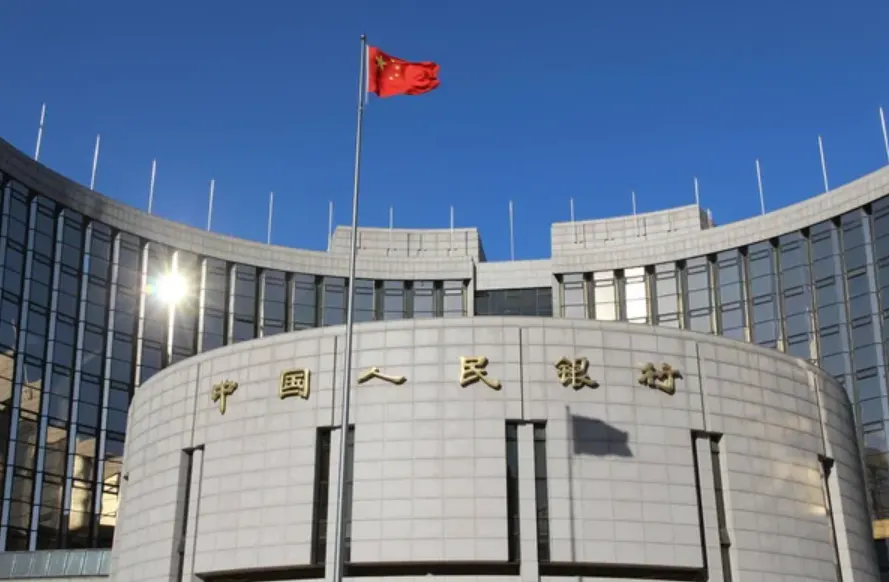
China’s central bank is adding an overnight tenor to its open-market operations, a technical but significant step in a multi-year effort to reshape how it steers short-term borrowing costs. The People’s Bank of China said it will conduct overnight reverse repurchase operations on 29 and 30 June, introducing a dedicated tool to influence the cost of overnight money directly rather than relying mainly on its seven-day operations.
The new overnight facility will sit alongside the seven-day reverse repo rate, which has been the PBoC’s main policy benchmark since 2024 and currently stands at 1.40 percent. The operations will use a fixed-rate, quantity-bidding format, meaning the central bank sets the price of overnight liquidity explicitly and lets banks bid for the amount, rather than leaving the rate to fluctuate with daily supply and demand. In its first operation, conducted on 29 June, the PBoC injected about 300 billion yuan, roughly 44 billion dollars, of overnight liquidity. Reuters reported, citing people familiar with the matter, that the rate was set at 1.25 percent, below the 1.30 to 1.35 percent that markets had expected and 15 basis points under the seven-day rate, a lower-than-anticipated level that several economists read as a de facto easing of short-term funding conditions. Bloomberg noted that the central bank did not publicly disclose the rate at the outset, an unusual lack of transparency for a debut policy tool.
A more precise, Fed-style toolkit
The change is about precision rather than direction. By adding an overnight rate just below the seven-day anchor, the PBoC tightens the corridor within which very short-term money-market rates trade, giving it firmer control over overnight funding conditions and reducing the volatility that can spill into bond and credit markets. That is the same basic architecture the US Federal Reserve and other major central banks use, where an overnight target rate is the primary lever for steering financial conditions. The move continues a gradual shift in which the PBoC has elevated the seven-day repo as its key rate and de-emphasised older quantity-based tools, edging China’s framework closer to the price-based, short-rate model of its global peers.
The step is not a rate cut and not informal lending guidance to banks; it is a plumbing upgrade that changes how policy is transmitted, not the current stance. Even so, setting the overnight rate at 1.25 percent, at the low end of expectations, confirms that Chinese short-term rates remain low and tilts the signal slightly dovish, consistent with a policy posture geared toward supporting growth while domestic demand stays soft.
Why it matters
For MENA economies the read-through runs through China’s weight in the global economy and in energy markets. A more precise and slightly lower Chinese overnight rate reinforces the low-rate environment in the world’s second-largest economy, which feeds into the yuan and the broader Asian rates complex, and a softer yuan can affect the relative cost of trade settled in Chinese currency, a growing channel in commodity and oil flows. For Gulf liquidity managers and sovereign investors with exposure to Chinese and Asian assets, a steadier, better-controlled Chinese money market reduces one source of cross-border volatility. More broadly, the health of Chinese demand remains the single biggest external swing factor for Gulf energy and petrochemical exporters, so the credibility and clarity of Beijing’s monetary framework is relevant to how reliably China can support its economy, and with it regional export demand.
Outlook
With the debut rate set at the low end of expectations, attention turns to how actively the PBoC uses the tool and whether it holds the overnight rate there. If the overnight facility becomes a regular feature, it will mark a further step toward a transparent, price-based framework that markets can read more easily, which over time should make Chinese monetary policy more predictable for global investors. The signal to watch is whether the central bank pairs the new precision with any change in the actual level of rates, which would be the real indicator of a shift in stance rather than in technique.
Sources: People’s Bank of China; Bloomberg; Reuters.