Qatar’s Economy Begins Gradual Improvement in Q3 as Hydrocarbon Activity Recovers

The Takeaway: Qatar’s hydrocarbon activity is recovering as shipping and export conditions improve, with the sector’s year-on-year contraction easing to 29.5% in the third quarter from 50.7% in the second. Wholesale and retail trade and hospitality grew, and the contraction in total real GDP narrowed to 11.8%. In The Edge’s reading, the hardest-hit sector is leading the recovery, and the regular estimate will show how the rest of the economy fared.
Qatar’s economy began a gradual improvement in the third quarter, the National Planning Council said on Sunday, with the year-on-year contraction in real GDP narrowing to 11.8% from 15.7%.
The figures are the council’s first flash estimates of gross domestic product, prepared with the relevant entities and designed to give an earlier reading than the regular quarterly estimates. They rest on early and incomplete data, and the regular estimate follows within 90 days of the quarter’s end.
Hydrocarbon activity recovers as shipping and exports improve
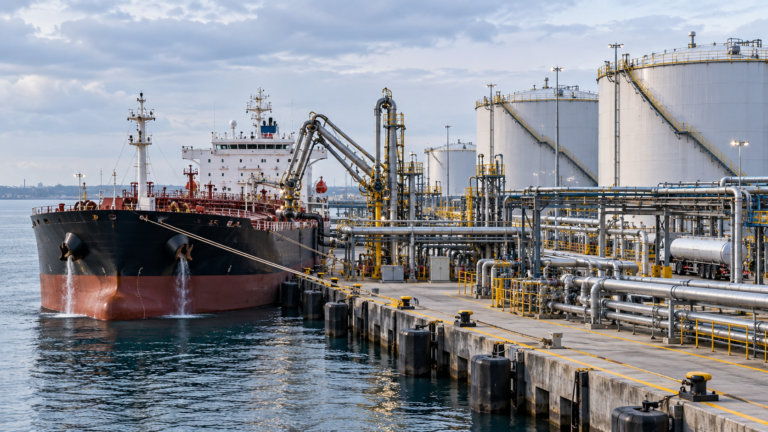
The hydrocarbon sector drove the turn. Its year-on-year contraction eased to 29.5% from 50.7% in the second quarter, and the release tied the change to a gradual improvement in shipping and export conditions and a gradual recovery in hydrocarbon activities.
That is an improvement of 21.2 percentage points in one quarter, against 3.9 points for real GDP as a whole. The second-quarter release of 30 September attributed the hydrocarbon fall to regional constraints and challenges affecting shipping activity and exports.
A year earlier the economy was growing. Real GDP rose 2.9% in the third quarter of 2025, and non-hydrocarbon activities expanded 4.4%. Those activities made up 65.5% of real GDP.
In The Edge’s reading, the sector that was hit hardest is now setting the pace of the recovery. The flash identifies growth in wholesale and retail trade and in accommodation and food services, but gives no aggregate growth rate for the non-hydrocarbon economy, so how the rest of the economy performed in the third quarter is not yet shown.
Qatar real GDP by quarter (change on a year earlier, %)
| Measure | Q3 2025 | Q2 2026 | Q3 2026 |
|---|---|---|---|
| Real GDP | 2.9 | -15.7 | -11.8 |
| Hydrocarbon | n.p. | -50.7 | -29.5 |
| Non-hydrocarbon | 4.4 | 2.6 | n.p. |
Real terms. The third quarter of 2026 is the flash estimate of 15 November 2026, which also carries the second-quarter real GDP figure; the other cells are as first published on 30 September 2026 and 28 December 2025. n.p.: not printed in that release. In the second quarter of 2025 real GDP grew 1.9% and non-hydrocarbon activities 3.4% (release of 21 September 2025).
Trade and hospitality grow on domestic demand and hosted events
Outside hydrocarbons, the flash named two activities with positive growth in the third quarter: wholesale and retail trade, and accommodation and food service activities. It credited domestic demand and the international conferences and sporting events Qatar hosted, and printed no growth rate for either.
Both were among the faster growers a year earlier. In the third quarter of 2025, wholesale and retail trade rose 8.9% and accommodation and food services 6.4%. Construction led that quarter at 9.1%.
In the second quarter the non-hydrocarbon economy grew 2.6%, led by real estate at 11.0%, while hydrocarbons fell, as The Edge reported on 1 October. Wholesale and retail trade grew 6.9% in that quarter.
Between them the four leading activities added more than the 2.6% total, so the other non-hydrocarbon activities, taken together, subtracted on balance. That is an arithmetic residual, not a sign that each of them contracted. The table carries each one’s contribution.
Second-quarter 2026 non-hydrocarbon leaders
| Activity | Growth | QAR m | Points |
|---|---|---|---|
| Real estate | 11.0% | 1,438 | 1.2 |
| Finance and insurance | 8.3% | 1,356 | 1.1 |
| Construction | 5.5% | 1,178 | 1.0 |
| Wholesale and retail trade | 6.9% | 1,010 | 0.8 |
Growth on the second quarter of 2025, real terms. QAR m is each activity’s contribution in millions of riyals, and points its contribution in percentage points, to real non-hydrocarbon GDP growth of 2.6%, as printed in the release of 30 September 2026.
A first flash leaves the detail to the regular estimate
The flash gives an early reading of the direction of growth across the hydrocarbon and non-hydrocarbon sectors, not a full breakdown: it prints no quarter-on-quarter change and no level in riyals.
For scale, real GDP stood at QAR 186.1 billion at constant prices in the third quarter of 2025, against QAR 180.9 billion a year before. The flash does not update that level.
The flash’s second-quarter hydrocarbon contraction of 50.7% matches the 30 September release, which printed no total for real GDP.
The comparisons here use each quarter as first published, and earlier figures may be revised, as the December 2025 release revised the third quarter of 2024.
Dr Abdulaziz bin Nasser bin Mubarak Al Khalifa, Secretary-General of the council, said the improvement reflects the Qatari economy’s ability “to adapt to change and meet challenges”. He tied the figures to continued efforts to diversify production and raise the contribution of non-hydrocarbon activities, in line with the Third National Development Strategy and Qatar National Vision 2030.
What to watch: The council’s regular estimate for the third quarter. Its 90-day window ends on 29 December by The Edge’s count, which is not a scheduled date: the statistical calendar posts no date for the release.
Figures are from the National Planning Council’s flash estimates of gross domestic product for the third quarter of 2026, released on 15 November 2026, and its quarterly GDP releases of 30 September 2026, 28 December 2025 and 21 September 2025; percentage-point changes and sums not printed in those releases are The Edge’s calculations.
Sources: National Planning Council, The Edge.