Saudi Arabia Projects 12.8 Percent Growth in 2027 and a Narrower 3.6 Percent Deficit
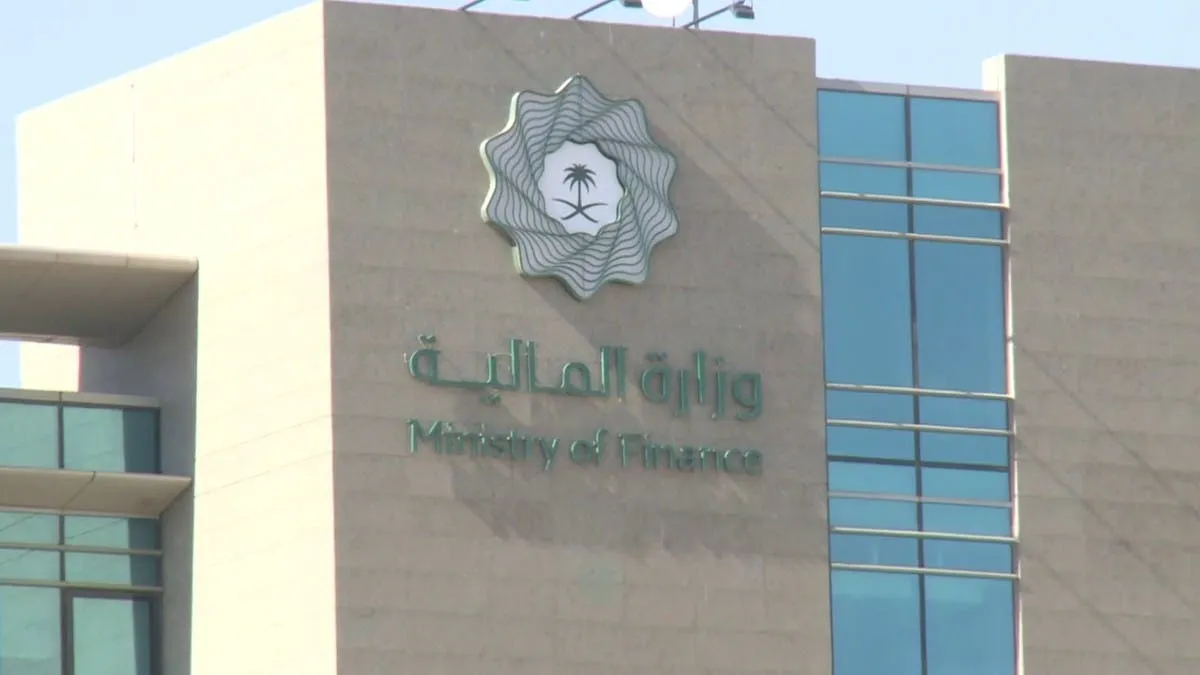
Saudi Arabia expects its economy to grow 12.8 percent in real terms in 2027. That projection is in the Pre-Budget Statement for FY2027, published by the Ministry of Finance on 30 September. The statement puts 2027 spending at about 1,392 billion riyals and revenue at about 1,202 billion. That leaves a deficit of around 3.6 percent of GDP, narrower than the 4.9 percent now estimated for 2026. Revenue is projected to reach 1,351 billion riyals by 2029.
The Numbers Behind the 2027 Budget
The deficit falls by 54 billion riyals from 2026 to 2027, or 22 percent, on our calculation. Spending comes down 3.0 percent from the 2026 estimate of 1,435 billion riyals, while revenue edges up 1.0 percent. Measured against nominal GDP, spending falls to 26.0 percent in 2027 from 28.8 percent this year, and revenue to 22.4 percent from 23.9 percent, on our calculation.
This year’s revenue is running ahead of plan. The 2026 estimate of 1,190 billion riyals is 43 billion, or 3.7 percent, above the 1,147 billion budgeted. Spending ran further ahead, at 122 billion riyals, or 9.3 percent, above budget, on our calculation.
Saudi medium-term fiscal projections, billion riyals
| Year | Revenue | Spending | Balance, % of GDP |
|---|---|---|---|
| 2025 actual | 1,112 | 1,388 | -5.8% |
| 2026 budget | 1,147 | 1,313 | -3.3% |
| 2026 estimate | 1,190 | 1,435 | -4.9% |
| 2027 projection | 1,202 | 1,392 | -3.6% |
| 2028 projection | 1,302 | 1,479 | -3.1% |
| 2029 projection | 1,351 | 1,544 | -3.3% |
Pre-Budget Statement for FY2027, Ministry of Finance, 30 September 2026. The printed balances are 277, 165, 245, 191, 177 and 192 billion riyals. Figures are rounded, so revenue minus spending can differ from the printed balance by 1 billion.
Non-Oil Revenue Covers 36 Percent of Spending
Non-oil revenue reached 505 billion riyals in 2025, compared with about 166 billion in 2015. That is roughly 3 times the 2015 level and 45 percent of total 2025 revenue, on our calculation. Non-oil revenue now covers about 36 percent of total spending, up from 17 percent in 2015, the statement said. It also rose to about 15 percent of nominal non-oil GDP, from 9 percent.
Preliminary estimates put real GDP 3.6 percent lower in 2026, with oil activities expected to decline by about 21.8 percent. Non-oil activities are expected to keep growing at around 3.2 percent. Non-oil activities grew 1.8 percent in the first half of 2026, and their share of GDP reached 57.3 percent.
Key economic indicators
| Indicator | 2025 | 2026 | 2027 |
|---|---|---|---|
| Real GDP growth | 4.6% | -3.6% | 12.8% |
| Nominal GDP, billion riyals | 4,776 | 4,978 | 5,358 |
| Nominal GDP growth | 1.6% | 4.2% | 7.6% |
| Inflation | 2.0% | 2.1% | 1.9% |
2025 actual (GASTAT); 2026 figures are estimates and 2027 figures projections, as published in the statement. The statement projects real growth of 3.9 percent in 2028 and 5.7 percent in 2029.
Reserve Cover of External Debt Stands at 284 Percent
The current account deficit fell 67.1 percent to 20.1 billion riyals in the first half of 2026, from about 61.0 billion a year earlier. The goods trade surplus rose 53.2 percent to 154.7 billion riyals. Reserve assets grew 8.1 percent year on year to about 1.85 trillion riyals in the second quarter. On the statement’s own measure, reserve cover of total external debt of 624.9 billion riyals stands at 284 percent. Saudi employees in the private sector rose by about 190,100 over the year to about 2.7 million, an annual increase of 7.7 percent.
Why it matters: The statement pairs a smaller deficit in 2027 with a return to strong growth and a larger non-oil revenue base. Non-oil revenue now funds more than a third of spending, and reserve cover of external debt stands at 284 percent. The deficit will be funded through borrowing under the medium-term debt strategy.
Outlook: The detailed FY2027 borrowing plan is due by the end of this year. Revenue is projected to rise 12.4 percent between 2027 and 2029, on our calculation, with non-oil revenue already covering about 36 percent of spending.
Sources: Saudi Ministry of Finance, General Authority for Statistics, The Edge.