
The SEC Has Proposed Crypto Fundraising Exemptions at 5, 20 and 75 Million Dollars, but Neither the Rule Nor the Senate Bill Is Final
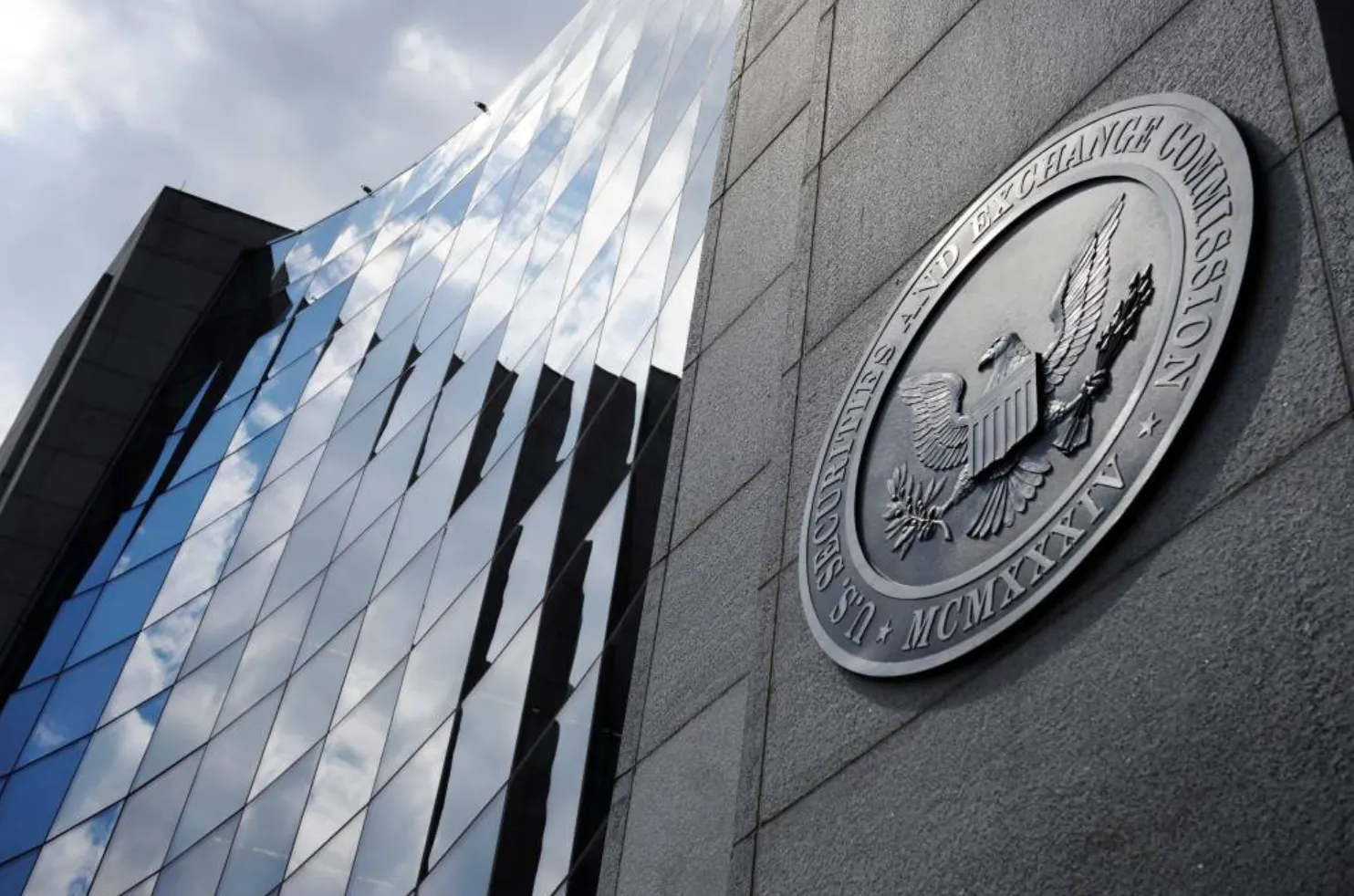
The United States Securities and Exchange Commission proposed a framework titled Regulation Crypto Assets on 18 August, creating exemptions from securities registration for token offerings and a conditional safe harbour from the investment contract test. The proposal is open for public comment for 60 days after it appears in the Federal Register. It is not a final rule.
That distinction is the story, and most coverage will blur it. Press Release 2026-76 accompanies Securities Act Release 33-11434 and Exchange Act Release 34-106150, under File S7-2026-27. A proposing release states what the Commission is minded to do and invites objection. Nothing in it binds anyone today, and the comment clock had not started as of the documents reviewed: the text still carries the placeholder instruction to insert a date 60 days after Federal Register publication.
| The proposal | Detail |
|---|---|
| Title | Regulation Crypto Assets |
| Releases | 33-11434 and 34-106150, File S7-2026-27 |
| Date | 18 August 2026 |
| Status | Proposed rule, comment clock not yet started |
| Startup Exemption | Up to USD 5m over up to four years |
| Fundraising Exemption, Tier 1 | Up to USD 20m per twelve months |
| Fundraising Exemption, Tier 2 | Up to USD 75m per twelve months, audited financials required |
The exemptions are the operative part. A Startup Exemption would permit raising up to 5 million dollars over a period of up to four years, conditioned on public filings at the beginning and end of the period plus principles based narrative disclosure. The Fundraising Exemption runs in two tiers over any twelve month period, 20 million at Tier 1 and 75 million at Tier 2, with both requiring public filing of offering materials and financials and the upper tier requiring audited statements. Disclosure would cover ecosystem governance, development plans and security rather than the financial statement package built for equity issuers.
The safe harbour is conditional, and the conditions are strict. An issuer qualifies only if it has completed or permanently ceased all essential managerial efforts it promised under the covered investment contract, is making no new such promises, and has filed publicly certifying that it meets the conditions. In plain terms, the relief arrives when the promoter stops being the reason the token has value.
Chairman Paul Atkins framed it as a break with the prior approach, describing the objective as minimum effective dose, maximum freedom to build, and durable clarity under existing law, and criticising what he called regulation by enforcement. All three sitting commissioners issued statements the same day, Commissioner Uyeda on the move away from regulation by enforcement and Commissioner Peirce on putting enforceable rules in place. None dissented.
The composition of the Commission is context the reader needs. The SEC has three sitting commissioners, all Republican: Chairman Atkins, Hester Peirce, who heads the Crypto Task Force, and Mark Uyeda. Both Democratic seats are vacant. Commissioner Peirce’s second term expired on 5 June 2025 and she has served on holdover status since; in June 2026 she said publicly that she was leaving Washington, but the Commission has not announced a departure date. This is a proposal issued by a three member Commission with no minority present, which is a fact about its durability rather than a judgement on its merits.
What the proposal does not do. It does not change custody rules, does not address staking, and does not alter exchange traded product listing standards. Those are separate workstreams. Coverage folding them into this release is describing something that is not in the document.
The legislative track is separate, and its key date is now fixed. On 8 August the Senate Majority Leader filed a cloture motion on the motion to proceed to H.R. 3633, the Digital Asset Market Clarity Act. That is a procedural step to limit debate on whether to take up the bill. It is not a vote, and the Senate cloture table records the filing with no vote date and no result. The Daily Digest states that the motion ripens on Tuesday 15 September at 2:15pm Eastern. Cloture requires 60 votes; the Republican conference holds 53 seats, so if every Republican supports the motion, at least seven votes from outside the conference are needed merely to begin debate. Unresolved disputes remain over ethics provisions, illicit finance and the merging of Senate Agriculture Committee text.
The stablecoin track is further along, and its clock has not run out. The GENIUS Act was enacted on 18 July 2025 and takes effect on the earlier of eighteen months after enactment, which is 18 January 2027, or 120 days after the primary federal payment stablecoin regulators issue final rules. Neither has occurred: no final implementing rules have been issued by any of the relevant agencies and every instrument remains at the proposal stage. Implementation is nonetheless well under way and is proceeding in pieces rather than as one synchronised rule set. The Office of the Comptroller of the Currency issued its principal proposed implementing rule on 25 February 2026, published in the Federal Register on 2 March, covering reserve assets, redemption, risk management, custody and capital. It followed with proposed reporting forms on 11 June and an anti money laundering and sanctions compliance proposal on 22 June. A multi agency customer identification proposal covering permitted payment stablecoin issuers, issued jointly on 22 June, closes for comment on 21 August 2026, and a Federal Deposit Insurance Corporation proposal on Bank Secrecy Act compliance closed on 4 August.
Several Gulf jurisdictions built dedicated frameworks well before this proposal, though they are not the same instrument.
| Jurisdiction | Framework | Nature |
|---|---|---|
| Dubai, UAE | VARA, Virtual Assets and Related Activities Regulations 2023 | Dedicated virtual asset regulator and licensing rulebook |
| Abu Dhabi, UAE | ADGM FSRA crypto asset regime | Separate licensing regime |
| UAE federal | Securities and Commodities Authority | Federal coordination with VARA and ADGM |
| Qatar | QFC Digital Assets Framework, September 2024 | Investment tokens covered; cryptocurrencies and stablecoins are excluded tokens |
| Bahrain | CBB Rulebook, Crypto-Asset and Stablecoin Modules | In force |
| Saudi Arabia | Regulates within existing financial law | No dedicated virtual asset framework; the 2018 joint SAMA and CMA statement stands |
| Kuwait | CMA Circular No. 10 of 2023 | A settled prohibition on virtual assets as a payment or investment medium and on VASP licensing, with regulated financial instruments expressly carved out |
The comparison should be made carefully. The SEC proposal is a securities law offering framework and a safe harbour for covered investment contracts. VARA, ADGM, Bahrain and Qatar combine virtual asset licensing, market supervision and token frameworks in different proportions. Several Gulf jurisdictions established dedicated digital asset regimes before the SEC’s 2026 offering proposal, but the scope and legal architecture are not directly comparable.
Why it matters: If adopted broadly as proposed, the framework could reduce one source of regulatory divergence between United States token fundraising and jurisdictions that already offer dedicated digital asset regimes. It would do so at ceilings of 5, 20 and 75 million dollars, which are small relative to institutional issuance, so the effect falls on early stage projects rather than on large offerings. The nearer term consequence is procedural: a proposal from a three member Commission, a comment clock that has not started, and a market structure bill that needs seven votes it does not yet have simply to reach debate.
Outlook: The comment period runs 60 days from Federal Register publication, which had not occurred at the time the documents were reviewed. The Senate cloture vote on the motion to proceed to H.R. 3633 is set for 15 September at 2:15pm Eastern and is the next hard date on the legislative track. The measurable test is whether a final rule is adopted while the Commission still has three sitting members.
Sources: United States Securities and Exchange Commission, Press Release 2026-76, “SEC Proposes New Regulation Crypto Assets”, 18 August 2026, with Securities Act Release 33-11434, Exchange Act Release 34-106150, File S7-2026-27, the accompanying fact sheet, and the statement of Chairman Paul S. Atkins · the separate statements of Commissioner Mark T. Uyeda and Commissioner Hester M. Peirce of 18 August 2026, and SEC commissioner biographies · Congressional Record of 7 August 2026 and the United States Senate cloture table for the 119th Congress, together with the Senate Daily Digest on the ripening of the cloture motion · Office of the Comptroller of the Currency, Federal Deposit Insurance Corporation and Financial Crimes Enforcement Network rulemakings implementing the GENIUS Act · Dubai Virtual Assets Regulatory Authority, ADGM Financial Services Regulatory Authority, UAE Securities and Commodities Authority, Qatar Financial Centre Regulatory Authority, Central Bank of Bahrain, Saudi Capital Market Authority and Saudi Central Bank, and Kuwait Capital Markets Authority Circular No. 10 of 2023 as published. The comparison of Gulf frameworks against the US proposal compiled by The Edge Research Team.