UAE Results: ADIB Earns 6.43 Billion Dirhams Before Tax in Nine Months, UAB Posts 333 Million
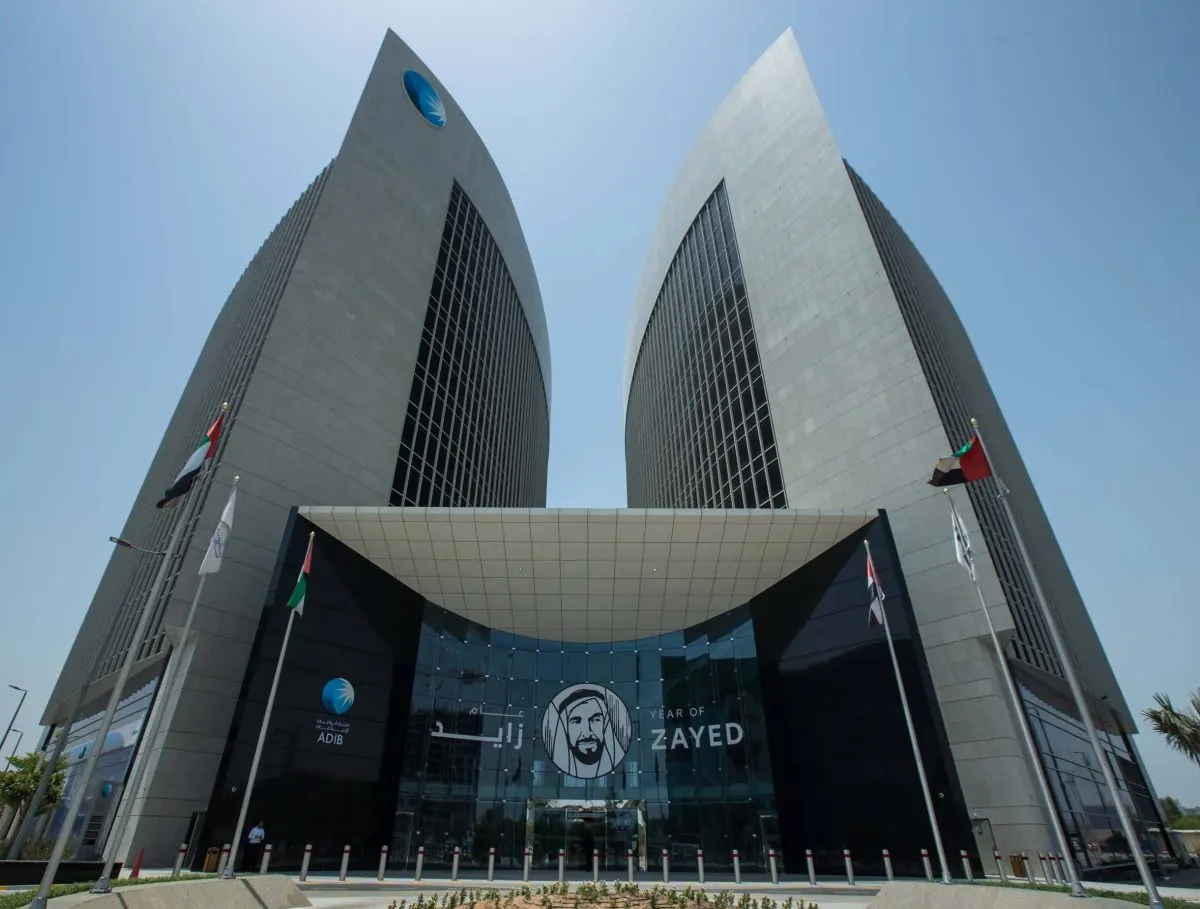
Abu Dhabi Islamic Bank (ADIB) earned 6.43 billion dirhams before tax in the first nine months of 2026, up 6 percent on a year earlier, in results released on 27 October, the day its board met. Ajman Bank’s nine-month profit fell 14.2 percent to 326.1 million dirhams, on our calculation from its interim statements. United Arab Bank (UAB) reported a nine-month net profit of 333 million dirhams, up 6 percent.
Nine-Month Results of Three UAE Banks
| Bank | 9M 2026 net profit (AED m) | Change on year | Total assets (AED bn) |
|---|---|---|---|
| ADIB | 5,609 | +5.5% | 317.6 |
| UAB | 333 | +6% | 28 |
| Ajman Bank | 326.1 | -14.2% | 35.8 |
ADIB and Ajman Bank show profit after tax from their statements, and the change for each is our calculation. UAB’s figure and change are as reported by WAM on 26 October. Total assets are at 30 September 2026.
ADIB Grows Financing 25.6 Percent as Funded Income Rises 10.5 Percent
ADIB’s profit after tax reached 5.61 billion dirhams, against 5.32 billion a year earlier. That is a rise of 5.5 percent on our calculation, slightly slower than pre-tax growth. The tax charge rose to 824 million dirhams from 736 million, which lifted the effective rate to 12.8 percent from 12.2 percent, on our calculation.
Revenue reached 9.71 billion dirhams. Funded income did the work: it rose 10.5 percent to 6.11 billion, on our calculation. Non-funded income was 3.60 billion, against 3.62 billion. Its share of revenue slipped to 37.1 percent from 39.5 percent, on our calculation.
Costs grew faster than income. Operating expenses rose 9.5 percent to 2.83 billion dirhams, on our calculation. Income grew 6.2 percent, on our calculation. The cost-to-income ratio moved to 29.1 percent from 28.3 percent. Impairment charges went the other way. At 451 million dirhams they were 11.7 percent lower, on our calculation, and the cost of risk eased to 0.30 percent from 0.46 percent.
The third quarter produced 1.85 billion dirhams after tax. That was 1.5 percent above the same quarter of 2025 and 4.0 percent below the second quarter, on our calculation. Pre-tax profit for the quarter was 2.12 billion dirhams. That is 33.0 percent of the nine-month pre-tax total, on our calculation.
The balance sheet grew faster than earnings. Total assets reached 317.6 billion dirhams, up 18 percent on the year, and added 13.73 billion in the third quarter alone, on our calculation. Net customer financing rose 25.6 percent to 214.5 billion dirhams, on our calculation. Depositors’ accounts grew 17 percent to 258.7 billion. That is 37.06 billion dirhams more than a year earlier, on our calculation. Lending ran ahead of deposits, and the financing-to-deposit ratio rose to 82.9 percent from 77.1 percent. Retail makes up 50 percent of the financing portfolio. Government-related entities account for 26 percent and large corporates for 14 percent.
Growth used capital. Risk-weighted assets rose 14.7 percent, on our calculation. The common equity tier 1 ratio eased to 12.4 percent from 13.0 percent, and the capital adequacy ratio to 15.6 percent from 16.7 percent. The planned 1.75 billion dirham rights issue equals 0.83 percent of risk-weighted assets at the end of September, on our calculation.
Credit quality improved. Non-performing financing fell 22.4 percent to 4.43 billion dirhams, on our calculation. The non-performing asset ratio improved to 2.0 percent from 3.3 percent, which the bank calls a record low. Coverage excluding collateral rose to 114.3 percent from 89.3 percent. The return on average equity was 27.5 percent, against 29.8 percent a year earlier.
ADIB, Nine Months to September
| Measure (AED m) | 9M 2026 | 9M 2025 | Change |
|---|---|---|---|
| Net revenue from funds | 6,112 | 5,530 | +10.5% |
| Non-funded income | 3,601 | 3,618 | -0.5% |
| Operating expenses | 2,831 | 2,585 | +9.5% |
| Impairment | 451 | 511 | -11.7% |
| Profit before tax | 6,433 | 6,052 | +6.3% |
| Profit after tax | 5,609 | 5,316 | +5.5% |
From ADIB’s management discussion and analysis for the first nine months of 2026, filed on the Abu Dhabi Securities Exchange. Changes are our calculation.
Ajman Bank’s Income Rises 12.3 Percent as Funding Costs Climb
His Highness Sheikh Ammar bin Humaid Al Nuaimi, Crown Prince of Ajman, Chairman of the Executive Council and Chairman of Ajman Bank, chaired the bank’s board meeting, at which the board announced the results. Gross operating income rose 12.3 percent to 1.35 billion dirhams, on our calculation. Income from Islamic financing and investing assets led the rise, up 19.2 percent to 976.8 million, on our calculation. Income from investment securities rose 14.4 percent, while fees, commissions and other income fell 17.2 percent to 169.4 million, on our calculation.
Funding costs took most of the gain. The depositors’ share of profits rose 25.1 percent to 676.6 million dirhams, on our calculation. It absorbed 50.2 percent of gross income, against 45.1 percent a year earlier, on our calculation. Net operating income therefore grew 1.8 percent to 671.3 million, on our calculation. Staff, administrative and depreciation costs came to 331.4 million dirhams on our sum, up 12.1 percent. General and administrative expenses alone rose 40.5 percent, on our calculation. Operating profit before impairment was 339.9 million dirhams, against 364.1 million, on our calculation.
The credit line turned. The bank booked a 23.7 million dirham provision for expected credit losses, against a 49.5 million write-back a year earlier, a swing of 73.2 million on our calculation. A 35.5 million dirham reversal of impairment on non-financial assets offset part of it. Profit before tax was 351.7 million dirhams, 15.0 percent lower, and profit after tax 326.1 million against 380.0 million, on our calculation. Earnings per share were 0.120 dirhams, against 0.141.
The third quarter was weaker. Profit was 79.7 million dirhams against 134.9 million, down 40.9 percent on our calculation. Net operating income for the quarter fell to 233.9 million from 260.4 million. The credit-loss charge rose to 32.4 million from 6.1 million. Gross income for the quarter was 467.7 million dirhams, 4.1 percent above a year earlier on our calculation. The bank’s chief executive pointed to record quarterly revenue.
The balance sheet moved toward lending. Since the end of 2025, total assets have risen 8.9 percent to 35.79 billion dirhams, on our calculation. Net Islamic financing grew 13.3 percent to 20.09 billion, on our calculation. Customers’ deposits fell 6.0 percent to 22.32 billion, on our calculation. Amounts due to banks rose to 6.08 billion from 2.89 billion. Financing now equals 90.0 percent of customers’ deposits, up from 74.7 percent, on our calculation.
Equity rose 26.9 percent since December to 4.41 billion dirhams, on our calculation. The 1.10 billion dirhams of Tier 1 sukuk added in the period is larger than the whole 934.2 million rise, on our calculation. On our reading, this is the 300 million dollar Additional Tier 1 sukuk the bank issued in July, its first such issue. The investment fair value reserve deficit widened to 465.3 million dirhams from 205.1 million. The non-performing financing ratio fell to 5.0 percent, an improvement of 203 basis points since December. The total capital ratio rose 308 basis points to 17.1 percent. Return on equity was 11.0 percent.
Ajman Bank, Nine Months to September
| Measure (AED m) | 9M 2026 | 9M 2025 | Change |
|---|---|---|---|
| Gross operating income | 1,347.9 | 1,200.6 | +12.3% |
| Depositors’ share of profits | 676.6 | 541.0 | +25.1% |
| Net operating income | 671.3 | 659.6 | +1.8% |
| Credit losses (provision or write-back) | -23.7 | +49.5 | n/a |
| Profit before tax | 351.7 | 413.6 | -15.0% |
| Profit for the period | 326.1 | 380.0 | -14.2% |
From Ajman Bank’s condensed consolidated interim statement of profit or loss, filed on the Dubai Financial Market on 27 October. Changes are our calculation.
UAB Cuts Its Non-Performing Loan Ratio to 0.5 Percent
UAB’s nine-month net profit of 333 million dirhams rose 6 percent, WAM reported on 26 October. The bank said the rise came from 12 percent growth in operating income, helped by disciplined costs and a reversal of impairment charges after delinquent loans were resolved. Total assets rose 16 percent to 28 billion dirhams. Loans, advances and Islamic financing grew 12 percent to 16 billion, and investments 23 percent to 9 billion.
Deposits grew faster than lending: customer deposits rose 27 percent to 18 billion dirhams, more than twice the pace of financing growth, on our calculation. The non-performing loans ratio dropped to 0.5 percent from 2.7 percent at the end of June, and provision coverage rose to 338 percent from 101 percent. The total capital adequacy ratio was 20.7 percent and the common equity tier 1 ratio 16.8 percent. Chief Executive Shirish Bhide credited the bank’s core business segments.
Asset Quality and Capital at 30 September 2026
| Bank | NP ratio | CAR | CET1 ratio |
|---|---|---|---|
| ADIB | 2.0% | 15.6% | 12.4% |
| Ajman Bank | 5.0% | 17.1% | not stated |
| UAB | 0.5% | 20.7% | 16.8% |
NP ratio is the non-performing asset ratio for ADIB, the non-performing financing ratio for Ajman Bank and the non-performing loans ratio for UAB. CAR is the capital adequacy ratio, and Ajman Bank’s figure is its total capital ratio.
Why it matters: The three results point the same way on credit. All three banks reported lower non-performing ratios, on our count. Profit is where they part. ADIB’s profit after tax still grew 5.5 percent, on our calculation, even though costs and tax rose faster than income. At Ajman Bank, higher payments to depositors and a return to credit-loss provisions together outweighed a 12.3 percent rise in gross income, on our calculation.
Outlook: ADIB’s 1.75 billion dirham rights issue will further strengthen its capital base, the bank says, and its management said the bank is well placed to keep its momentum under its Vision 2035 plan. Ajman Bank enters the final quarter with a total capital ratio of 17.1 percent, after its first Additional Tier 1 sukuk. Its financing now equals 90.0 percent of customer deposits, on our calculation. UAB says it remains focused on innovation, digital transformation, efficiency and risk management as it enters the final quarter.
Sources: Abu Dhabi Islamic Bank, Ajman Bank, Abu Dhabi Securities Exchange, Dubai Financial Market, WAM, The Edge.