US Rule Will Require Licenses for Advanced Chips to Five Countries and Curb Remote Access

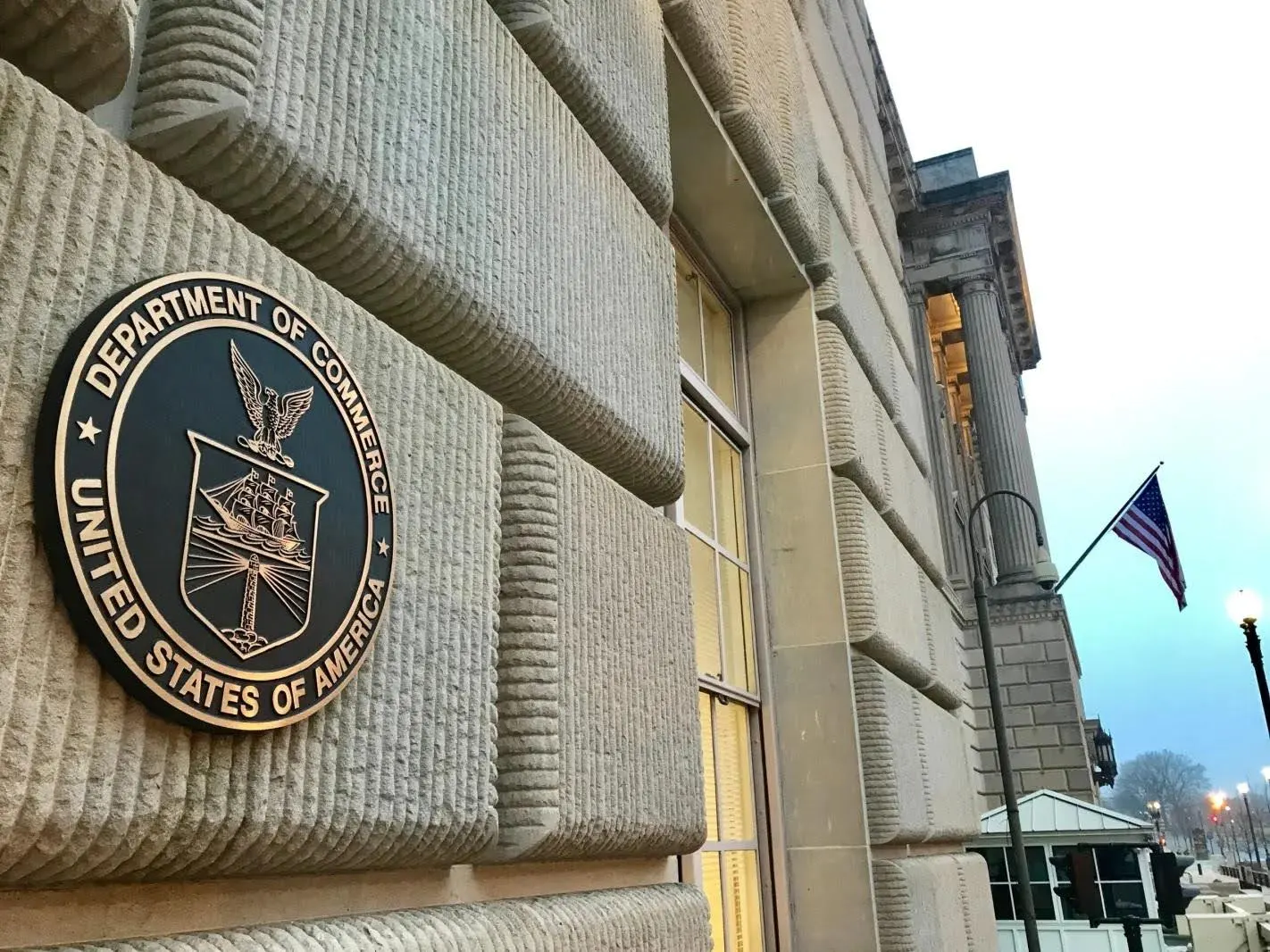
The Takeaway: The US Commerce Department’s Bureau of Industry and Security (BIS) issued an interim final rule on Monday that, once in force, will require a license to ship advanced chips to Indonesia, Malaysia, Singapore, Thailand and Brazil. Without a license, the chips will also be barred from data centers anywhere that supply large amounts of computing power to companies headquartered in Country Group D:5 or Macau. The rule takes effect on publication in the Federal Register and formally rescinds the AI Diffusion Rule of January 2025.
Washington moved on Monday to stop restricted buyers from reaching advanced American chips remotely through data centers in third countries.
BIS said the interim final rule aligns remote-access controls with those on physical shipments. It was “written by and at the direction of” the Treasury Department and the National Security Council, the bureau said. The rule uses “Super Intelligence” in place of “artificial intelligence”, under Executive Order 14434, and is titled “Addressing Remote Access to Advanced Semiconductors”.
Five countries will need a license, with an exclusion for US companies
Once the rule takes effect, exports, reexports and in-country transfers of advanced computing items to or within Indonesia, Malaysia, Singapore, Brazil and Thailand will need a license. The rule describes the five as countries that “present a higher-than-normal risk of diversion”.
The Secretary of Commerce can add further countries, in consultation with the Secretary of State or the Assistant to the President for National Security Affairs. Applications for the five will be reviewed case by case, weighing the effectiveness of each destination’s export control regime and its coordination with the bureau on enforcement.
Shipments to a consignee or end user headquartered in the United States, or whose ultimate parent company is, are excluded, provided the exporter reports them to the bureau every month. Each report names the parties and their ultimate parents and gives the export classification, product name and SKU, quantity, date and total processing performance (TPP), the rule’s measure of a chip’s computing power. It is due by the first business day of the month after the transaction.
Commerce will watch for countries that tolerate evasion of the rule, the text says. The possible responses it lists include import restrictions, new license requirements on advanced chip exports, a downgrade of the country’s export control status, and temporary export bans and Entity List designations, which tie named parties to extra license requirements, for the foreign persons involved.
Data centers serving D:5 or Macau companies will need a license above 12 million TPP
A new section of the rules bars shipping advanced computing items without a license when the exporter knows they are bound for a data center, anywhere in the world, that provides or will provide more than 12,000,000 “aggregate TPP” to or for companies headquartered in Macau or a Country Group D:5 destination, the US list of arms-embargoed countries. Companies whose ultimate parent is headquartered there are covered too.
The total counts one data center or a group of linked ones, and the links may be digital rather than physical. Applications will be reviewed case by case.
The rule’s top export class for advanced chips, 3A090.a, has two tests. A chip qualifies with a TPP of 4,800 or more.
It also qualifies at a TPP of 1,600 or more when its performance density is 5.92 or more.
The rule’s own technical note equates that first threshold with 300 teraflops of 16-bit computation.
Data centers that were already supplying what the rule calls a significant volume of compute to such companies before publication, and want to keep doing so, must obtain a license within 90 days of the effective date or face future export restrictions. Exporters are expected to obtain the foreign data center’s know-your-customer checks, including on direct or indirect ownership or control from D:5 or Macau.
A data center that declines or cannot provide those checks is treated as a red flag that presumptively gives the exporter knowledge of a prohibited use, unless the exporter resolves it first. Exporters who ship without a license because they had no such knowledge must tell recipients that any later switch to a prohibited use needs authorization.
The ban does not apply where the computing power serves only a “commercial recommender system”, a tool that ranks, filters or suggests products, services or content, such as those of online retailers and social media companies. Systems that generate text, images, audio, video or software fall outside that carve-out. To use it, the exporter or transferor must submit the customer’s name, the total TPP supplied and its due diligence to the bureau.
The rule also states that the existing end-use control for advanced computing items has always reached cloud arrangements. It applies, for example, where a Macau or D:5 company is the buyer, or the exclusive or primary remote user, defined as more than 50% of total compute. The recommender carve-out sits in the new section only. Under this existing control, the rule says, data center operators that otherwise comply with the export rules and were already serving commercial recommender systems may continue for 90 days and must then obtain a license.
The UAE has a presumption of approval as D:5 faces denial
The worldwide license requirement is removed and replaced by a list of destinations.
Beyond the five new countries, licenses stay in place for Country Groups D:1 and D:4, the national security and missile technology groups, for D:5 and for the United Arab Emirates. Destinations also listed in two other US country groups, A:5 and A:6, are excluded.
No license is needed for the UAE where the ultimate consignee and all end users are approved UAE entities listed in the rules, under the July 2026 rule “Enhanced Favorable Treatment for the United Arab Emirates Under the Export Administration Regulations”. Other applications for the UAE, and for D:1 and D:4 destinations, are reviewed under a presumption of approval.
For China and Macau, applications for chips with a TPP below 21,000 and total DRAM bandwidth below 6,500 GB/s are reviewed case by case, with extra information required. All other applications for D:5 destinations and Macau, or for entities headquartered there, face a presumption of denial.
The AI Diffusion Rule is formally rescinded
The rule formalizes the rescission, announced by the bureau in May 2025, of the January 2025 “Framework for Artificial Intelligence Diffusion”, which the rule says was never enforced. The country tiers go, along with License Exception Artificial Intelligence Authorization, License Exception Low Processing Performance and the Data Center Validated End-User authorization.
The control on AI model weights, export classification 4E091, is removed with its foreign direct product rule, a provision that extends US controls to some foreign-made items. The text says destination and end-use license requirements are the more effective approach.
License Exception Advanced Compute Manufacturing, which supports supply chains for items destined to end users outside Macau and D:5, stays, as does the worldwide scope of the advanced computing foreign direct product rule.
Chip fabricators and packaging companies face a narrower set of routes. Designers located in, or with an ultimate parent headquartered in, Country Groups D:1, D:4 or D:5 or the five countries will no longer be able to rely on a fabricator’s or packager’s transistor-count attestation to rebut the presumption that an advanced logic chip falls in the top export class. Only approved or authorized designers keep a way to rebut it.
The five countries bought $140.4 billion of US goods in nine months
The five new license destinations are large US export markets. US goods exports to them, covering all merchandise rather than chips alone, reached $140.4 billion in the first nine months of the year, US Census Bureau figures show, 22.0% more than a year earlier.
US goods exports to the five countries, January to September (in $ billions; change in %)
| Country | 2026 | 2025 | Change |
|---|---|---|---|
| Brazil | 42.34 | 40.09 | 5.6 |
| Singapore | 40.30 | 31.02 | 29.9 |
| Malaysia | 27.02 | 21.70 | 24.5 |
| Thailand | 21.59 | 14.24 | 51.6 |
| Indonesia | 9.17 | 8.07 | 13.6 |
| Total | 140.41 | 115.12 | 22.0 |
All merchandise; chips are not shown separately. Nominal, not seasonally adjusted. The 2025 figures and the totals are sums of monthly figures in $ millions; changes are computed from those figures.
In The Edge’s reading, the requirement falls hardest on the four Southeast Asian destinations, where US goods exports rose 30.7% in the nine months, against 5.6% for Brazil.
The bureau expects an estimated 970 extra filings a year
The bureau expects an estimated 100 additional license applications a year. For that collection, it estimates the added paperwork burden at 50 hours a year and $1,900 in cost.
Under its collection for license exceptions and other authorizations, it expects a net increase of an estimated 970 submissions and 440 burden hours. It puts the estimated burden cost of that increase at $16,720, taking into account the new monthly reports and the reporting removed with the rescinded exceptions.
The rule was issued without prior notice and comment under the Export Control Reform Act of 2018 and was found not significant under Executive Order 12866. Under its savings clause, shipments already en route on the publication date that needed no license, or used a license exception, may proceed if completed within 30 days. It is signed by Jeffrey I. Kessler, Under Secretary for Industry and Security.
What to watch: The Federal Register, which had not published the rule on Monday, sets the deadlines below by its publication date, and the rule takes effect on that date. Comments are due within 60 days, and data centers that want to keep serving the covered companies have 90 days to obtain a license. Shipments en route have 30 days to complete.
Method: rule provisions are from the Bureau of Industry and Security’s interim final rule “Addressing Remote Access to Advanced Semiconductors” (RIN 0694-AK50), displayed with its press release of 16 November 2026 ahead of Federal Register publication; country-group names are from supplement no. 1 to part 740 of the Export Administration Regulations; trade figures are from the US Census Bureau’s tables of US goods trade by country, nominal and not seasonally adjusted, through September 2026; sums and percentage changes are The Edge’s calculations.
Sources: US Bureau of Industry and Security, US Census Bureau, The Edge.