US Dollar Outlook 2026: Higher for Longer Rates Keep the Dollar Supported, But Upside Is Becoming More Selective

The US dollar has entered the second half of 2026 with a firmer tone, supported by sticky inflation, resilient labour market data, elevated Treasury yields, and renewed demand for dollar liquidity during a period of geopolitical and energy market uncertainty. The recent move is not only a safe haven reaction. It also reflects a repricing of Federal Reserve policy after investors reduced expectations for near term easing.
As of 19 June 2026, the US Dollar Index traded around 100.79, gaining 1.71% over the previous month and 2.11% over the previous 12 months. This is not a dramatic structural surge, but it is a meaningful reversal from the earlier assumption that the dollar would weaken as US policy rates moved lower. The stronger dollar reflects a more persistent interest rate advantage, especially against the euro and yen, which together represent more than 70% of the DXY basket.
The Fed Repricing Is the Main Driver
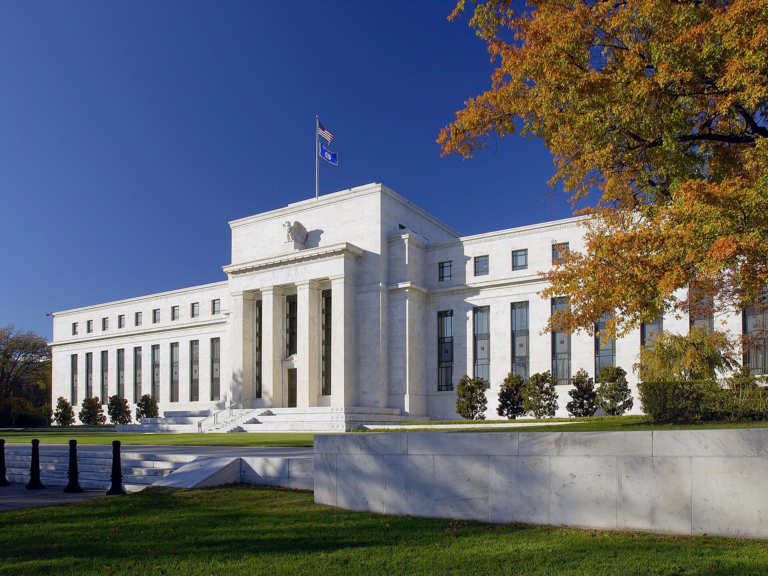
The Federal Reserve kept the federal funds target range unchanged at 3.50% to 3.75% in June, leaving the midpoint at 3.625%. The rate decision itself was expected. The important signal came from the updated Summary of Economic Projections, which showed a more restrictive policy profile than previously expected.
The June projections put 2026 real GDP growth at 2.2%, unemployment at 4.3%, PCE inflation at 3.6%, and core PCE inflation at 3.3%. These numbers matter because they describe an economy that is slowing but not weak, while inflation remains materially above the Fed’s 2% objective.
The projected federal funds rate also shifted higher. The median projected federal funds rate for end 2026 rose to 3.8%, compared with the current midpoint of 3.625%. Out of 18 June SEP participants, eight projected the policy rate at 3.625%, one projected a lower rate, and nine projected a rate above the current midpoint. This distribution does not guarantee a hike, but it clearly shows that the policy debate has moved away from imminent cuts and toward a higher for longer stance.
For the dollar, this is central. Currency strength is strongly influenced by expected interest rate differentials. When US rates are expected to remain higher for longer, dollar denominated assets become more attractive, especially relative to economies where policy rates remain lower.
Inflation Remains the Core Dollar Support
The latest US inflation data continue to support a firm dollar outlook. Headline CPI rose 4.2% year on year in May 2026, up from 3.8% in April. Core CPI, excluding food and energy, rose 2.9% year on year.
The composition of inflation is important. Energy prices increased 23.5% year on year, while gasoline rose 40.5%. Energy also accounted for more than 60% of the monthly increase in the all items CPI index. This shows that the latest inflation pressure is heavily linked to energy and geopolitical risk, but it does not remove the Fed’s policy challenge because core inflation remains above target.
On a simple annualized basis, the May monthly headline CPI increase of 0.5% implies an annualized pace of around 6.2%. Core CPI’s monthly increase of 0.2% implies an annualized pace of around 2.4%. The gap between headline and core inflation confirms that energy is the immediate shock, but core inflation is still not low enough to justify a confident shift toward easier policy.
This is why the dollar remains supported. A currency tends to benefit when inflation prevents its central bank from cutting rates, particularly when the economy is still growing and the labour market is not deteriorating sharply.
Growth Is Slower, But Not Weak Enough To Undermine the Dollar
US growth has moderated, but current data do not point to recession. Real GDP increased at an annualized rate of 1.6% in the first quarter of 2026, revised down from the advance estimate of 2.0%. However, real final sales to private domestic purchasers rose 2.4%, suggesting that underlying private demand was more resilient than headline GDP alone implies.
The price data within the GDP report also reinforce the inflation challenge. The PCE price index rose 4.5% in the first quarter, while core PCE rose 4.4%. This combination of slower growth and high inflation creates a difficult policy mix, but it is not yet a clear dollar negative signal. The dollar usually weakens when growth slows enough to force policy easing. Current data do not yet support that conclusion.
The labour market also remains firm. Nonfarm payrolls increased by 172,000 in May, while the unemployment rate held at 4.3%. Average hourly earnings rose 0.3% month on month and 3.4% year on year. Compared with headline CPI at 4.2%, wage growth is running around 0.8 percentage points below inflation, pointing to pressure on real household purchasing power. However, from a monetary policy perspective, job creation remains strong enough to prevent the Fed from declaring victory on inflation.
Treasury Yields Continue To Support Dollar Demand
Treasury yields remain an important transmission channel for dollar strength. On 18 June 2026, the 2 year Treasury yield stood around 4.19%, the 10 year yield around 4.46%, and the 30 year yield around 4.90%.
Compared with the Fed funds midpoint of 3.625%, the 2 year yield was around 56.5 basis points higher, while the 10 year yield was around 83.5 basis points higher. This indicates that markets are demanding a meaningful yield premium across the curve, reflecting inflation risk, fiscal risk, term premium, and uncertainty over the future path of policy.
The 10 year minus 2 year Treasury spread was approximately positive 27 basis points. This suggests that the yield curve is no longer deeply inverted at this point. For the dollar, a positive yield structure can attract global capital into US fixed income, especially when major peer economies still offer lower policy rates.
The Dollar Still Has a Rate Advantage Over Major Peers
The dollar’s relative appeal remains clear when compared with the two largest components of the DXY basket, the euro and the yen.
The European Central Bank raised its key rates by 25 basis points in June, taking the deposit facility rate to 2.25%, the main refinancing rate to 2.40%, and the marginal lending facility rate to 2.65%. Even after this move, the Fed funds midpoint of 3.625% remains around 137.5 basis points above the ECB deposit rate.
The Bank of Japan also raised its policy setting, with the overnight call rate guideline moving to around 1.0%. This marks a significant shift for Japan, but the US policy midpoint still stands around 262.5 basis points above Japan’s overnight policy guideline.
Because the euro and yen account for more than 70% of the DXY basket, these rate differentials remain highly relevant. They help explain why the dollar can remain firm even when other major central banks are also tightening policy.
The Outlook Is Firm, But Not One Directional
The baseline outlook is for the dollar to remain supported in the near term, especially while three conditions remain in place.
First, inflation remains elevated. Headline CPI at 4.2% is still more than double the Fed’s target.
Second, the Fed is not positioned for near term easing. A policy range of 3.50% to 3.75%, combined with 2026 inflation projections above 3%, keeps the dollar supported through interest rate differentials.
Third, geopolitical and energy market risks continue to increase demand for liquid dollar assets. Energy price volatility, shipping risk, and uncertainty around Middle East supply routes remain important market drivers.
However, the dollar’s upside is not unlimited. Current strength could fade if energy prices retreat, inflation data cool, or markets rebuild expectations for future Fed cuts. The dollar would also become more vulnerable if US growth weakens materially while inflation falls, because investors would then shift attention from inflation protection to recession risk.
Implications for Kuwait and the GCC
For Kuwait and the GCC, the dollar outlook matters through monetary conditions, capital flows, import prices, energy revenues, and financial market liquidity.
Kuwait follows a basket based exchange rate policy designed to maintain relative stability of the Kuwaiti dinar against major currencies. Most other GCC currencies are more directly linked to the US dollar. As a result, dollar strength affects the region through different channels depending on each country’s exchange rate framework.
A stronger dollar can help preserve external currency stability for dollar linked economies, but it can also tighten financial conditions by keeping regional interest rates elevated. Higher US yields can raise funding costs, influence bank liquidity, and shift investor allocation between regional assets and US fixed income.
For oil exporters, the impact is mixed. If dollar strength is linked to geopolitical risk and higher oil prices, fiscal revenues may benefit. But if dollar strength begins to pressure global demand or reduce non dollar purchasing power in major importing economies, the medium term impact becomes less supportive.
Conclusion
The US dollar’s near term bias remains firm, but the rally should be viewed as cyclical rather than open ended. The dollar is supported by elevated inflation, a restrictive Fed, resilient employment, and positive yield differentials. At the same time, the currency is exposed to reversal if inflation moderates, energy prices fall, or US growth slows more sharply.
The key indicators to monitor over the next quarter are US CPI, core PCE inflation, payroll growth, the 2 year Treasury yield, oil prices, and the Fed’s July policy communication. If inflation remains above target and the labour market stays stable, the dollar can remain strong near current levels. If inflation cools and growth weakens, the case for a softer dollar into 2027 will become stronger.
Overall, the dollar is still supported by fundamentals, but the balance of risks is becoming more two sided. Investors should treat current dollar strength as a function of policy and inflation repricing, not as a guaranteed structural uptrend.
Sources: Federal Reserve, Bureau of Labor Statistics, Bureau of Economic Analysis, US Treasury, European Central Bank, Bank of Japan, Central Bank of Kuwait, ICE, and verified market data as of 21 June 2026.