Fed Chairman Warsh Uses Jackson Hole to Curtail Forward Guidance as Inflation Stays Above Target
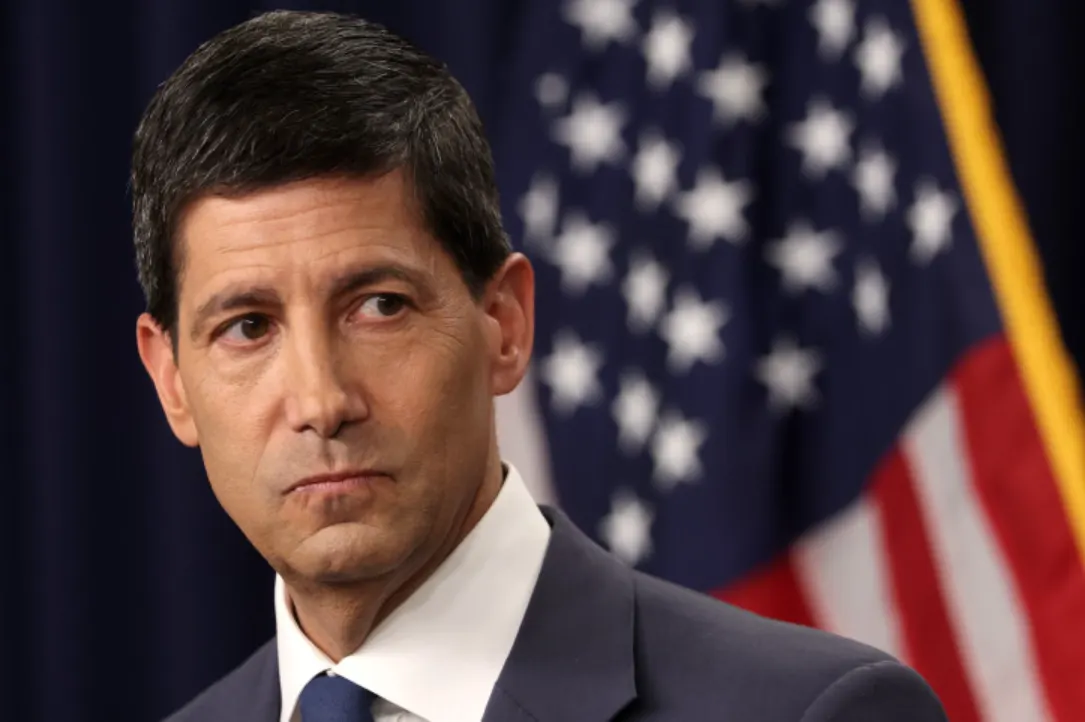
Federal Reserve Chairman Kevin Warsh told the Kansas City Fed’s Jackson Hole Economic Policy Symposium on 28 August 2026 that he intends to sharply limit the central bank’s use of forward guidance in normal times, arguing the practice has “overstayed its welcome” since its introduction during the Global Financial Crisis, while declining to signal a specific near term path for interest rates.
Speaking on his 100th day as Chairman, Warsh also delivered a firm assessment of the inflation challenge. He said the economy appears to have strengthened and labor markets remain consistent with full employment, but inflation is still running well above the Fed’s 2 percent target, concluding that “the Fed’s predominant focus right now should be on prices.”
A Shift Away From Forward Guidance
Warsh, delivering a speech titled “In Our Time,” said transparency about future policy decisions “is not a virtue unto itself” and argued that forward guidance, which became a regular Fed practice during the Global Financial Crisis, should have a much narrower role outside genuine crises. He said excessive guidance can create “ambiguity in the name of clarity” by encouraging markets, businesses and households to rely too heavily on signals about decisions not yet made, and that quasi commitments on future rates can restrict policymakers’ ability to respond as conditions change.
Warsh described a “hall of mirrors problem”: if markets rely heavily on Fed guidance while the Fed itself relies on market prices for signals about the economy, each can end up reflecting the other’s expectations rather than independent information. He said this can leave both markets and policymakers less prepared for unexpected developments and raise the risk of policy errors, and that market participants themselves are unlikely to bear the largest costs if that happens; instead, he said, households without significant financial assets bear the consequences through elevated inflation or less secure jobs.
Warsh also rejected the idea that less forward guidance means replacing it with a mechanical reaction function, saying economic relationships are not precise enough for policymakers to rigorously rely on a simple rule such as a Taylor rule. Citing research by economists Christina Romer and David Romer, Warsh said forward guidance in 2021 “might well have slowed the policy response to high inflation.” He said policymakers need to stay modest about the limits of economic forecasting given how fast geopolitics, supply chains and technology are changing, though he said his colleagues will still work to build more reliable models and rules to inform, rather than mechanically determine, policy decisions.
Policy Principles: A Firm Inflation Target, Fewer Commitments
Warsh set out a broader framework alongside the communications shift. He called the Fed’s 2 percent inflation objective, measured by the personal consumption expenditures price index, a “firm, fixed target,” and said price stability and maximum employment are not conflicting goals over the medium term, since persistently high inflation itself damages prosperity. He reaffirmed that short term interest rates should remain the Fed’s predominant tool, with unconventional measures reserved for genuine crises, and said monetary aggregates deserve more attention in policymaking than they currently receive. His communications principle tied it together: a quieter Fed, making fewer commitments about future policy, should be better positioned to meet its objectives.
Economy Appears Stronger, Financial Conditions Supportive
Warsh said the economy “appears to have strengthened.” Four-quarter growth in business investment in equipment and intangibles has run around 9 percent, the strongest pace since 2021, with more than half of this year’s capital expenditure growth likely tied to AI related buildout, on Warsh’s own estimate. S&P 500 corporate profits have grown more than 20 percent over the past year, with profit margins elevated relative to history and overall equity market volatility low.
Credit spreads on corporate bonds and leveraged loans are near the low end of their historical ranges, with strong issuance volumes this year, while the Fed’s own July Senior Loan Officer Opinion Survey found banks easing standards for commercial and industrial loans — Warsh’s conclusion was that credit and loan markets show few signs of policy restraint. He said housing and agriculture are showing strains but that broad financial conditions cannot, on balance, readily be described as restrictive. Real consumer spending has risen more than 2 percent over the past four quarters, and private domestic final purchases, a measure combining consumption and investment that Warsh said typically carries more signal than GDP, has risen at nearly 3 percent so far this year.
Labor Market Consistent With Full Employment
Warsh described labor markets as “quite stable,” with the unemployment rate at 4.1 percent, low by historical standards and largely unchanged for a couple of years, and unemployment claims on a four-week average near their lowest level in decades. He attributed relatively low labor turnover partly to large scale rematching between employers and employees since the pandemic, acknowledged areas of weakness such as conditions for some recent graduates, and said that as of now labor markets are consistent with full employment.
Inflation Remains the Central Concern
Warsh’s assessment of inflation was notably less comfortable. The Fed’s preferred gauge, the PCE price index, is running at a 3.7 percent 12-month pace and a 4.1 percent six-month pace — the six-month reading is 0.4 percentage points above the 12-month one, on our calculation, meaning the more recent pace of price increases has stayed elevated rather than continuing to ease. Comparable CPI measures and core readings on both gauges are similarly elevated, Warsh said, and while this summer’s PCE and CPI readings were better than expected, he said they did not show that underlying trends had “meaningfully improved.”
Warsh said he disaggregates the 199 individual components of the PCE price index to gauge underlying inflation. Over the past 12 months, 54 percent of components showed price increases above 3 percent, down from a post-pandemic peak of about 77 percent but still well above the roughly 32 percent average of the two decades before the pandemic. Over the past six months alone, 49 percent of components showed annualized increases above 3 percent. He said medium term inflation expectations, including from the swaps market, remain broadly stable and well anchored for now, though he said they “must be closely minded.” His standard for success is a high one: the Fed must be confident that underlying inflation is moving toward its 2 percent objective “clearly and at sufficient speed.”
July’s FOMC Was Divided on Rates, Not on the Inflation Problem
Warsh characterized the July FOMC minutes as showing a unanimous view that labor markets were stable, output solid, and inflation too high, with a “good majority” of policymakers favoring a wait for more data given uncertainty around supply chains, investment flows and geopolitics, before deciding on any change to interest rate policy. That description of shared views on the economic backdrop should not be read as unanimity on the rate decision itself: the FOMC’s own minutes show the Committee voted 9 to 3 in July to hold the target range at 3.50 to 3.75 percent, with Beth Hammack, Neel Kashkari and Lorie Logan dissenting in favor of a 25 basis point increase. The minutes describe most participants as supporting the hold while more information accumulated, with several participants favoring an immediate 25 basis point increase.
AI as a New Variable for Policy
Warsh devoted part of his remarks to artificial intelligence, which he called a potential new factor of production. He said annualized token sales for the two leading AI labs alone are estimated at more than 100 billion dollars, an increase of more than 500 percent from a year earlier, and said the Fed does not yet know whether AI will cause a sustained, economy-wide rise in productivity, whether it will complement or compete with labor, or how the resulting gains will be split between capital owners and the broader economy and workforce. The Fed has established a task force on productivity and jobs, alongside four other task forces, to study these questions, though Warsh said their conclusions will not bear on current policy decisions.
Why it matters: Warsh’s speech is the clearest indication yet of how monetary policy communication will change under his chairmanship, and the shift away from routine forward guidance is substantive rather than cosmetic — he wants markets relying less on advance signals about Fed decisions and more on their own reading of economic and financial conditions, while preserving more flexibility for policymakers as new information arrives. But less guidance should not be read as less concern about inflation: Warsh called the 2 percent objective fixed, described current inflation readings as concerning, said the Fed’s predominant focus right now should be on prices, and set a demanding bar for declaring victory. Solid growth, supportive financial conditions and a labor market consistent with full employment give the Fed little pressure from the employment side of its mandate to tolerate inflation that remains well above target.
Outlook: Warsh deliberately avoided giving markets a near-term rate forecast, closing with the formulation “I stand here today committed to a discipline, not to a decision.” The speech should not be read as a signal for either a rate increase or a hold at the next meeting. Its inflation language is nonetheless consequential: with PCE inflation at 3.7 percent over 12 months, 4.1 percent over six months, and nearly half of PCE components rising at annualized rates above 3 percent over the latest six months, the data have not yet met the standard Warsh set for confidence that inflation is moving toward 2 percent “clearly and at sufficient speed.” The next scheduled FOMC meeting, on 15-16 September 2026, will be the first opportunity for the Committee to translate that framework into another rate decision.
Sources: Federal Reserve — Chairman Kevin Warsh’s “In Our Time” remarks, 28 August 2026, and the Minutes of the Federal Open Market Committee, 28-29 July 2026