World Bank Grants Syria 100 Million Dollars to Rebuild Its Payments Backbone
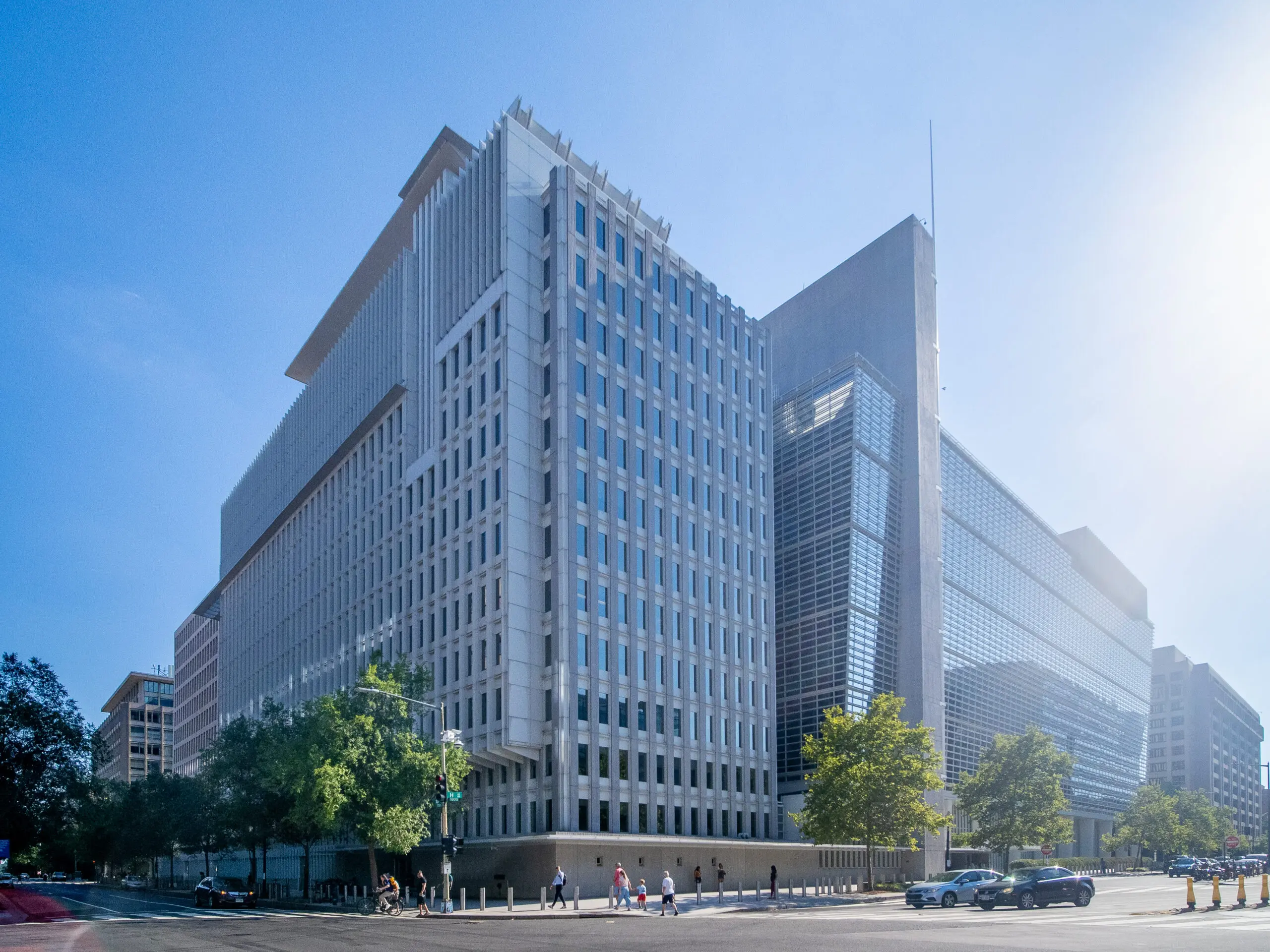
The World Bank has approved a one hundred million dollar grant to modernise Syria’s financial system, its Board of Executive Directors clearing the Syria Financial Sector Modernization Project on 6 August and the Bank announcing it on 7 August. The money is an International Development Association grant, equivalent to seventy three point eight million special drawing rights, and will be implemented by the Central Bank of Syria through to a closing date of 31 October 2031.
Rather than lending into the banking system, the project builds the plumbing underneath it. Fifty seven million dollars goes to payments and financial infrastructure, thirty six million to supervision and financial integrity, and seven million to implementation support, with a fourth zero cost component held in reserve as an emergency reallocation mechanism.
| Component | Allocation |
| Payments, financial infrastructure and core banking enablers | 57 million dollars |
| Supervisory, integrity and financial stability systems | 36 million dollars |
| Project implementation support | 7 million dollars |
| Contingent emergency response | Zero cost mechanism |
The largest component funds a core banking platform for the central bank, an automated transfer system combining real time gross settlement with automated clearing house functions, a central securities depository, a fast payments system for instant account to account transfers, and a national card and quick response code routing switch, alongside cybersecurity, business continuity and disaster recovery. It also covers preparatory credit infrastructure, explicitly including credit registry or credit bureau functionality, secured transactions and collateral valuation.
The second component pays for asset quality reviews of every public and private bank in the system, carried out by independent firms, together with risk based supervision technology, deposit insurance and crisis management readiness, and anti money laundering and counter financing of terrorism capability for the central bank and the Financial Intelligence Unit. The Bank has set targets of at least fifteen million electronic retail payments a year and at least five hundred thousand people and businesses actively using project supported digital payments, of whom one hundred and fifty thousand are to be women.
Dahlia Khalifa, the World Bank’s Division Director for the Middle East Department, said a modern financial system is essential to Syria’s economic recovery and that the project would make payments safer and more efficient while strengthening financial integrity.
The grant is the fifth World Bank operation for Syria since the institution re-engaged. Arrears of about fifteen point five million dollars owed to the International Development Association were settled jointly by Saudi Arabia and Qatar, with the Bank confirming no outstanding balance on 12 May 2025 and announcing it on 16 May. The first project followed on 25 June 2025, a one hundred and forty six million dollar electricity emergency grant, described at the time as the first World Bank operation in Syria in nearly four decades. A twenty million dollar public financial management project was approved on 5 March 2026 and announced on 11 March, and water and health projects worth one hundred and fifty million and seventy five million dollars respectively were approved on 23 April 2026. The five operations together come to four hundred and ninety one million dollars, all of them grants, an arithmetic total of the individual commitments rather than a figure the Bank publishes as a portfolio headline.
Why it matters: The project targets institutional infrastructure rather than bank balance sheets, and the sequencing looks deliberate. System wide asset quality reviews produce a standardised assessment of loan quality, provisioning and capital adequacy, the common measuring stick a supervisor needs before it can act on any individual bank. Modern settlement infrastructure reduces settlement risk in large value interbank transfers and makes retail payments more reliable. Establishing the ability to measure and to settle comes before any attempt at broader balance sheet intervention. Note what the grant does not do: it does not recapitalise banks, it does not fund currency reform, and improved correspondent banking relationships appear as a hoped-for consequence of stronger institutions rather than a funded component.
Looking ahead: The asset quality reviews are the milestone worth waiting for, because they will produce the first consistent system wide read on Syrian bank asset quality and capital needs. Delivery of the core banking, settlement and digital payment systems is the second test. The project runs to October 2031, with the International Monetary Fund providing macroeconomic and central banking advice alongside it after staff visits in February and July 2026, and the International Finance Corporation engaged on advisory work with no figures attached.
Sources: World Bank Group.