Middle East Hotels Enter Peak Season as Marriott Revenue per Room Seen Up 70 Percent
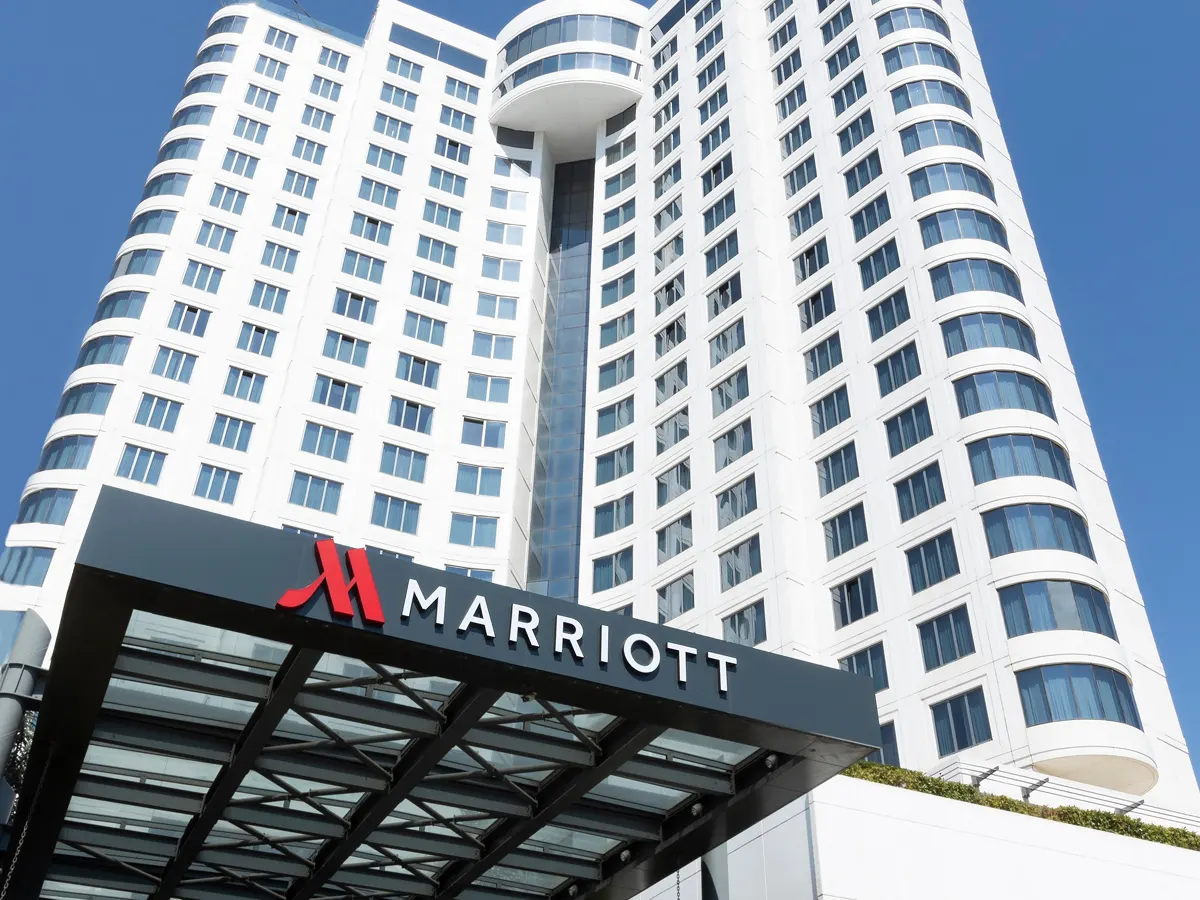
Hotel operators in the Middle East are heading into the region’s peak travel season with demand starting to recover, as analyst estimates cited by Bloomberg show revenue per available room in the region rising about 70 percent at Marriott International and about 65 percent at Hilton Worldwide in the fourth quarter from the second. The second quarter was when travel disruption linked to the regional conflict began to weigh on the 2 companies’ earnings.
Recovering from a steep second quarter
Marriott reported on 3 August that its revenue per available room in the Middle East fell 43 percent in the second quarter from a year earlier, outweighing growth in Europe and leaving its wider Europe, Middle East and Africa region more than 5 percent lower. On our calculation, a 70 percent rise from a second quarter that stood 43 percent below a year earlier would lift Marriott’s regional revenue per room to about 97 percent of its second quarter 2025 level. On our reading, the fourth quarter is seasonally stronger than the second, so the gap with last year’s peak season is likely to be wider; the report on the analyst estimates also notes that business will remain well below the levels seen before the disruption.
Middle East tourism and hotel indicators
| Indicator | Period | Value |
|---|---|---|
| Marriott Middle East room revenue, analyst estimate | Q4 2026 vs Q2 2026 | About +70% |
| Hilton Middle East room revenue, analyst estimate | Q4 2026 vs Q2 2026 | About +65% |
| Marriott Middle East room revenue | Q2 2026 vs Q2 2025 | -43% |
| Middle East international arrivals | 2025 vs 2019 | +39% |
| Middle East international arrivals | H1 2026 vs H1 2025 | -22% |
| Dubai international overnight visitors | 2025 | 19.59m |
Room revenue is revenue per available room. Analyst estimates as reported by Bloomberg on 3 October 2026; company second quarter results, 3 August 2026; World Tourism Barometer, January and September 2026; Dubai figures, February 2026.
A region coming off a strong 2025
The 2026 setback follows a strong 2025. The Middle East virtually reached 100 million international visitors last year, 39 percent above pre-pandemic levels and the strongest result of any region relative to 2019, according to UN Tourism. On our calculation, that is about 6.6 percent of the estimated 1.52 billion international tourist arrivals worldwide. Dubai welcomed a record 19.59 million international overnight visitors in 2025, up 5 percent from 18.72 million, its 3rd successive record year, according to the Dubai Department of Economy and Tourism. Arrivals in the region fell 22 percent in the first half of 2026, according to UN Tourism’s September update.
Why it matters: The final quarter typically carries the region’s strongest hotel demand, so a recovery that gathers pace now would lift the operators’ full year results. On our reading, the region’s strong 2025, when Middle East arrivals ran 39 percent above pre-pandemic levels and Dubai hosted 19.59 million overnight visitors, shows the scale of demand the peak season can draw on as travel recovers. The recovery the analysts describe is from the second quarter trough, not a return to last year’s peak.
Outlook: Marriott’s and Hilton’s third quarter results will give the first company figures since the second quarter and any guidance for the peak season.
Sources: Marriott International, UN Tourism, Dubai Department of Economy and Tourism, Bloomberg, The Edge.