DIEZ First Half Trade Reaches a Record 246 Billion Dirhams as Re-exports Grow 22 Percent
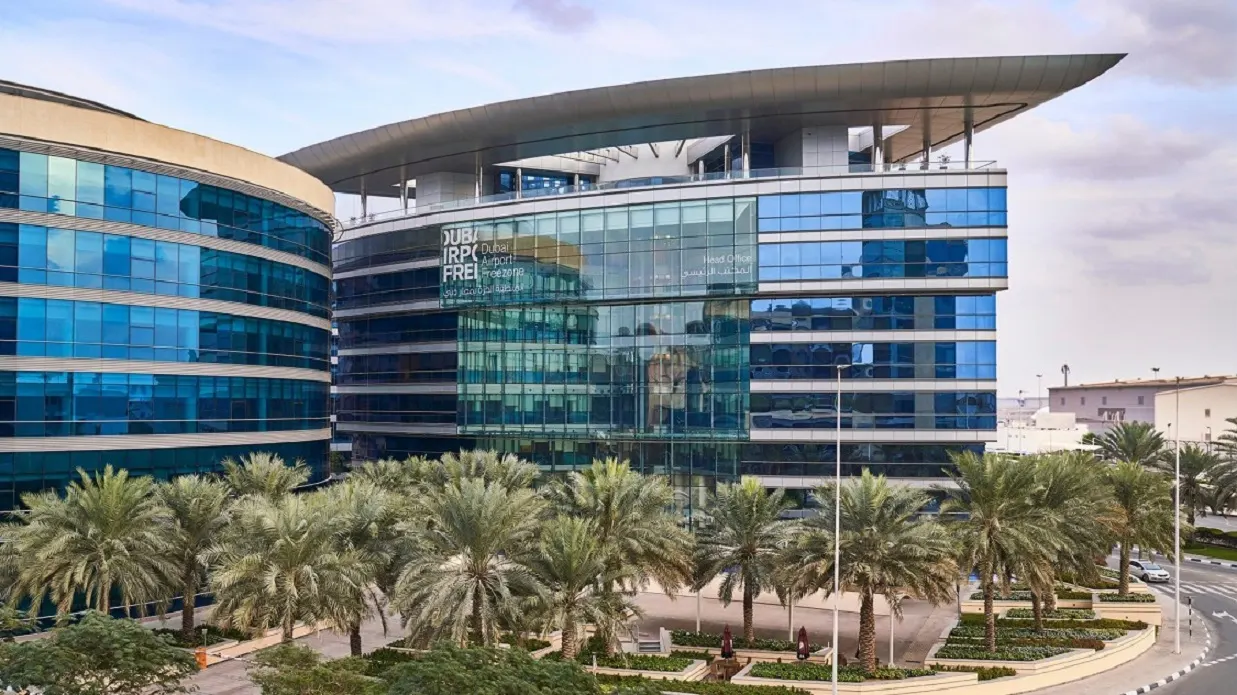
Trade across the three economic zones run by the Dubai Integrated Economic Zones Authority (DIEZ) reached a record 246 billion dirhams in the first half of 2026, 17 percent more than a year earlier, according to figures carried by the Emirates News Agency (WAM) on 18 October. At the Central Bank of the UAE’s rate of 3.6725 dirhams per dollar on 16 October, that is equivalent to 67.0 billion dollars on our calculation. The authority said it was the sixth year in a row that its first-half trade had set a record.
The three zones are Dubai Airport Freezone, Dubai Silicon Oasis and Dubai CommerCity. Re-exports grew 22 percent, faster than imports, and the zones lifted their share of Dubai’s non-oil trade. His Highness Sheikh Hamdan bin Mohammed bin Rashid Al Maktoum, Crown Prince of Dubai, Deputy Prime Minister, Minister of Defence, and Chairman of The Executive Council of Dubai, commended the result.
Re-exports Grow 8 Points Faster Than Imports
Imports into the zones rose 14 percent to 134.8 billion dirhams. Re-exports rose 22 percent to 108.8 billion dirhams and direct exports came to 2.4 billion dirhams. The authority gives the last two values as approximate.
On our calculation, imports make up 54.8 percent of the zones’ trade, re-exports 44.2 percent and direct exports 1.0 percent. Re-exports equal 80.7 percent of imports, and the gap between goods brought in and goods sent on is 26.0 billion dirhams. Because re-exports grew 8 percentage points faster than imports, that ratio is higher than it was a year earlier: re-exports are covering a larger part of what the zones bring in.
Zone Trade by Flow, First Half of 2026
| Flow | AED billion | Growth | Share |
|---|---|---|---|
| Imports | 134.8 | 14% | 54.8% |
| Re-exports | 108.8 | 22% | 44.2% |
| Direct exports | 2.4 | not given | 1.0% |
| Total | 246.0 | 17% | 100% |
Growth is on the first half of 2025. Re-export and direct-export values are given as approximate in the release. Shares are our calculation.
Machinery and Precious Goods Carry High Value per Tonne
Two product groups dominate. Machinery, equipment and electrical equipment account for 66 percent of the zones’ trade, and precious stones, precious metals, jewellery and ornaments for 30 percent, so together they make up 96 percent. The precious goods group grew 18 percent, a point faster than total trade. All three shares are given as approximate.
Volumes moved the other way. The authority put tonnage at 270,000 tonnes in the first half, against 298,000 tonnes a year earlier, both figures given as approximate.
The two numbers together describe the cargo. At 246 billion dirhams over 270,000 tonnes, trade value per tonne of recorded trade volume was 0.91 million dirhams in the first half, on our calculation. With value up 17 percent, value per recorded tonne rose. Machinery, electrical equipment, precious metals and jewellery put a great deal of value into little weight. In his statement the Crown Prince said: “Competition in global trade is no longer determined by trade volumes alone.”
China, Saudi Arabia and India Lead the Partner List
China remained the largest trading partner, with 28.4 percent of the total, ahead of Saudi Arabia, India and Vietnam.
On our calculation, the top four together account for 127.1 billion dirhams, or 51.7 percent of the zones’ trade, and China’s trade alone is 2.6 times Saudi Arabia’s. China, India and Vietnam together add up to 100.6 billion dirhams, 40.9 percent of the total. Saudi Arabia, in second place, is the only Gulf partner in the top four.
Top Four Partners Account for More Than Half of Zone Trade
| Partner | AED billion | Share of zone trade |
|---|---|---|
| China | 69.8 | 28.4% |
| Saudi Arabia | 26.5 | 10.8% |
| India | 17.6 | 7.2% |
| Vietnam | 13.2 | 5.4% |
| Top four combined | 127.1 | 51.7% |
| All other partners | 118.9 | 48.3% |
First half of 2026. Partner values and individual shares as published; the combined rows are our calculation.
A Rising Share of Dubai’s Non-Oil Trade
The zones’ share of Dubai’s non-oil trade rose to 16 percent in the first half, a figure the authority gives as approximate, from 15.4 percent a year earlier.
The UAE’s non-oil foreign trade reached 1,937 billion dirhams in the first half of 2026, up 13.1 percent, according to figures published by the Government of Dubai Media Office on 19 July. The two series are compiled separately.
The Zones Set Against UAE Non-Oil Trade, First Half of 2026
| Measure | Zones | UAE |
|---|---|---|
| Trade, AED billion | 246.0 | 1,937 |
| Growth on a year earlier | 17% | 13.1% |
| Trade with China, AED billion | 69.8 | 180.7 |
| Trade with India, AED billion | 17.6 | 107.5 |
UAE figures are national non-oil foreign trade as published by the Government of Dubai Media Office on 19 July 2026. Zone figures cover the three zones. The two series are compiled separately.
Why it matters: The zones are growing faster than the country’s non-oil trade. Trade rose 17 percent while the UAE’s non-oil trade rose 13.1 percent, and the authority reported in August that the number of companies in its zones rose 13 percent in the first half, with their workforce up 24 percent and occupancy at 96 percent. Together, the figures point to expanding business activity in the zones. Both the Crown Prince and the authority’s chairman referred to the Dubai Economic Agenda, D33, and the three zones’ rising share of Dubai’s non-oil trade is one measure of progress toward it.
Outlook: The full-year figures will show whether the 22 percent re-export pace carried through the second half. The zones go into it with 96 percent occupancy, 13 percent more companies than a year earlier and higher value per recorded tonne, after a sixth straight record first half.
Sources: Dubai Integrated Economic Zones Authority, WAM, Government of Dubai Media Office, Central Bank of the UAE, The Edge.