Egypt and Fertiglobe Discuss 1.5 Billion Dollar Phosphate Complex as Seismic Survey Nears
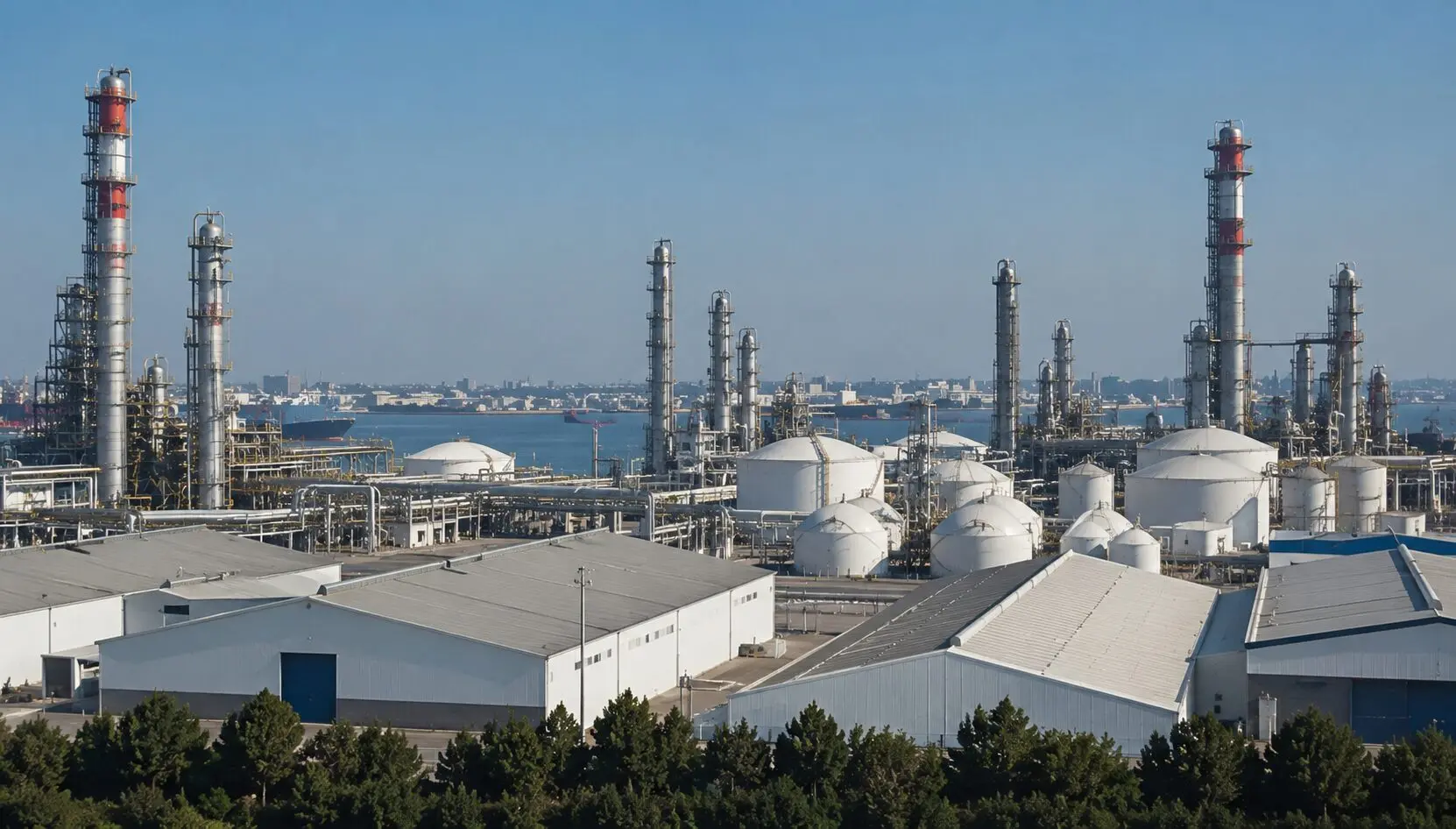
Egypt and Fertiglobe, the fertiliser company within the ADNOC group, are studying a phosphate fertiliser complex at Ain Sokhna with investment above 1.5 billion dollars and a target capacity of 1.3 million tonnes a year of diammonium phosphate (DAP), with commercial production planned for 2031. Minister of Petroleum and Mineral Resources Karim Badawi discussed the preliminary plans with Chief Executive Ahmed El-Hoshy on Sunday 18 October. On the same day the minister said the first phase of an ocean bottom node (OBN) seismic survey, covering an estimated 18,000 square kilometres of Egyptian waters in the East Mediterranean, would begin within 2 weeks.
A 1.5 billion dollar step into phosphate fertiliser
At the 1.5 billion dollar floor, the plan works out to 1,154 dollars of investment for each tonne of annual capacity, on our calculation. A 2031 start leaves 5 years to finish the studies, secure ore supply and build. The company is completing its feasibility study with consultants, and long-term supply of phosphate ore is one of the project’s main requirements, the ministry said.
Badawi directed the company to work with the Mineral Resources and Mining Industries Authority and the wider mining sector to identify available phosphate ore sources and test whether the project’s needs can be met over the long term. The studies still to be completed cover the technology, energy needs and the infrastructure the site requires. The two sides also looked at combining phosphoric acid production with finished fertiliser manufacture, using the ammonia and the industrial base already in Egypt, and discussed speeding up the exchange of technical, geological and commercial data ahead of any ore supply agreements. The heads of the Egyptian Petrochemicals Holding Company and of the mining authority attended.
The ammonia link is the industrial logic. The company’s own product material notes that most ammonia produced is converted into other products, DAP among them. Its two Egyptian plants sit in the Suez Industrial Development Company park, with access to the ports of Ain Sokhna, Adabeya and Damietta.
ADNOC’s fertiliser base in Egypt and the proposed complex
| Plant | Product | Annual capacity, thousand tonnes |
|---|---|---|
| EFC, 2 lines | Urea | 1,679 |
| EFC | Diesel exhaust fluid | 350 |
| EBIC, 1 line | Merchant ammonia | 748 |
| Ain Sokhna, proposed | DAP | 1,300 |
Capacities of the existing plants as listed by the company; the Ain Sokhna figure is the target named on 18 October 2026, with commercial production planned for 2031.
The proposed complex equals 77.4 percent of the urea capacity at EFC, on our calculation. Set against the 2,427,000 tonnes of urea and merchant ammonia the two Egyptian plants list, the complex would add capacity equal to 53.6 percent of that base, on our calculation, though it covers a different product and remains under study. Egypt already hosts 2 of the company’s 4 plants, against a combined annual capacity the company states at 6.6 million tonnes across Egypt, Algeria and the UAE. The investment, above 1.5 billion dollars, is more than 10 times the 150 million dollars of first-half 2026 dividends Fertiglobe declared on 30 September, a payout 20 percent higher than a year earlier.
The meeting also covered local production of AdBlue, the urea solution used to cut vehicle exhaust emissions, from Egyptian urea. The company’s product page describes diesel exhaust fluid as “also known as AdBlue in Europe”, and its production facilities page lists 350,000 tonnes a year of it at EFC. The ministry release does not say whether the proposal would build on that line or add new output.
Phase 1 of the OBN survey starts within 2 weeks
The survey will be carried out by the Egyptian Natural Gas Holding Company (EGAS) with the consortium of SLB and Viridien, as part of a programme that is to cover up to 95,000 square kilometres of Egypt’s East Mediterranean waters. Phase 1 equals 18.9 percent of that 95,000 square kilometre ceiling, on our calculation. The survey vessel Commander has reached Port Said as the first ship on the project, and 2 more vessels are to join it. Work starts in two areas, Denise off Port Said and Ras El Bar, and continues there until the end of 2026, while the consortium prepares to carry the survey into 2027.
The East Mediterranean OBN programme
| Stage | Area, km² | Share of the 95,000 km² ceiling |
|---|---|---|
| Phase 1, estimated | 18,000 | 18.9% |
| Full programme, up to | 95,000 | 100% |
Areas as announced on 18 October 2026; the phase 1 area is given as approximate. Shares on our calculation.
The minister said better data improves the choice of exploration well sites and lowers technical risk. Once processed and interpreted, the data is to be turned into defined opportunities offered to international companies. At a meeting with SLB’s chief executive in Riyadh on 12 October, Badawi discussed the timetable for acquisition, processing and preliminary results, and making the data available through the Egypt Upstream Gateway to support coming international bid rounds. The same meeting covered next steps for seismic work in the Red Sea.
The data is meant for coming bid rounds: phase 1 acquisition runs to the end of 2026, past the current round’s deadlines. The 2026 International Bid Round, which opened for submissions on 11 August, offers 14 blocks: 8 EGAS blocks in the Mediterranean, the Nile Delta and North Sinai, with a deadline in December 2026, and 6 Egyptian General Petroleum Corporation blocks in the Gulf of Suez, Sinai and the Western Desert, due by 11 November. The gas holding company’s 2024 round offered 12 blocks, 10 of them offshore, and was the eighth round run through the gateway since its launch at the start of 2021.
The trade and price backdrop
Egypt’s exports rose 0.58 percent to 3.93 billion dollars in July, CAPMAS reported on 13 October, with petroleum product exports up 55.1 percent. Fertiliser exports were 47.1 percent lower than in July 2025. On prices, the World Bank’s 2 October update showed its fertiliser index up 0.4 percent, with the next update due on 3 November.
Why it matters: Egypt is pairing two kinds of investment on the same day: a downstream project that would turn domestic phosphate ore into finished fertiliser, and new subsurface data that should make its offshore acreage easier to value. For the ADNOC group, the complex would make Egypt home to a larger share of its fertiliser capacity and add phosphate fertiliser to its range. Both rest on resources and infrastructure Egypt already has: ammonia supply, Red Sea and Mediterranean ports, and a Mediterranean gas basin in active licensing.
Outlook: The next markers are the completed feasibility study and the phosphate ore supply arrangements, with commercial output targeted for 2031. Offshore, phase 1 acquisition is set to begin within 2 weeks and run to the end of 2026, with the survey continuing into 2027 and its processed data offered through the gateway for future rounds. In the current round, the 6 Egyptian General Petroleum Corporation blocks close on 11 November and the 8 gas holding company blocks in December.
Sources: Ministry of Petroleum and Mineral Resources, Fertiglobe, EGAS, CAPMAS, World Bank, The Edge.