Euro Has Lost 4.23 Percent Against the Dollar in 2026, a Year of 2 ECB Rate Rises
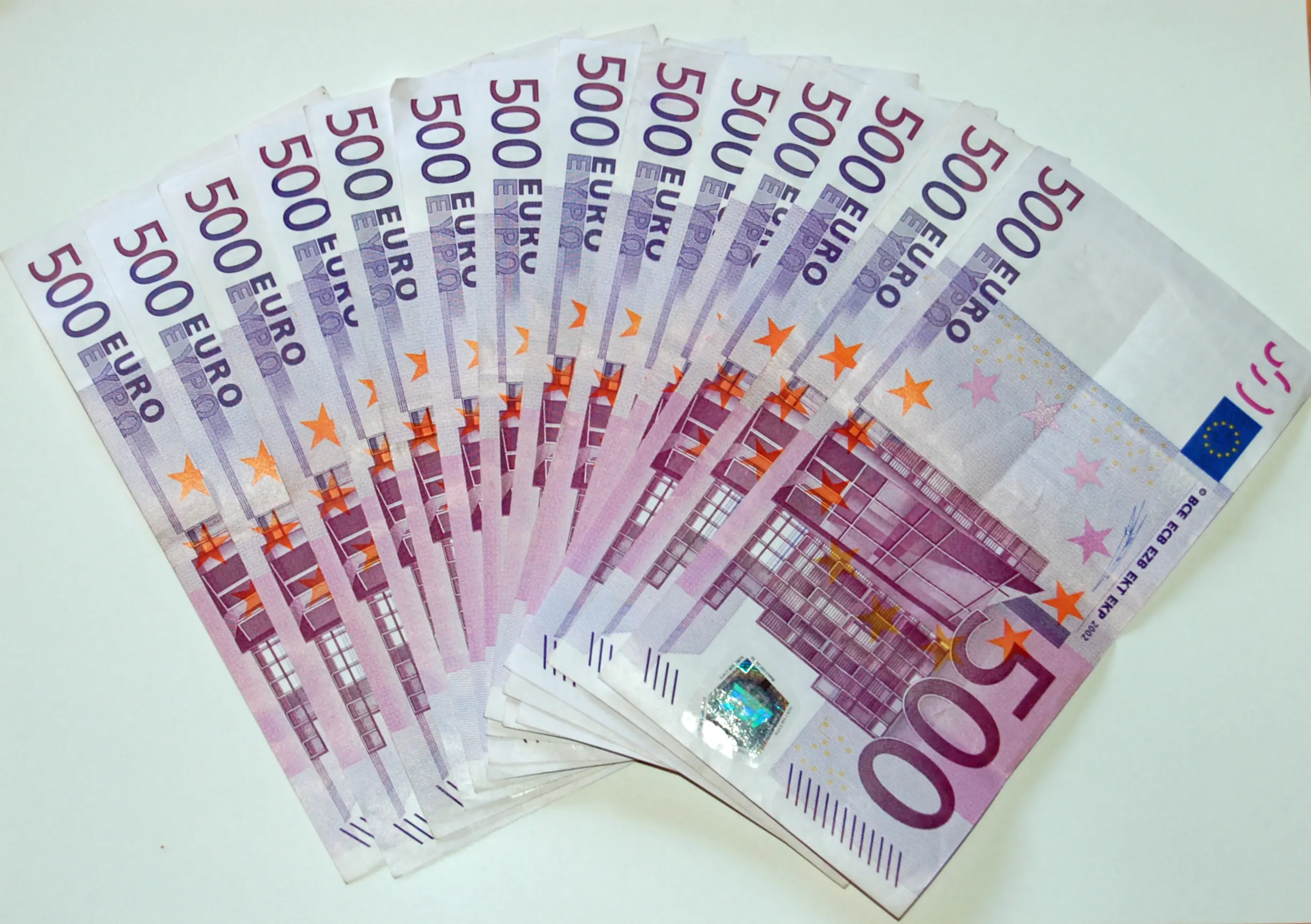
The euro has lost 4.23 percent against the dollar since the end of 2025, on our calculation, although the latest week ran the other way: it rose 0.40 percent on Friday 16 October and 0.42 percent over the week. The European Central Bank’s reference rate stood at 1.1253 dollars that day, against 1.1750 on 31 December and 6.02 percent below the year’s peak of 1.1974 on 28 January. The decline has come in a year in which the central bank raised its deposit rate twice.
The euro now sits 0.68 percent above the 2026 low of 1.1177 set on 7 October, the weakest fixing since 13 May 2025. Over a month the picture is different: the rate is 2.46 percent below the 1.1537 of 16 September, and October’s 12 fixings average 1.12158 dollars, 2.58 percent under September’s average of 1.15132 and 3.25 percent under August’s 1.15931, all on our calculation.
A broad decline, sharpest against the yuan
The euro against 5 currencies and its effective exchange rate
| Currency | 16 Oct 2026 | Since 31 Dec | Over 1 year |
|---|---|---|---|
| US dollar | 1.1253 | -4.23% | -3.40% |
| Chinese yuan | 7.5240 | -8.54% | -9.36% |
| Japanese yen | 177.82 | -3.41% | +0.90% |
| Pound sterling | 0.84385 | -3.29% | -2.74% |
| Swiss franc | 0.9272 | -0.45% | -0.32% |
| Effective rate index | 127.2299 | -2.97% | -2.65% |
Units of each currency per euro, from the euro reference rates; the effective rate is the daily nominal effective exchange rate, a weighted average of the euro’s rates against a basket of foreign currencies. Changes are against the fixings of 31 December 2025 and 16 October 2025, on our calculation.
This is not a dollar story alone. The euro is lower against all 5 major currencies in 2026, and the steepest fall is against the yuan, from 8.2262 to 7.5240. The cross rates explain why. On our calculation, the yuan has gained 4.71 percent against the dollar this year, from 7.0010 to 6.6862 per dollar, so the euro’s 4.23 percent loss to the dollar and the yuan’s own gain compound into the 8.54 percent fall.
Sterling tells a similar story. At 0.84385 pounds on 16 October, the euro matched the 2026 low it first set on 14 October, its weakest against the pound since 9 June 2025, and it fell 0.27 percent on Friday, on our calculation, even as it rose against the dollar. Against the yen the euro is down 3.41 percent this year but still 0.90 percent higher than a year ago, having peaked at 187.72 on 17 April.
The Swiss franc is the outlier. The euro is close to flat against it for the year, yet the path was anything but quiet: it touched 0.9008 francs on 9 March, the lowest fixing in a series that starts in 1999, then climbed to 0.9478 on 30 September before shedding 2.17 percent in just over 2 weeks, on our calculation.
The euro against the dollar through 2026
| Date | Dollars per euro | Change to 16 Oct |
|---|---|---|
| 31 Dec 2025 | 1.1750 | -4.23% |
| 28 Jan 2026, year high | 1.1974 | -6.02% |
| 16 Sep 2026 | 1.1537 | -2.46% |
| 30 Sep 2026 | 1.1355 | -0.90% |
| 7 Oct 2026, year low | 1.1177 | +0.68% |
| 16 Oct 2026 | 1.1253 |
Reference rate fixings; changes are the 16 October fixing against each date, on our calculation.
The effective exchange rate is off a record
The euro’s daily nominal effective exchange rate confirms the direction but softens the size. It stood at 127.2299 on 16 October, 3.42 percent below 131.7304 on 28 January, the highest level in a series that runs back to 1993. It touched a 2026 low of 126.8539 on 12 October, the lowest since 13 May 2025, and has edged up 0.30 percent since, on our calculation.
Its 2.97 percent fall this year, on our calculation, is smaller than the euro’s losses against the dollar, the yuan, the yen and sterling, and larger only than the move against the franc. For scale, the EER-40 weights for 2022 to 2024 published alongside the index give the United States 17.4 percent, China 15.4 percent, the United Kingdom 9.7 percent, Switzerland 6.0 percent and Japan 3.1 percent, which add up to 51.6 percent of that group, on our calculation.
The policy rate gap narrowed to 1.25 points
Policy rates since the end of 2025
| Measure | 31 Dec 2025 | 16 Oct 2026 | Change |
|---|---|---|---|
| Euro area deposit rate | 2.00% | 2.50% | +0.50 pts |
| US target range, lower bound | 3.50% | 3.75% | +0.25 pts |
| Gap, US minus euro area | 1.50 pts | 1.25 pts | -0.25 pts |
The deposit rate rose to 2.25 percent from 17 June and to 2.50 percent from 16 September 2026. The US range is 3.75 to 4.00 percent after a single 2026 increase in September. The gap is our calculation, measured from the lower bound of the US range; measured from its midpoint it is 1.375 points.
The ECB lifted its 3 key rates by 0.25 points in June and again in September, taking the deposit rate to 2.50 percent, while the Federal Reserve raised its target range once, by the same 0.25 points, to 3.75 to 4.00 percent. The distance between the lower bound of the US range and the euro area deposit rate has therefore narrowed by 0.25 points to 1.25 points this year, on our calculation. Over the same period the euro fell against the dollar.
The 10 September decision said inflation “is set to remain well above target for an extended period”. The accompanying projections put headline inflation at 3.0 percent for 2026, 2.5 percent for 2027 and 2.1 percent for 2028, and growth at 0.9 percent this year, revised up mainly on what the bank called the greater than expected resilience of the economy. Neither that decision nor Lagarde’s 17 October IMFC statement comments on the exchange rate, and this article does not assign the decline a cause.
For Kuwait, the euro’s level reaches the dinar directly. At the Central Bank of Kuwait’s rates updated on 19 October, which valued the euro at 345.884 fils, 0.08 percent lower on the day, 1 dinar bought 2.8911 euros, on our calculation. Set against the dinar’s unchanged rate of 308.000 fils per dollar, that cross implies 1.1230 dollars per euro, also on our calculation, 0.20 percent below Friday’s reference rate of 1.1253.
Why it matters: A weaker euro raises the euro price of anything bought in dollars, energy included, at a time when euro area inflation reached 3.8 percent in September, as Eurostat reported on 16 October. It also lowers the price of euro area goods abroad, which bears on a trade account that the same 16 October releases put at a deficit of 5.4 billion euros in January to August, against a surplus of 90.9 billion euros a year earlier. The effective exchange rate, down 2.97 percent this year, shows a decline that is real but far smaller than the 8.54 percent drop against the yuan.
Outlook: The 2 central banks meet in the same week. The Fed’s committee meets on 27 and 28 October, and euro area rate setters meet in Frankfurt on 28 and 29 October, with a press conference on the 29th, having said in September that they are not pre-committing to a rate path. The flash estimate of October inflation follows on 4 November and the next trade release on 13 November. Against the dollar, the reference point is the 7 October low of 1.1177.
Sources: European Central Bank, Federal Reserve, Eurostat, Central Bank of Kuwait, The Edge.