ECB Keeps Deposit Rate at 2.50% on the Day Lagarde Sets a 7 February 2027 Exit
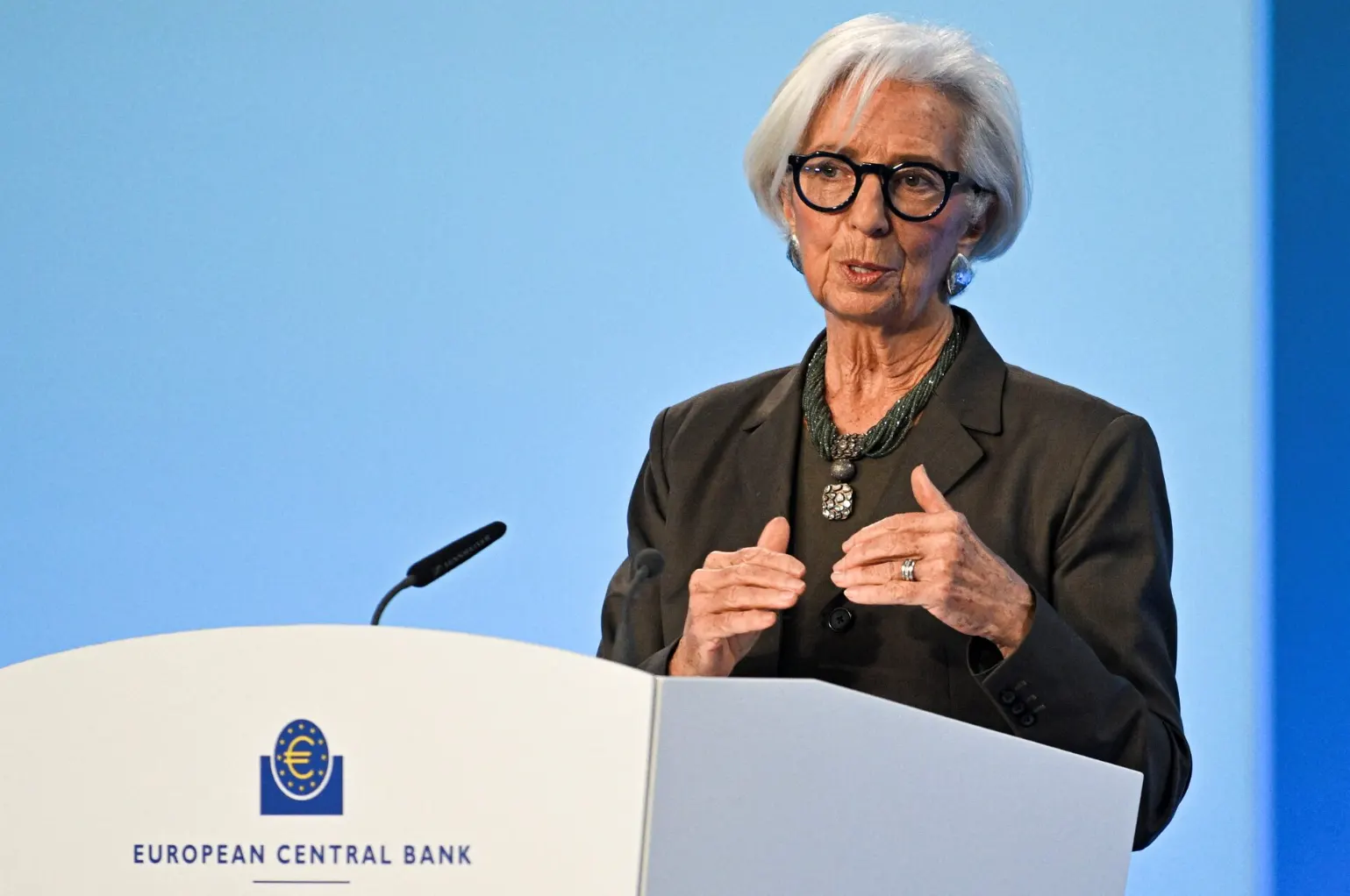
The European Central Bank kept its deposit rate at 2.50% on Thursday, and President Christine Lagarde said the same day that she will step down on 7 February 2027.
For euro-area borrowers and savers, the pause follows increases at two of the previous three meetings, and it comes with a new caution: financing conditions have tightened since September, which the Governing Council expects to weigh on both inflation and growth. In The Edge’s reading, that tightening gives the Governing Council a reason to wait, because part of the restraint a further increase would deliver is already reaching borrowers; the bank itself has committed to no path, and 17 December is the next test of whether a third rise is needed. Two more policy meetings remain before Lagarde leaves on 7 February, and the ECB has given no reason for the timing and named no successor.
The Governing Council pauses after two increases this year
All three key rates are unchanged: the deposit facility at 2.50% and the main refinancing operations at 2.65%. The marginal lending facility stays at 2.90%. The deposit rate is the one through which the Governing Council steers its stance, a choice it confirmed in March 2024.
The refinancing rate sits 15 basis points above the deposit rate, and the lending facility 40 basis points above it. Both spreads have applied since September 2024, when a revised operational framework narrowed the corridor.
The last move came on 10 September, a rise of 25 basis points. A first rise of the same size in June had ended a year at 2.00%, a level in force since 11 June 2025.
The deposit rate is now back at the level in force between 12 March and 22 April 2025, before the last two cuts of the previous easing cycle.
ECB rate decisions in 2026 (deposit facility rate, %)
| Meeting | Decision | Deposit rate |
|---|---|---|
| 5 February | Unchanged | 2.00 |
| 19 March | Unchanged | 2.00 |
| 30 April | Unchanged | 2.00 |
| 11 June | Raised 25 bp | 2.25 |
| 23 July | Unchanged | 2.25 |
| 10 September | Raised 25 bp | 2.50 |
| 29 October | Unchanged | 2.50 |
Rates after each decision; the June and September increases took effect on 17 June and 16 September.
The decision adds tighter financing to the energy shock
Thursday’s decision text keeps the energy shock at its centre. Energy prices have continued to rise, the Governing Council said, tilting the risks towards higher inflation and weaker growth. It expects the larger and longer shock, with its indirect and second-round effects, to push inflation up and growth down.
Euro-area inflation rose to 3.8% in September from 3.2% in August. Energy inflation reached 18.9%.
There is countervailing evidence. Underlying inflation has stayed broadly stable so far, and wages show no material response at this stage. Compensation per employee grew 3.3% in the second quarter, down from 3.6% in the first.
The new element is financing. Conditions have tightened since the September meeting, and the bank expects that to weigh on inflation and growth alike.
Mortgage rates rose to 3.6% in August from 3.5% in July, and demand for mortgages declined substantially in the third quarter. Credit standards for company loans tightened over the same quarter, while those for mortgages were unchanged.
The language has moved over three meetings. In July the ECB described the energy price outlook as close to its June baseline but well above pre-conflict levels; in September it tied its increase to inflation pressures from the conflict in the Middle East and said inflation would stay well above target for an extended period.
It repeated that it will decide meeting by meeting on incoming data, underlying inflation and the strength of transmission, and that it is “not pre-committing to a particular rate path”. Its APP and PEPP bond portfolios keep shrinking as maturing principal is no longer reinvested, and the Transmission Protection Instrument remains available against disorderly market moves.
The staff projections published with the September decision put headline inflation at 3.0% this year and keep it above target through 2028. Next year’s figure was revised up to 2.5% from 2.3% in June.
The monetary policy statement read at Thursday’s press conference added that energy prices have since risen beyond the path assumed in those projections, which is likely to keep headline inflation well above target over the coming quarters.
ECB staff baseline projections, September 2026 (%)
| Measure | 2026 | 2027 | 2028 |
|---|---|---|---|
| Headline inflation | 3.0 | 2.5 | 2.1 |
| Inflation excluding energy and food | 2.5 | 2.6 | 2.3 |
| Growth | 0.9 | 1.4 | 1.5 |
Annual averages, as published with the 10 September decision. The June baseline had headline inflation at 2.0% for 2028. The 29 October statement said energy prices have since risen beyond the September baseline path.
Lagarde’s early exit starts the succession process
Lagarde informed the Governing Council and European Council President António Costa of her decision on Thursday. She has led the ECB since November 2019. Before that she was managing director of the International Monetary Fund from 2011 to 2019.
She leaves before the end of the eight-year, non-renewable term that members of the ECB’s Executive Board serve. The Governing Council thanked her warmly and gave her a long standing ovation.
Her successor will be appointed by the European Council under Article 283 of the Treaty on the Functioning of the European Union. Euro-area leaders act on a recommendation from the Council of the EU, after consulting the European Parliament and the Governing Council, and decide by reinforced qualified majority.
That requires at least 16 of the 21 euro-area countries to vote in favour. Those countries must also represent at least 65% of the euro-area population. The appointee must be a national of a euro-area member state with recognised standing and experience in monetary or banking matters.
Two monetary policy meetings remain before her departure, on 16 and 17 December and on 3 and 4 February. The second ends three days before she steps down. The rest of the Executive Board, as of June 2026, is Vice-President Boris Vujčić, Piero Cipollone, Frank Elderson, Philip R. Lane and Isabel Schnabel.
Her tenure ran from negative rates to a 4% peak and back to increases
When Lagarde took office the deposit rate was negative, at minus 0.50%. It has changed 20 times since, for a net rise of 300 basis points.
The sharpest phase came first, with ten increases between July 2022 and September 2023. They took the rate to a peak of 4.00%.
Eight quarter-point cuts followed between June 2024 and June 2025. They brought the rate down to 2.00%. The two increases of 2026 have since lifted it to 2.50%.
Deposit facility rate under Lagarde
| Phase | Moves | Total (bp) | Rate after (%) |
|---|---|---|---|
| In force from 18 September 2019 | None | 0 | -0.50 |
| July 2022 to September 2023 | 10 hikes | +450 | 4.00 |
| June 2024 to June 2025 | 8 cuts | -200 | 2.00 |
| June to September 2026 | 2 hikes | +50 | 2.50 |
Changes counted by effective date in the official table of key interest rates.
What to watch:
17 December 2026: the Governing Council’s next monetary policy decision, published at 13:15 GMT. The press conference follows at 13:45 GMT.
4 February 2027: Lagarde’s last scheduled monetary policy meeting before she steps down on 7 February.
Rates, statements and projections are from the ECB’s monetary policy decisions of 29 October 2026 and earlier meetings this year, its monetary policy statement and its release on the President of the same date, its table of key interest rates and its meeting calendar; the appointment rules are from the Council of the EU. Counts, spreads and changes not attributed to a source are The Edge’s calculations.
Primary source: European Central Bank, “Monetary policy decisions” and “ECB President Lagarde to step down on 7 February 2027”, press releases, 29 October 2026.
Sources: European Central Bank, Council of the EU, The Edge.