Saudi Arabia’s HRDF Lifts Its Subsidised Minimum Wage to SAR 5,000, Then SAR 6,000
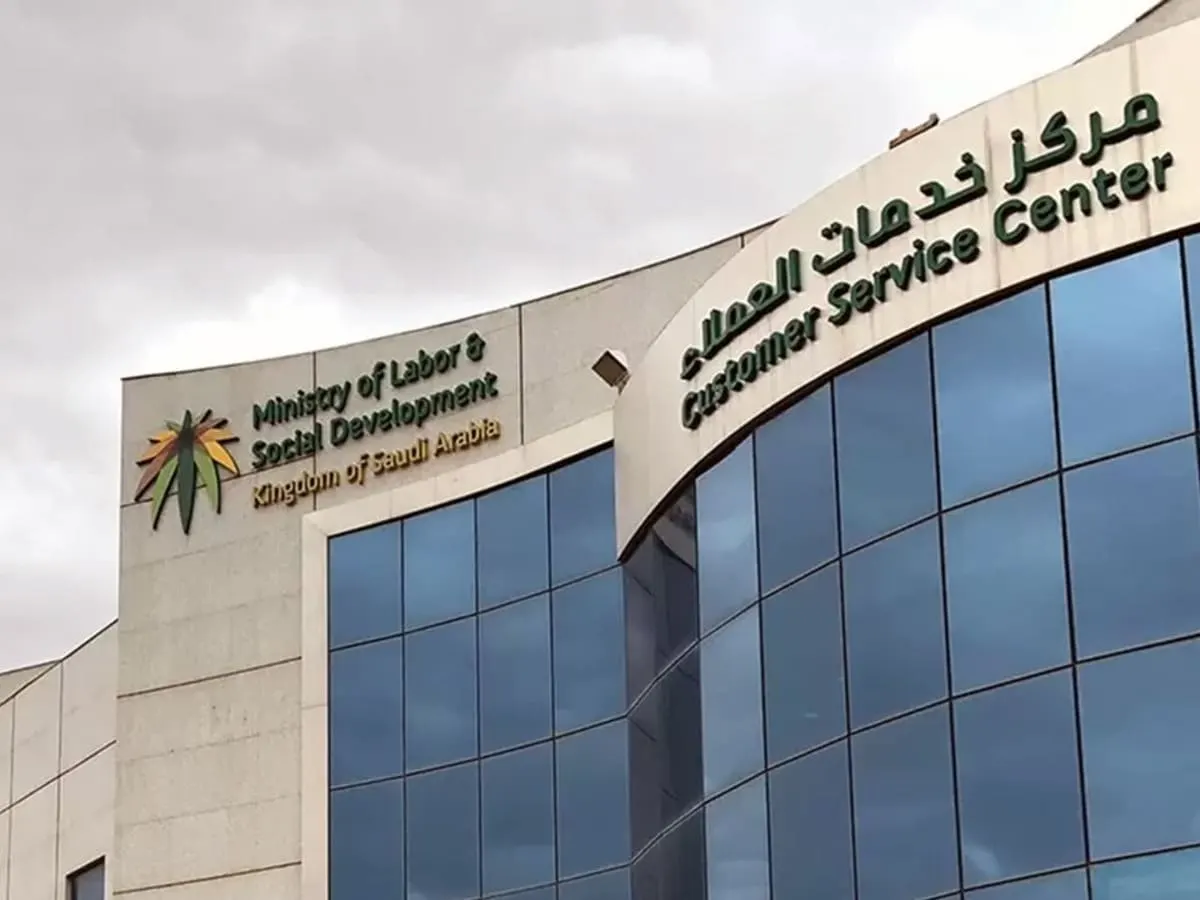
The Human Resources Development Fund (HRDF) will raise the minimum wage it subsidises for Saudi employees to SAR 5,000 a month from 25 April 2027, the Saudi Press Agency reported on 29 October.
A second step lifts the floor to SAR 6,000 from 25 April 2028. Both steps coincide with the stages of the Ministry of Human Resources and Social Development’s decision raising the minimum wage at which a Saudi worker counts in Nitaqat, the agency said. In The Edge’s reading, the higher floor steers the fund’s money toward better-paid roles rather than toward jobs paid below it.
The subsidised wage rises 25%, then 20%
Under the Employment Support product, the first step lifts the minimum subsidised wage from SAR 4,000 to SAR 5,000 a month for new applications from 25 April 2027. Existing support applications move to the new level from the May 2027 support payment.
The second step, from 25 April 2028, lifts it from SAR 5,000 to SAR 6,000 for new applications. Existing applications follow from the May 2028 support payment.
That makes the first step a 25% rise and the second a 20% rise. Across both, the floor climbs 50% from the current SAR 4,000.
Minimum subsidised wage under Employment Support (in SAR a month)
| Stage | Starts | Wage |
|---|---|---|
| Current | In force | 4,000 |
| First step | 25 Apr 2027 | 5,000 |
| Second step | 25 Apr 2028 | 6,000 |
Start dates apply to new applications; existing applications move from the May support payment of the same year.
Support stays at up to 50% of pay, capped at SAR 3,000
The fund will keep paying up to 50% of the monthly wage of the Saudi employees covered by the product. The ceiling stays at SAR 3,000 a month, under its approved rules and conditions.
On The Edge’s illustration at the full rate, a SAR 6,000 wage would draw SAR 3,000 of support, exactly the product’s monthly cap. At that rate, the second step brings the floor to the wage at which the cap starts to bind.
On a SAR 5,000 wage, the same rate would cover SAR 2,500. The fund pays up to that rate, and actual support depends on its rules.
Illustrative support at the full 50% rate (in SAR a month)
| Wage | Support | Employer |
|---|---|---|
| 4,000 | 2,000 | 2,000 |
| 5,000 | 2,500 | 2,500 |
| 6,000 | 3,000 | 3,000 |
Employer is the wage less the support, before other employment costs. The Edge’s illustration; not a figure published by the fund.
The fund said the change extends its role in building national talent and lifting job quality and sustainability. It also aims to encourage private firms to attract Saudi men and women, and to support their participation in the labour market.
Employment Support is one of the fund’s products for encouraging private firms to hire Saudis by covering part of their wages. The fund describes it as a way to support job opportunities and job stability.
Nitaqat and the fund move in step from 2027
The Nitaqat full-count wage, the pay a Saudi in the private sector must earn to count fully toward Saudization quotas, was set out on 25 October. The Saudi Press Agency reported that day that it rises to SAR 5,000 in a first step, 6 months after the measures take effect. The second rise, to SAR 6,000, follows 12 months after the first.
The fund’s floor and the Nitaqat bar will therefore stand at the same two levels. At each level, a wage that counts fully toward Nitaqat also meets the fund’s minimum.
Saudi unemployment eases to 6.5% from 6.8% a year earlier
The latest labour force survey of the General Authority for Statistics, for the second quarter of 2026 and set out on 30 September, put Saudi unemployment at 6.5%. A year earlier it was 6.8%.
The improvement came from women. Unemployment among Saudi women was 9.6%, down from 11.3% a year earlier.
Among Saudi men the rate was 4.8%, against 4.3% a year earlier.
On the quarter, the overall Saudi rate rose 0.1 percentage points from 6.4%.
The survey also covered attitudes to private-sector work. It found that 96.7% of unemployed Saudis would accept a job offer in the private sector, the hiring the Employment Support product is designed to encourage.
On working hours, 82.9% of unemployed Saudi men said they would accept a day of 8 hours or more. Among unemployed Saudi women the share was 70.0%.
Saudi labour market indicators (in %)
| Indicator | Q2 2025 | Q1 2026 | Q2 2026 |
|---|---|---|---|
| Unemployment | 6.8 | 6.4 | 6.5 |
| Women | 11.3 | 9.0 | 9.6 |
| Men | 4.3 | 4.9 | 4.8 |
| In labour force | 49.2 | 49.0 | 48.7 |
| Employment ratio | 45.9 | 45.8 | 45.5 |
Saudi nationals; women and men rows are unemployment rates. “In labour force” is the participation rate; employment ratio is employment to working-age population. Labour force survey estimates.
What to watch: The first step applies to new Employment Support applications from 25 April 2027, and to existing ones from the May 2027 support payment. The second step follows on 25 April 2028.
Method: percentage changes, step sizes and the support illustration are The Edge’s calculations from the figures the fund announced; the illustration assumes the full 50% rate. Labour figures are labour force survey estimates for Saudi nationals, as published.
Sources: Human Resources Development Fund, General Authority for Statistics, Saudi Press Agency, The Edge.