Kuwait Real Estate Trading Rises 12.4% to KWD 1.02 Billion in Q3, KFH Report Shows
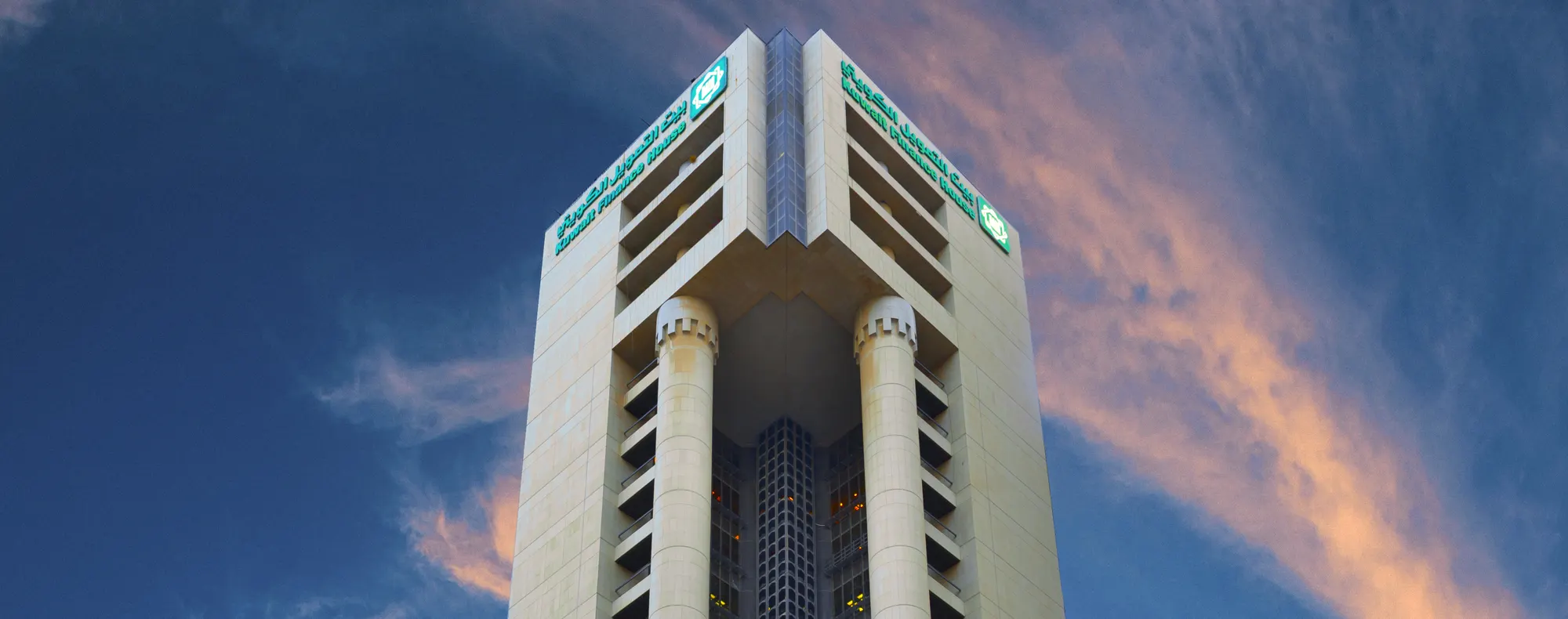
Real estate trading in Kuwait rose 12.4% from the second quarter to KWD 1,019.7 million in the third quarter of 2026, Kuwait Finance House said in its quarterly market report.
For Kuwait’s property investors, the quarter shows trading widening beyond private housing, which kept the largest share of value at 44.6%. Investment property trading climbed 25.1% and commercial trading 62.2%. In The Edge’s reading, the market is regaining pace after the second quarter without repeating last year’s commercial surge, and private housing trading over the first nine months is running 10.0% above the same period of 2025.
The bank released the figures on 5 November through Hamad Al-Hasawy, its Executive Manager of Real Estate Valuation. Its quarterly reports compile monthly registration data from Kuwait’s Ministry of Justice and group trading into private housing, investment, commercial and smaller segments.
Private housing leads as investment and commercial trading pick up
Private housing trading rose 6.7% to KWD 455.3 million. The number of deals was unchanged at 1,106. That lifted the average private housing deal to KWD 411,700 from KWD 385,700.
Investment property gained 25.1%, reaching KWD 359.1 million. Its deal count climbed 9.5% to 359. The average investment deal reached KWD 1.0 million, 14.3% above the second quarter’s.
Commercial property moved the other way on volume. Its trading value jumped 62.2% to KWD 183.1 million. Deals, however, fell to 32 from 45.
That leaves an average commercial deal of KWD 5.72 million, 2.3 times the second-quarter average. The quarter brought fewer but much larger commercial transactions, and the three main segments together accounted for 97.8% of its value.
The smaller segments were mixed. Craft property trading rose to KWD 18.2 million across 2 deals, up from KWD 0.7 million in the second quarter.
The coastal strip fell to KWD 2.3 million across 2 deals, from KWD 23.5 million. Warehouses traded KWD 1.8 million in a single deal, and the smaller segments together made up 2.2% of the total.
Trading value by segment (in KWD millions)
| Segment | Q3 2025 | Q2 2026 | Q3 2026 |
|---|---|---|---|
| Private housing | 396.0 | 426.6 | 455.3 |
| Investment | 406.6 | 287.1 | 359.1 |
| Commercial | 441.6 | 112.9 | 183.1 |
| Craft | 8.2 | 0.7 | 18.2 |
| Coastal strip | 3.1 | 23.5 | 2.3 |
| Warehouses | 19.0 | 27.5 | 1.8 |
| Total | 1,274.5 | 907.5 | 1,019.7 |
Q3 2025 and Q2 2026 as printed in the bank’s second-quarter 2026 report, whose commercial line covers commercial property and exhibitions. The Q2 2026 total also includes KWD 29.2 million of nurseries trading, which is not shown in the table, so the six segments listed for that quarter add to less than the total; the Q3 2026 figures list no nurseries. The Q3 2026 segments differ from their total only through rounding.
The average deal rises 11.8% as total deals edge higher
Deals across the market totalled 1,502 in the third quarter, according to the Kuwait News Agency’s account of the report. That is 0.5% more than the 1,494 of the second quarter.
The average deal rose 11.8% from the second quarter to an estimated KWD 679,000, the news agency’s account showed. It had stood at KWD 607,000 in the second quarter, after KWD 774,000 in the first.
Private housing supplied 73.6% of all deals in the quarter, against its 44.6% share of value.
Deals by main segment
| Segment | Q2 2026 | Q3 2026 |
|---|---|---|
| Private housing | 1,106 | 1,106 |
| Investment | 328 | 359 |
| Commercial | 45 | 32 |
| All segments | 1,494 | 1,502 |
The remaining third-quarter deals were 2 in craft property, 2 in the coastal strip and 1 in warehouses.
Last year’s commercial surge drives the annual comparison
Against the third quarter of 2025, total trading was 20.0% lower, down from KWD 1,274.5 million. The gap comes from commercial property, which traded KWD 441.6 million a year earlier and made up 34.6% of that quarter’s total.
Set commercial property aside and the rest of the market traded KWD 836.6 million this quarter. That is 0.4% above the KWD 832.9 million of a year earlier, on The Edge’s calculation.
Private housing trading was 15.0% higher on the year, up from KWD 396.0 million. Its deals rose 6.9% from 1,035 in the third quarter of 2025.
Investment property trading was 11.7% lower and commercial 58.5% lower than a year earlier. Total deals were 4.0% fewer than the 1,564 of the third quarter of 2025.
Prices moved in different directions by segment, the news agency’s account of the report showed. Private housing prices ended the quarter 0.5% below the second quarter and 4.8% below a year earlier.
Investment property prices rose 1.3% from the second quarter and 6.1% on the year, alongside the segment’s quarterly gain in trading value.
Private housing runs 10.0% ahead over nine months as the bank cites domestic demand
Over the first nine months of 2026, private housing trading reached KWD 1,276.2 million. That is 10.0% more than the KWD 1,160.3 million of the same period of 2025. Private housing made up 43.2% of all trading over the nine months.
Total trading for the nine months was KWD 2,951.5 million, 8.8% below the same period of 2025. The decline sits in investment and commercial property, as the table shows.
Nine-month trading (in KWD millions)
| Segment | 9M 2025 | 9M 2026 | Change |
|---|---|---|---|
| Private housing | 1,160.3 | 1,276.2 | 10.0% |
| Investment | 1,234.6 | 938.0 | -24.0% |
| Commercial | 697.1 | 510.8 | -26.7% |
| Total | 3,237.6 | 2,951.5 | -8.8% |
Sums of the quarterly values: the first and second quarters of each year and the third quarter of 2025 from the bank’s second-quarter 2026 report, the third quarter of 2026 from the bank’s 5 November statement. Totals include the smaller segments; the 2026 total includes KWD 108.5 million of nurseries trading in the first two quarters, a category the bank lists only from 2026.
KFH said the market showed clear resilience in the quarter on domestic demand, improving investor confidence and balanced growth across its main segments. It added that the performance came despite geopolitical tensions and unprecedented swings in oil prices, supported by a stable local economy and a solid banking sector.
Al-Hasawy said a growing pipeline of development projects and the government’s attention to the sector make Kuwait one of the most attractive real estate markets in the region.
The bank also tied its positive view of the market to recent legislative reforms. The Kuwait News Agency’s account names the housing finance law and the sukuk law among them, both set out earlier on these pages. It adds that growth in government capital spending and development plan projects, strong bank liquidity and growing real estate credit helped lift trading value in the quarter.
Figures are from Kuwait Finance House’s third-quarter 2026 real estate market statement of 5 November 2026 and its Local Real Estate Reports for the second quarter of 2026 and the third quarter of 2025, with the total deal count, the average deal value and the price changes as carried by the Kuwait News Agency on 5 November 2026; percentages, sums, shares and averages not attributed to a source are The Edge’s calculations.
Sources: Kuwait Finance House, Kuwait News Agency, The Edge.