South Korea Waives 140% Margin Loan Collateral Rule for 3 Months to Curb Forced Selling
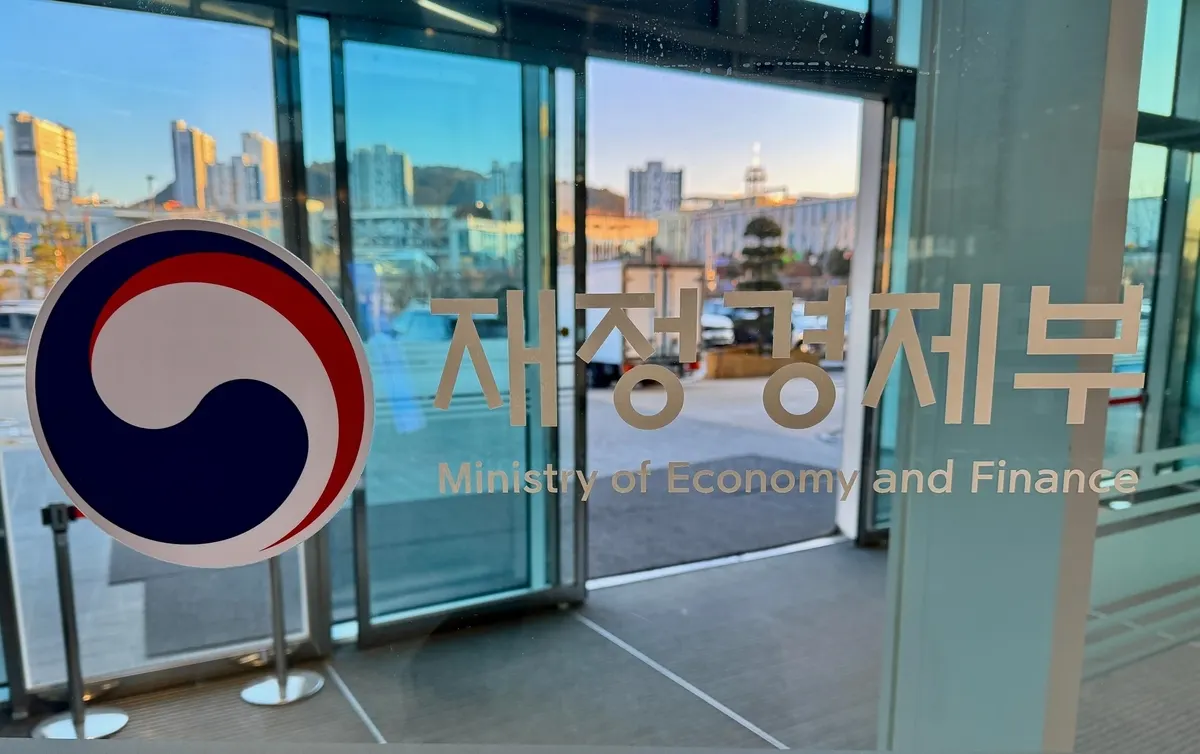
South Korea’s financial authorities will waive the 140% collateral ratio securities firms must keep on margin loans for three months, aiming to curb forced selling after sharp price falls.
For Korean investors who buy shares on credit, and the securities firms that lend to them, the change starts on Monday 9 November. It was the first of three steps agreed at an emergency meeting on 6 November, after a steep fall in Seoul the day before and an overnight slide in US technology shares. In The Edge’s reading, the waiver buys leveraged accounts time rather than putting a floor under prices.
The announcement did not halt Friday’s slide, though the waiver itself starts only on Monday. The Kospi closed at 5,059.69, the 6.02% fall set out in The Edge’s Asia wrap that day. That was below the 5,075 the ministry recorded at 11:00, half an hour before the joint release went out.
Four authorities agree three steps at an emergency meeting
Deputy Prime Minister and Minister of Finance and Economy Lee Hyoung Il chaired the Market Situation Review Meeting at the Government Complex Seoul at 10:30 local time (01:30 GMT). The Chairman of the Financial Services Commission, the Governor of the Financial Supervisory Service and the Senior Deputy Governor of the Bank of Korea took part.
The four bodies issued the outcome as one joint release, which the commission also carried on its own site. Its Korean title speaks of response measures being activated in stages as volatility widens in stock markets at home and abroad.
Participants voiced serious concern about volatility in global stock markets following the US midterm elections. US shares fell sharply overnight, led by technology stocks, after a steep decline in Korea’s market the previous day.
They attributed the recent declines to a mix of factors: policy uncertainty around the AI industry, including concerns over regulation of AI data centres, and weaker global investor sentiment. They also judged that Korea’s market appeared to be “reacting excessively to these external factors”.
Against that, they pointed to fundamentals they called stronger than ever. The ministry cited projected growth in the mid-3% range this year and exports reaching $1 trillion. It also cited projected corporate operating profits above KRW 900 trillion, equivalent to $663 billion, and warned against excessive pessimism driven by market anxiety.
Korea’s October trade data were set out by The Edge on 1 November.
The waiver targets forced selling on margin loans
The rule being lifted obliges securities firms to keep a collateral ratio of 140% on the margin loans they extend to clients. The authorities said they are waiving it to stop excessive forced selling after sharp price declines from amplifying market volatility.
The waiver runs for three months from 9 November. The release does not say how firms should treat accounts that fall below the ratio in that period.
The second step comes with a trigger. The authorities will watch for excessive anxiety and one-sided trading flows, and will prepare additional stabilisation measures should volatility increase further.
The third is longer term: continued work to strengthen Korea’s capital markets, including corporate value and confidence in the market.
Alongside the three steps, the bodies pledged the highest level of vigilance, with real-time monitoring of stock markets and capital flows at home and abroad. They also said they would keep tracking the global semiconductor industry and policy trends in major economies.
The Kospi has lost more than a quarter of its value since September
The ministry’s own table traces the slide. The Kospi stood at 6,838 at the end of September and 5,731 at the end of October. It was down to 5,384 on 5 November.
Friday’s close leaves the index 26.0% below its end-September level. It is also 11.7% below the end of October.
The fall on Friday was broad. The Kospi 200 lost 6.51%, more than the main index. The Kosdaq closed down 5.03%.
The Kospi, the won and bond yields in the ministry’s table
| Date | Kospi (pts) | Won per dollar | 10-year yield (%) |
|---|---|---|---|
| 30 Sep | 6,838 | 1,352.8 | 4.407 |
| 30 Oct | 5,731 | 1,334.3 | 4.008 |
| 3 Nov | 5,649 | 1,341.0 | 4.001 |
| 4 Nov | 5,684 | 1,341.5 | 3.968 |
| 5 Nov | 5,384 | 1,342.1 | 3.887 |
| 6 Nov, 11:00 | 5,075 | Not given | Not given |
Kospi levels as rounded in the joint release of 6 November; the 6 November level is as of 11:00 Seoul time. The yield is on the 10-year Korea Treasury Bond.
Korea Exchange indices, 6 November close
| Index | Close | Change (%) |
|---|---|---|
| Kospi | 5,059.69 | -6.02 |
| Kospi 200 | 783.23 | -6.51 |
| KRX 300 | 3,401.79 | -6.48 |
| Korea Value-up | 2,438.48 | -5.73 |
| Kosdaq | 644.27 | -5.03 |
| Kosdaq 150 | 1,057.25 | -5.41 |
Changes are against the 5 November close, as published by the exchange.
The overseas moves the ministry cited were steepest in chips. The Philadelphia Semiconductor index fell 12.25% on 5 November, more than twice the Nasdaq’s 5.52% drop.
Europe’s STOXX 600 lost 3.38% the same day. In Asia, the Taiwan weighted index fell 3.20% and the Nikkei 1.79%.
Moves on 5 November cited by the ministry (in %)
| Index | Change |
|---|---|
| Philadelphia Semiconductor | -12.25 |
| Nasdaq | -5.52 |
| S&P 500 | -4.36 |
| Dow | -3.44 |
| STOXX 600 | -3.38 |
| Taiwan weighted | -3.20 |
| Nikkei | -1.79 |
Change on the previous day, as listed in the joint release of 6 November.
Bond yields fall while equities slide
Government bonds moved the other way. The 10-year Korea Treasury Bond yield fell to 3.887% on 5 November from 4.407% at the end of September. That is a decline of 52 basis points.
On 6 November the three-year AA- corporate bond yielded 4.313% and the three-year Korea Treasury Bond 3.613%, the ministry’s indicator page shows. The gap between them was 70 basis points. The Bank of Korea’s base rate stands at 3%.
The currency moved less than shares. In the ministry’s table the won was stronger on 5 November than at the end of September, at 1,342.1 per dollar against 1,352.8.
The ministry’s closing rate for Friday, 1,356.6 per dollar, was weaker than any level in that table.
What to watch:
9 November: the three-month waiver of the 140% collateral ratio on securities firms’ margin loans takes effect.
Figures are from the Ministry of Finance and Economy’s joint release with the Financial Services Commission, the Bank of Korea and the Financial Supervisory Service, “Market Situation Review Meeting”, 6 November 2026 (English and Korean), and its indicator page, and from Korea Exchange index data for 6 November; the dollar equivalent uses the ministry’s closing rate of 1,356.6 won per dollar on 6 November; percentages and differences not attributed to a source are The Edge’s calculations.
Sources: Ministry of Finance and Economy, Financial Services Commission, Korea Exchange, The Edge.