S&P Downgrades BMW to A- as China Deliveries Fall 21.8%, Keeps Outlook Negative
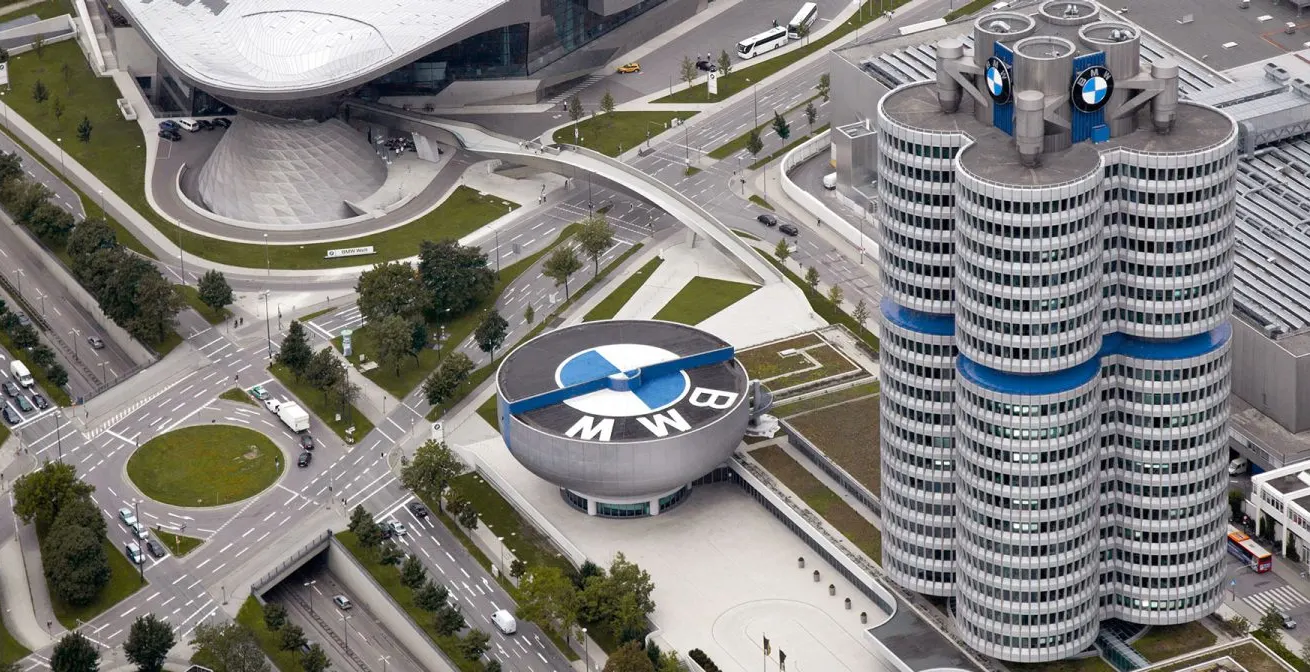
S&P Global Ratings cut BMW AG one notch to A- from A on 5 November, saying a more competitive Chinese premium car market will constrain its margins and cash flow.
The senior unsecured rating falls to A- as well, and the negative outlook leaves room for another step. The agency could cut again if China share keeps sliding, competition elsewhere bites or cost cuts fall short, leaving the adjusted EBITDA margin below 10% or free operating cash flow below 3% of sales from 2028. The offset is the agency’s estimated €11.5 billion of adjusted net cash at the end of 2025.
China drives a one notch cut and a lower forecast path
The long and short term issuer credit ratings on BMW and its rated subsidiaries fall to A-/A-2 from A/A-1. The action follows the carmaker’s 3 November decision to lower its 2026 automotive EBIT margin guidance to a corridor of minus 0.5% to 0.5%.
S&P revised the outlook to negative on 1 August 2025, when it affirmed BMW at A/A-1. At the time it called China, a little less than 30% of the group’s global sales, the company’s main problem.
Nine-month deliveries in mainland China fell 21.8%, the agency said, mainly driven by a 19.5% contraction in the country’s overall light vehicle market. It expects Chinese light vehicle sales to fall 16% to 19% this year. It sees them declining further through 2028.
The agency sees a structural change in China’s premium and luxury segment. BMW’s premium market share has more than halved over five years, to below 10% in the 12 months to the third quarter. Mercedes-Benz and Audi have seen the same, and much of the lost share went to domestic brands such as Aito, Xiaomi and LI.
Combustion engine models, the high margin part of the range, made up more than 90% of BMW’s China sales in the third quarter. The shift to electric vehicles and tough competition in them will constrain the carmaker’s China earnings for the next few years, in the agency’s view.
The new forecasts sit well below the path published in August 2025. The adjusted EBITDA margin is now projected at 9.5% to 10.5% over 2027 and 2028. That is materially below the highs of 14% to 17% in 2021 to 2023, and below the level associated with an A rating.
Free operating cash flow is seen at 1.6% of sales in 2026 and an estimated 1.0% in 2027, the agency said. Its previous outlook threshold was well above 3%. It expects the ratio to converge towards 3% by 2028 as earnings improve and capitalised research spending and capital expenditure fall after the Neue Klasse platform and the plant investments in Hungary and China.
The company’s restructuring measures will reduce adjusted EBITDA by €2.6 billion to €2.9 billion in 2026, the agency estimates. The savings that follow are a key driver of its projected return to a margin of an estimated 10% in 2028.
The agency’s forecasts and thresholds for BMW (in %)
| Measure | Aug 2025 | Nov 2026 |
|---|---|---|
| EBITDA margin, 2027 | 11.5 | 9.5 to 10.5 |
| FOCF to sales, 2026 | 3.7 | 1.6 |
| FOCF to sales, 2027 | 4.7 | 1.0 |
| EBITDA downgrade trigger | 11 | 10 |
| FOCF downgrade trigger | 3 | 3 |
Adjusted measures from the research updates of 1 August 2025 (forecast table, “FOCF/adjusted revenues”) and 5 November 2026 (“FOCF to sales”); the November 2026 margin range covers 2027 and 2028, the agency gives the 2027 cash flow figure as an estimated 1.0%, and the November 2026 triggers apply to 2028 and after.
China’s loss outweighs the group’s entire delivery decline
The company’s quarterly statement shows the scale. Deliveries in its China sales region fell to 376,444 in the first nine months from 481,221. That loss of 104,777 cars exceeds the group’s total decline of 87,932.
Outside China, deliveries rose 1.3% to 1.33 million. In the third quarter they were flat, up 705 cars, while China fell 24.8%. China’s share of group deliveries in the quarter dropped to 20.8% from 25.9% a year earlier.
The company’s own market table shows the Chinese market for the vehicle groups it serves down 21.8% in the nine months and 24.6% in the quarter. On that measure its China decline was in line with the market, while the agency’s 19.5% market figure puts BMW’s fall 2.3 percentage points steeper.
BMW Group deliveries by sales region, January to September (in thousands)
| Region | 2025 | 2026 | Change |
|---|---|---|---|
| Europe | 701.6 | 733.1 | 4.5% |
| of which Germany | 202.9 | 217.6 | 7.2% |
| Americas | 364.1 | 374.5 | 2.8% |
| of which USA | 298.4 | 308.6 | 3.4% |
| China | 481.2 | 376.4 | -21.8% |
| Asia-Pacific, Eastern Europe, Middle East, Africa | 248.7 | 223.7 | -10.1% |
| Total | 1,795.7 | 1,707.8 | -4.9% |
Sales regions as the company reports them; changes as printed; the “Others” line (111 cars in 2026, 80 in 2025) is not shown.
Group revenues fell 7.3% to €92.72 billion in the nine months. Net profit fell 24.4% to €4.32 billion. The automotive EBIT margin was 3.5%, from 5.9%. In the third quarter it was 3.4%, from 5.2%.
BMW Group nine-month figures (in € millions)
| Measure | 9M 2025 | 9M 2026 |
|---|---|---|
| Group revenues | 99,999 | 92,718 |
| Automotive revenues | 87,164 | 80,990 |
| Automotive EBIT | 5,120 | 2,875 |
| Group profit before tax | 8,056 | 6,128 |
| Group net profit | 5,712 | 4,320 |
| Automotive free cash flow | 2,688 | 724 |
Nine months to 30 September, as printed in the company’s quarterly statement.
The guidance cut points to a fourth quarter automotive loss
The company said on 3 November that operating performance remained solid in the third quarter, but that expanded portfolio and structural measures will bring “a non-operating impact on earnings” in the automotive segment in the fourth quarter. The quarterly statement puts the measures’ total effect on this year’s automotive margin at an estimated 2.5 percentage points, from 1.25 previously.
The corridor of minus 0.5% to 0.5% replaces 1% to 3%. Before the measures, the company still expects an automotive margin above 2.0%, and it maintained its expectation of more than €2.5 billion of automotive free cash flow.
With €2.88 billion of automotive EBIT already earned in nine months, the new corridor implies a fourth quarter automotive loss at any realistic revenue level, on The Edge’s calculation. A quarterly profit would need full year automotive revenue of €575 billion. The cash flow goal likewise implies more than €1.77 billion of automotive free cash flow in the quarter, after minus €566 million in the third.
In The Edge’s reading, if fourth quarter automotive revenue matched the third quarter’s €26.67 billion, the loss would land between €2.3 billion and €3.4 billion. The assumption is ours; the company gives no quarterly figure.
Deliveries are now expected to fall moderately for the year, rather than slightly, while the share of all electric cars rises slightly. The company also expects the Chinese market to keep contracting significantly, primarily in combustion engine cars.
Neue Klasse and cost savings carry the case for stability
The agency says the long wheelbase iX3, the flagship Neue Klasse model, uses below 14 kilowatt hours per 100 kilometres. Its range on the Chinese test cycle is above 900 kilometres. The agency sees the new models as margin accretive in other markets, particularly Europe, though it assumes no meaningful price premium in China.
By the agency’s account, cost savings, including staff cuts announced in June and November, are the most important factor in reaching the company’s interim target of a 3% to 5% automotive EBIT margin by 2028. The company set that target at its Capital Market Day on 29 and 30 September.
The agency still projects a comfortable net cash position despite €3 billion to €4 billion of annual shareholder returns in 2027 and 2028. The outlook could return to stable if new products bring a durable improvement in China sales, market shares elsewhere stay broadly stable, and the margin and cash flow ratio recover sustainably to 10% and 3%.
Our 28 October roundup set out that Mercedes-Benz and Porsche both described China as challenging in their own nine-month figures.
What to watch: BMW Group publishes the BMW Group Report 2026 and holds its annual conference on 11 March 2027; the quarterly statement to 31 March 2027 follows on 5 May 2027.
Method: The rating action is S&P Global Ratings’ research update of 5 November 2026 (20:35 GMT), compared with its research update of 1 August 2025; BMW figures are from the BMW Group Quarterly Statement to 30 September 2026, published 4 November 2026, the BMW Group guidance update of 3 November 2026 and the BMW Group Capital Market Day 2026 key messages of 29 and 30 September 2026; percentages, shares, differences and comparisons not attributed to a source are The Edge’s calculations.
Sources: S&P Global Ratings, BMW Group, The Edge.